
 +84 28 6265 4683
 sales@pacificlab.vn


Real-time PCR
PCR (short for polymerase chain reaction) is an important analysis method in food analysis as well as in medical diagnostics.
A real-time PCR test duplicates and analyzes specific DNA sequences. In food analysis, PCR tests are used in many applications, e.g. for the detection of pathogenic microorganisms, for allergen identification, for the detection of genetically modified organisms (GMO) or for the identification of animal species. PCR tests offer many advantages: They are very specific, sensitive, robust, rapid and reliable. Moreover, the tests can be automated.
Advantages of real-time PCR tests
- Safe: specific and validated method
- Reliable: quality-controlled test kits
- User-friendly: easy-to-use, universal sample preparation
- Effective: capable to multiplex and quantify
- Versatile: many application areas
Real-time PCR procedure
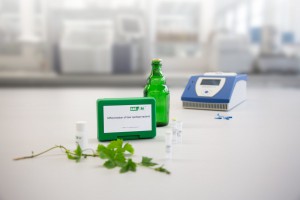
The first step of all analysis is representative sampling and homogenization. After lysis of the organic cells of food tissue, the DNA will be prepared using different dedicated DNA or RNA preparation kits either for bacteria or viruses. SureFood® PREP Basic and SureFood® Prep Advanced kits are used for solid food and feed from plant or meat origin. For beverages specific DNA preparation kits will be used depending on the matrix, whereas the new QuickGEN line allows a straight forward easy handling.
The modular system of DNA preparation and DNA detection can be used independently. Amplification of the target DNA requires in addition to the relevant kits the use of a suitable thermocycler with two (FAM/HEX) up to 4 (FAM/HEX/ROX/Cy5) detection channels.
Application areas for PCR in food testing
- Allergens
- Animal speciation
- Beverage spoilage
- GMO
- Microbiology