Symptoms of egg allergy:
- Rashes, hives, itchy skin.
- Nasal congestion, difficulty breathing, coughing and wheezing.
- Abdominal pain, nausea, diarrhea.
- Anaphylactic shock: a severe allergic reaction that can be life-threatening.
1. Why must egg allergy be tested for in food?
- Eggs are a common ingredient in many food products such as bread, cakes, pasta, sauces, and processed foods. For allergic people, even a small amount of egg protein can cause a severe reaction. Therefore, testing for egg allergy in food is necessary to:
- Protect consumer health.
- Ensure compliance with food safety and labeling regulations.
- Build customer trust in food products.
2. Method for testing egg allergy in food
2.1. ELISA method (Enzyme-Linked Immunosorbent Assay)
- Principle: ELISA detects egg protein based on antigen and antibody. This is the most sensitive and specific method for determining the presence of ovalbumin or ovomucoid.
- Application: analysis of processed food products, checking for cross-contamination on the production line.
- Advantages: High sensitivity, fast processing time.
- Limitations: Requires dedicated equipment and trained technicians.
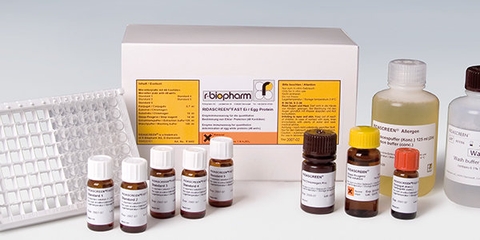
- Refer to the egg allergy ELISA test kit here.

2.2. PCR method (Polymerase Chain Reaction)
- Principle: PCR detects egg DNA in food, even when the protein has been denatured by processing.
- Advantages: accurate detection even when egg is present in trace amounts, effective for high-temperature products such as baked goods.
- Limitations: Only detects DNA, cannot determine the level of protein allergenicity
2.3. Rapid egg allergy test method
- Principle: using a rapid egg allergy test strip with specific antibodies to detect egg protein in food.
- Advantages: easy to use, no complex equipment needed, suitable for on-site testing in factories or restaurants
- Limitations: Lower sensitivity than ELISA or PCR.
- Refer to the rapid egg allergy test kit here.

2.4. Mass spectrometry analysis of egg allergy (Mass Spectrometry)
- Principle: Analysis of specific peptides from egg protein in food
- Advantages: High accuracy, simultaneous detection of multiple allergenic proteins.
- Limitations: High cost, requires an analysis expert.
3. Benefits of egg allergy testing
* For food manufacturers:
- Ensure compliance with legal regulations on allergen labeling.
- Minimize the risk of product recalls due to food safety violations.
* For consumers:
- Help people with allergies easily choose safe foods.
- Raise awareness of the risk of egg allergy in the daily diet.
Egg allergy is a serious health issue that needs to be managed carefully. Modern testing methods such as ELISA, PCR, and rapid test kits play an important role in detecting and controlling egg allergy in food. Manufacturers need to carry out strict testing measures to ensure safety for consumers, while contributing to building a more transparent and safer food environment.