
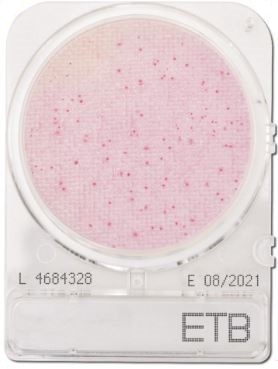
 FeaturedShimadzuCompact Dry Enterobacteriaceae plates | Compact Dry ETB Enterobacteriaceae | Shimadzu
Code: 54055 · +1 order codes
Shimadzu
Compact Dry Staphylococcus Aureus plates | Compact Dry X-SA Staphylococcus Aureus | Shimadzu
Manufacturer: Shimadzu Diagnostics Nissui
Origin: Japan
Catalogue number: 54057
Packaging: 4 plates/pack
- Staphylococcus aureus, also called the golden staphylococcus, is a Gram-positive, anaerobic coccus species, and it is the most common cause of infection among the staphylococcal species; it is a widespread commensal organism in humans and can be found naturally on the skin, the nose and the hair.- Staphylococcus is therefore often used as an indicator of the personal hygiene of the people who handle food. It is usually harmless, but at a high density Staphylococcus can start to form endotoxins that cause food poisoning. It can also tolerate low water activity and survive in foods with a high sugar content.
- For this reason, a testing and detection procedure for Staphylococcus aureus is recommended, and the Compact Dry Staphylococcus aureus plate brings convenience to the user because it needs no preparation of culture media, equipment or complex consumables.- All the technology used in this Compact Dry Staphylococcus aureus plate is a pre-poured medium. The user only has to extract the sample, pipette the sample onto the plate and take it to incubation.
– Simple procedure that is easy to use, with no need to prepare consumables or complex equipment.
– Easy to use and no time lost on training users.
– The compact dry plate is easy to store thanks to its packaging of 4 plates per pack.
– Reasonably accurate, easy to analyse and results are available after 24 hours.
– Colonies can be picked for biochemical testing.
– Aseptically weigh 10.0 g of sample, or use a pipette to take 10.0 ml (for samples that are a solution), and place it in a suitable sterile container (for example a sterile sample bag, a dilution bottle or a Whirl Park bag).
– Add 90.0 ml of diluent to reach a 1:10 dilution and homogenise the sample. Adjust the pH if necessary. The diluent usually recommended is Butterfield's phosphate buffer, maximum recovery diluent and other suitable diluents depending on BAM.
– If necessary, the sample can be diluted further.
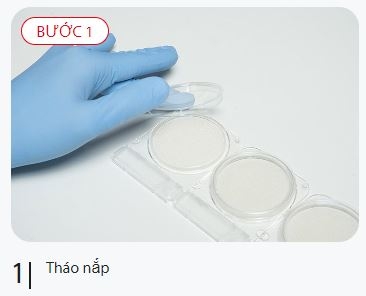
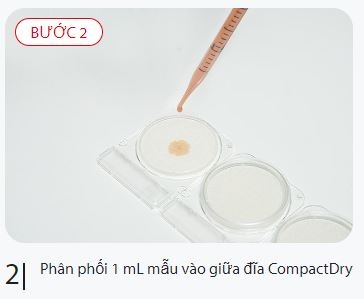
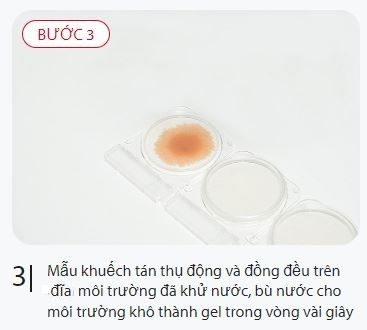
– Open the lid of the Compact Dry plate. Take 1.0 ml of the diluted sample with a micropipette and place it in the middle of the Compact Dry plate.
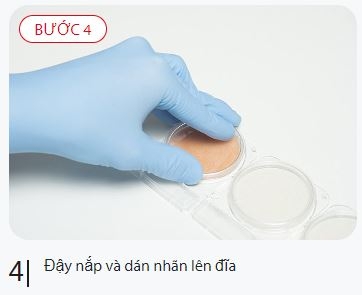
- Close the lid of the plate.
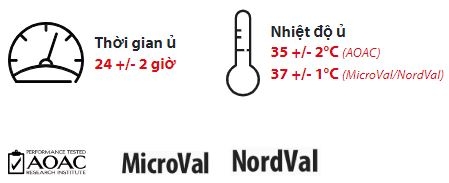
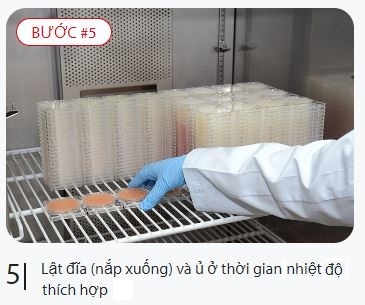
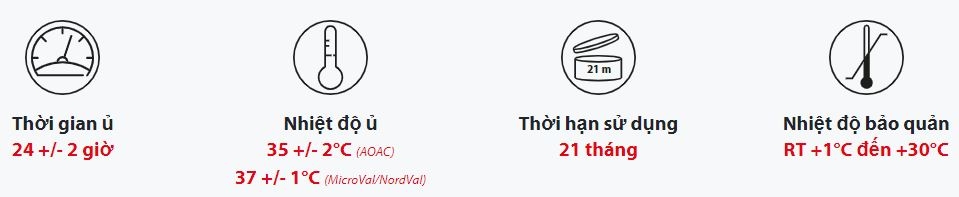
- Invert and incubate the compact dry plate under the specific incubation conditions (Per AOAC International standard: 35 ± 2°C for 24 ± 2 hours, per Microval and NordVal standards: 37 ± 1°C for 24 ± 2 hours).
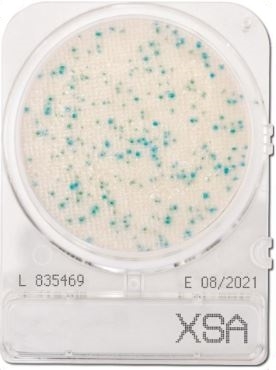
Choose plates with 10-150 colonies.
Blue colonies/light blue colonies
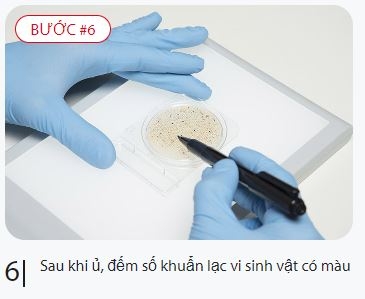
- A plate with more than 300 CFU can make the whole colony area turn blue. In this case the sample has to be diluted.
- After the results have been read, the plate is sterilised in an autoclave (121 °C/ 30 minutes) before it is disposed of.
 FeaturedShimadzuCompact Dry Enterobacteriaceae plates | Compact Dry ETB Enterobacteriaceae | Shimadzu
Code: 54055 · +1 order codes
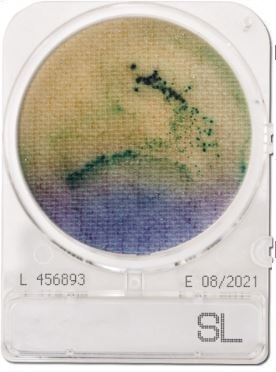 FeaturedShimadzuCompact Dry Salmonella plate | Compact Dry SL Salmonella | Shimadzu
Code: 54058 · +1 order codes
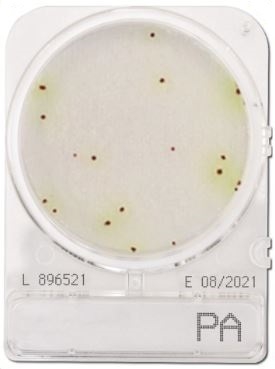 FeaturedShimadzuCompact Dry Pseudomonas Aeruginosa plate | Compact Dry Pseudomonas Aeruginosa | Shimadzu
Code: 54062 · +1 order codes
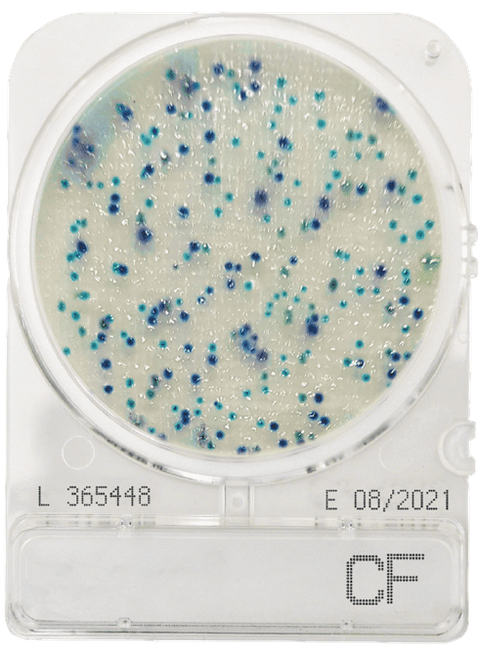 ShimadzuCompact Dry CF Coliform plates | Compact Dry CF Coliform | Shimadzu
Code: 54053 · +1 order codes