
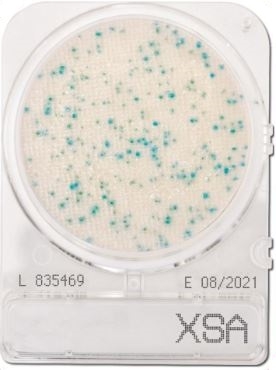
 FeaturedShimadzuCompact Dry Staphylococcus Aureus plates | Compact Dry X-SA Staphylococcus Aureus | Shimadzu
Code: 54057 · +1 order codes
Shimadzu
Compact Dry TCR Total Viable Count Rapid plates | Compact Dry TCR Total Viable Count Rapid | Shimadzu
Manufacturer: Shimadzu Diagnostics Nissui
Origin: Japan
Order code: 54069
Packaging: 4 plates/pack, 1400 plates/carton
- Aerobic microorganisms are microorganisms that need molecular oxygen to survive and grow and that form colonies when cultured. They nevertheless require a lower percentage of oxygen in their environment than in the normal atmosphere.
- This refers to all the microorganisms present in a sample that can tolerate the presence of oxygen and have no specific growth requirements; they are usually not included in the formulations of the media.
- Under the regulations of the Food and Drug Administration (FDA), the total aerobic count is considered one of the typical and representative parameters for food (frozen, chilled, minimally processed and ready-prepared food) and pharmaceutical samples. A total count test has to be carried out to verify that a food or beverage sample does not contain bacterial pathogens in order to ensure food safety.
- For this reason, a test procedure for the total aerobic count is recommended; and the Compact Dry Total Viable Count plate gives the user convenience because it has the advantage of needing no preparation of culture media chemicals, instruments or complex consumables.
- All the technology used for this Compact Dry Total Viable Count plate is a pre-poured medium. The user only has to extract the sample, drop it onto the plate and incubate it.
– Liquid samples: Waste water, domestic water…
– Solid samples: Animal feed, milk, milk powder, meat, fish, shrimp…
– Simple procedure that is easy to use, with no need to prepare consumables or complex equipment.
– Easy to use and no time spent training the user.
– The Compact Dry plate is easy to store thanks to the packaging of 4 plates per pack.
– Fairly accurate results, easy to analyse and available after 24 hours.
– Colonies can be isolated for biochemical testing.
– Aseptically weigh 10.0 g of sample or use a pipette to take 10.0 ml (for liquid samples) into a suitable sterile container (for example a sterile sample bag, dilution bottle or Whirl-Pak bag).
– Add 90.0 ml of diluent to reach a 1:10 dilution and homogenise the sample. Adjust the pH if necessary. The diluent recommended is usually Butterfield's phosphate buffer, maximum recovery diluent and other suitable diluents depending on the BAM. If needed, the sample can be diluted further.
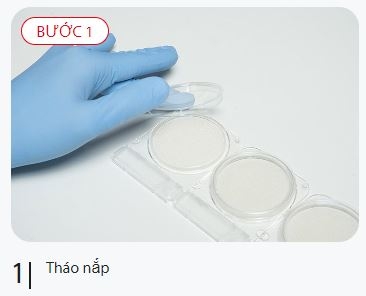
– Open the lid of the Compact Dry plate. Take 1.0 ml of the diluted sample with a micropipette and place it in the centre of the Compact Dry plate. Close the lid of the plate.
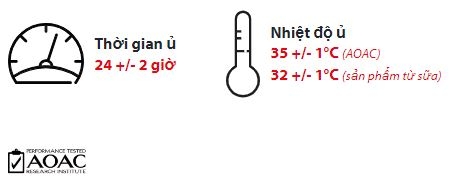
– Invert and incubate the Compact Dry plate under the specific incubation conditions (according to AOAC International: 35 ± 1°C for 24 ± 2 hours).
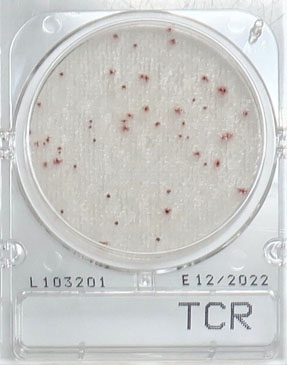
- Select plates with 10-150 colonies.
- Red colonies or colourless colonies.
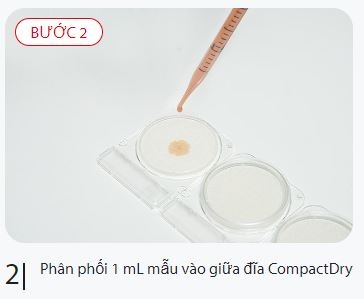
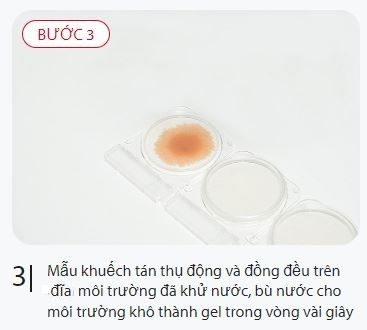
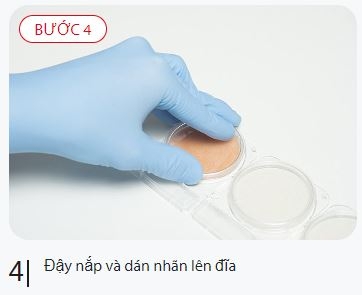
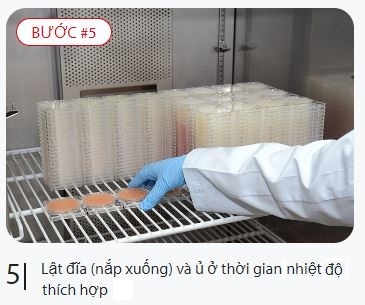
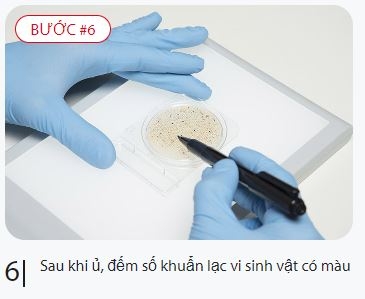
Note:
- Some colonies may not have a clear red colour
- A plate with more than 300 CFU of colonies may turn the whole colony growth area red/pink. In this case the sample needs to be diluted.
- After the results have been read, the plate is autoclaved (121 °C / 30 minutes) before being discarded.
 FeaturedShimadzuCompact Dry Staphylococcus Aureus plates | Compact Dry X-SA Staphylococcus Aureus | Shimadzu
Code: 54057 · +1 order codes
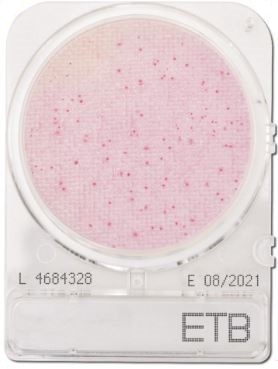 FeaturedShimadzuCompact Dry Enterobacteriaceae plates | Compact Dry ETB Enterobacteriaceae | Shimadzu
Code: 54055 · +1 order codes
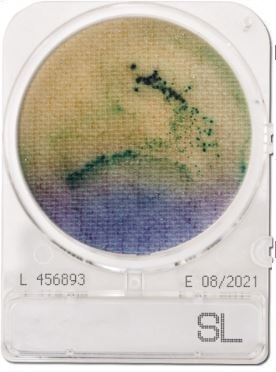 FeaturedShimadzuCompact Dry Salmonella plate | Compact Dry SL Salmonella | Shimadzu
Code: 54058 · +1 order codes
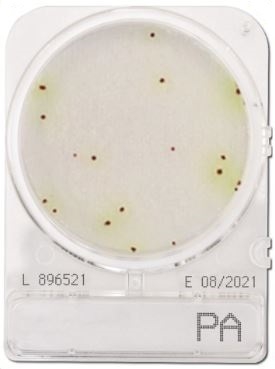 FeaturedShimadzuCompact Dry Pseudomonas Aeruginosa plate | Compact Dry Pseudomonas Aeruginosa | Shimadzu
Code: 54062 · +1 order codes