
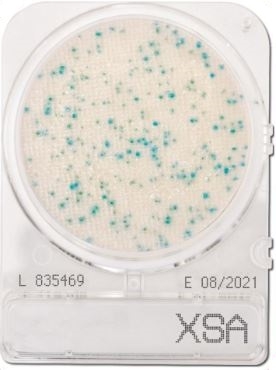
 FeaturedShimadzuCompact Dry Staphylococcus Aureus plates | Compact Dry X-SA Staphylococcus Aureus | Shimadzu
Code: 54057 · +1 order codes
Shimadzu
Compact Dry Salmonella plate | Compact Dry SL Salmonella | Shimadzu
Manufacturer: Shimadzu Diagnostics Nissui
Origin: Japan
Catalogue number: 54058
Packaging: 4 plates/pack, 1400 plates/carton

– Salmonella is a gram-negative bacterium that includes only two species, S. enterica and S. bongori. According to the standard laid down by the food and drug regulatory authority, Salmonella must be completely absent from all food and environmental samples.
– No acceptable level has been established, because its infectious dose is low, but it can lead to fatal illness.
– Salmonella contamination is caused by cross-contamination during animal dressing, the washing and transport of raw materials, and can also occur while ingredients are being prepared. Environmental monitoring programmes should therefore be in place in industries such as poultry, because it is very easily contaminated.
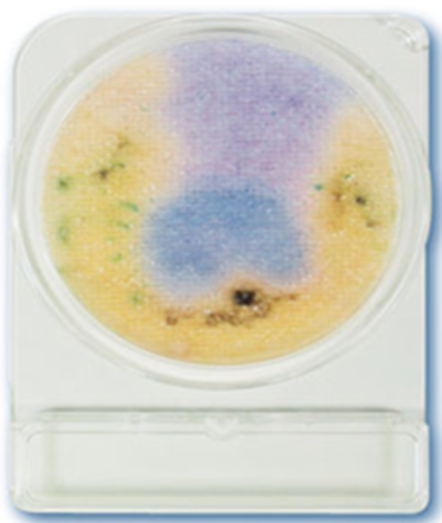
– The Compact Dry plate for Salmonella testing can help detect Salmonella easily through the colour change of the medium from blue-purple to yellow.
– This is produced by the alkalinisation of the medium by the lysine decarboxylase enzyme characteristic of Salmonella.
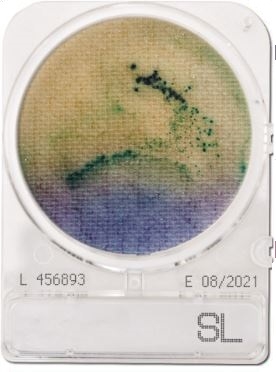
– In addition, dark blue colonies will appear, and the motility of Salmonella is observed through colonies appearing not only at the origin of the inoculum but also in other areas of the nutrient pad.
– For that reason, a procedure for testing and detecting Salmonella is recommended.
– The Compact Dry Salmonella plate offers convenience to the user thanks to the advantage that no complex culture media chemicals, equipment or consumables need to be prepared.
– All the technology used for this Compact Dry Salmonella plate is a pre-poured medium. The user only has to extract the sample, pipette it onto the plate and incubate it. Compact Dry Salmonella is a dehydrated selective chromogenic medium for the determination of Salmonella bacteria. Detecting Salmonella contamination is very important in food production. Compact Dry Salmonella detects Salmonella with a 20-24 hour pre-enrichment step, followed by incubation at 41-43°C on the Compact Dry Salmonella plate.
- Compact Dry Salmonella uses a combination of different test principles based on the motility of the bacteria and on a specific chromogenic colour.
- The first sign of the presence of Salmonella is the yellow colour of the green/purple medium, caused by Salmonella lysine decarboxylase. As motile Salmonella spreads across the plate, the blue/purple plate also turns yellow, reflecting the motility of Salmonella.
- The blue colonies that subsequently appear are caused by the degradation of the chromogenic substrate by a Salmonella-specific enzyme. The black/blue colonies are produced by hydrogen sulphide generated by Salmonella.
- To interpret positive Salmonella results, you will observe the spread of isolated or merged black/green colonies and the change in colour of the Compact Dry Salmonella selective chromogenic medium from its usual blue/purple to yellow.
- At very high Salmonella concentrations, the whole Salmonella test plate turns yellow, with dense patches of blue/black colonies.
– Simple, easy-to-use procedure, with no need to prepare complex consumables or equipment.
– Easy to use, and no time lost training users.
– The Compact Dry plate is easy to store thanks to its packaging of 4 plates per pack.
– The results are quite accurate, easy to interpret, and available after 24 hours.
– Colonies can be isolated for biochemical testing.
– Aseptically weigh 25.0 g of sample, or use a pipette to take 25.0 ml of sample, into a sterile container (for example a stomacher bag, dilution bottle or whirl-pak bag).
– Add 225.0 ml of diluent and homogenise. The diluents recommended for Salmonella are Buffered Peptone Water and other suitable diluents depending on BAM.
– Incubate at 36 ± 1°C for 20-24 hours.
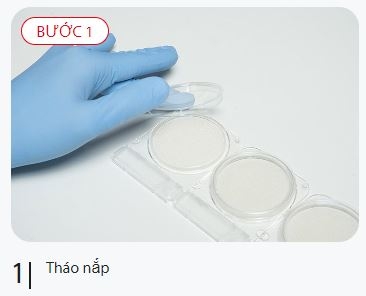
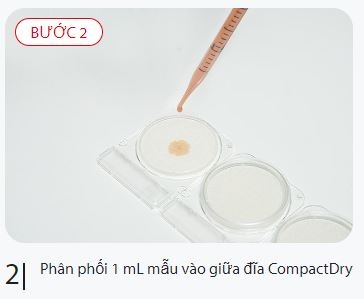
– Take 0.1 ml of the pre-enriched sample and inoculate it about 1 cm from the edge of the Salmonella plate. Then add 1.0 ml of sterile distilled water to the opposite side of the preparation. Close the lid of the plate.
– Invert the plate and incubate it under the specified conditions. Manufacturer's recommendation: 42 ± 1°C for 22 ± 2 hours.
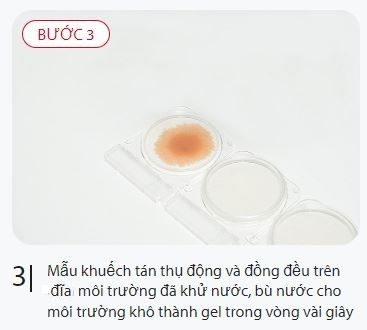
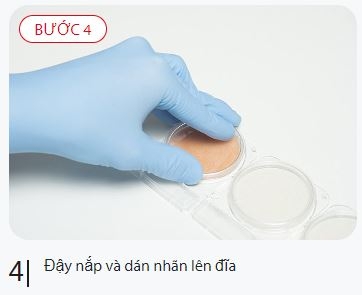
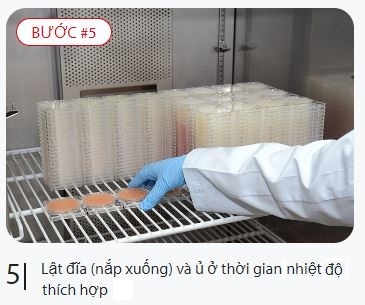
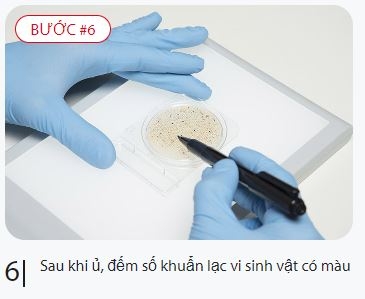
– Salmonella positive
+ Isolated or merged black or green colonies
+ The medium around the colonies turns yellow.
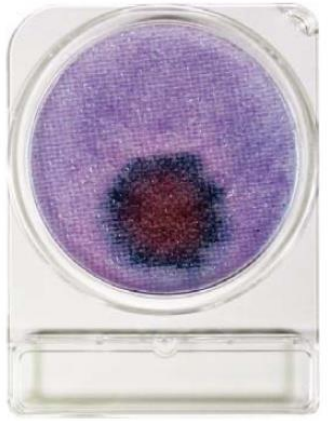
– Salmonella negative
+ No colour change
+ Red or purple-red colonies.
- Very high Salmonella counts – the plate turns completely yellow with no isolated colonies, and patches of black and green colonies appear.
- After the results have been read, the plate is autoclaved (121 °C/ 30 minutes) before disposal.
 FeaturedShimadzuCompact Dry Staphylococcus Aureus plates | Compact Dry X-SA Staphylococcus Aureus | Shimadzu
Code: 54057 · +1 order codes
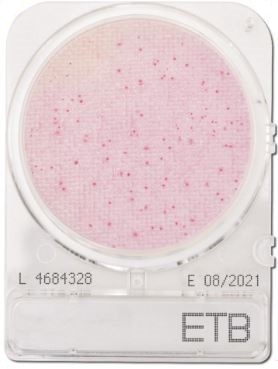 FeaturedShimadzuCompact Dry Enterobacteriaceae plates | Compact Dry ETB Enterobacteriaceae | Shimadzu
Code: 54055 · +1 order codes
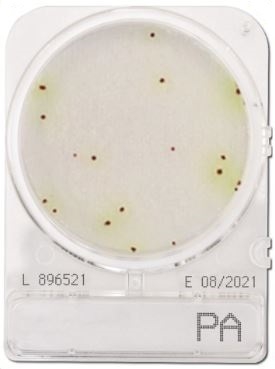 FeaturedShimadzuCompact Dry Pseudomonas Aeruginosa plate | Compact Dry Pseudomonas Aeruginosa | Shimadzu
Code: 54062 · +1 order codes
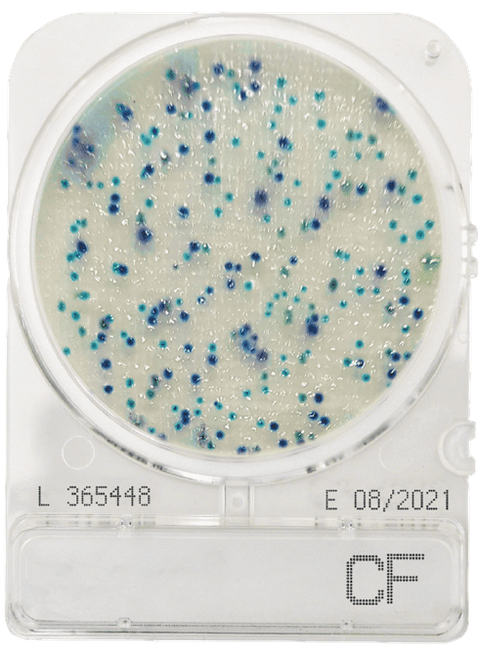 ShimadzuCompact Dry CF Coliform plates | Compact Dry CF Coliform | Shimadzu
Code: 54053 · +1 order codes