
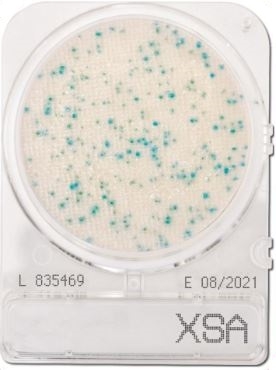
 FeaturedShimadzuCompact Dry Staphylococcus Aureus plates | Compact Dry X-SA Staphylococcus Aureus | Shimadzu
Code: 54057 · +1 order codes
Shimadzu
Compact Dry Enterobacteriaceae plates | Compact Dry ETB Enterobacteriaceae | Shimadzu
Manufacturer: Shimadzu Diagnostics Nissui
Origin: Japan
Order code: 54055
Packaging: 4 plates/pack, 1400 plates/carton
– Enterobacteriaceae is a family in the Gram-negative group of bacteria, known scientifically as anaerobes; they do not form spores; and the genera are usually motile, although non-motile types are also present.
– Enterobacteriaceae are commonly found in the environment as well as in the intestines of animals.
– Almost all foodborne pathogenic bacteria belong to this family, including Citrobacter, Enterobacter, Escherichia, Klebsiella, Proteus, Salmonella, Serratia, Shigella and Yersinia.
– Enterobacteriaceae are microorganisms found in food, beverage, pharmaceutical and cosmetic samples. As a recent development in food safety, Enterobacter sakazakii is being monitored in infant formula because of the high risk of contamination of milk, as well as its health effects when ingested by newborns. For that reason, testing and detection procedures for Enterobacteriaceae are recommended.
– The Compact Dry Enterobacteriaceae plate offers convenience to the user because it needs no preparation of culture media, equipment or complex consumables.
– The whole technology used for this Compact Dry Enterobacteriaceae plate is a pre-poured medium.
– The user only has to extract the sample, pipette it onto the plate and incubate it.
– Simple, easy-to-use procedure with no need to prepare consumables or complex equipment.
– Easy to use, with no time lost training users.
– The Compact Dry plates store easily thanks to the packaging of 4 plates per pack.
– Results are quite accurate, easy to interpret, and available after 24 hours.
– Colonies can be isolated for biochemical testing.
– Aseptically weigh 10.0 g of sample, or pipette 10.0 ml (for samples that are liquid), into a suitable sterile container (for example a sterile sample bag, dilution bottle or Whirl-Pak bag).
– Add 90.0 ml of diluent to reach a 1:10 dilution and homogenise the sample.
+ Adjust the pH if necessary.
+ The diluent usually recommended is Butterfield's phosphate buffer, maximum recovery diluent and other suitable diluents depending on the BAM.
– If necessary, the sample can be diluted further.
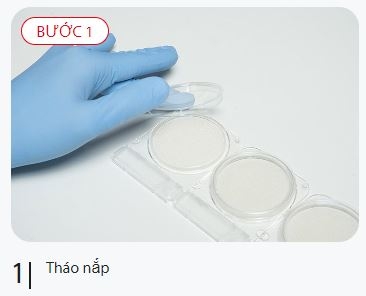
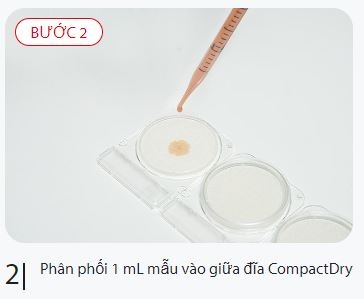
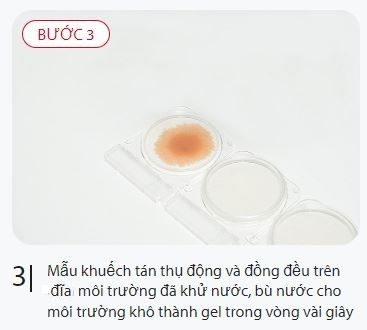
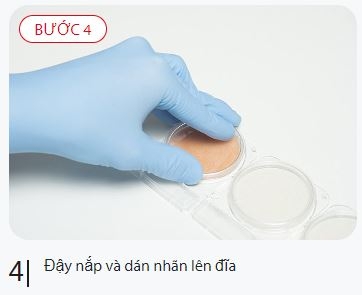
– Open the lid of the Compact Dry plate. Using a micropipette, take 1.0 ml of the diluted sample and place it in the centre of the Compact Dry plate. Close the lid.
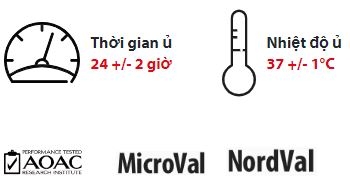
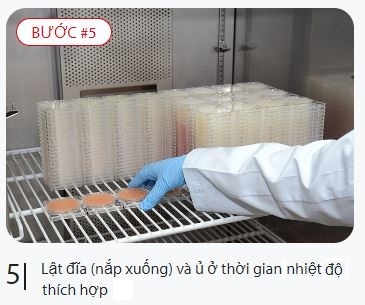
– Invert and incubate the Compact Dry plate under the specific incubation conditions (per AOAC International: 35 ± 2°C for 24 ± 2 hours; per Microval: 37 ± 1°C for 24 hours; and NordVal: 37 ± 1°C for 24 ± 2 hours)
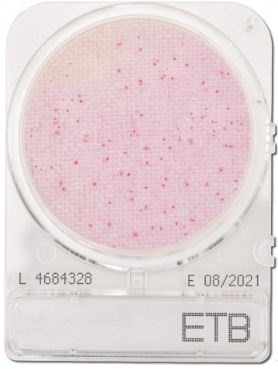
- Choose plates with 10-150 colonies.
- Colony morphology: red/red-purple colonies
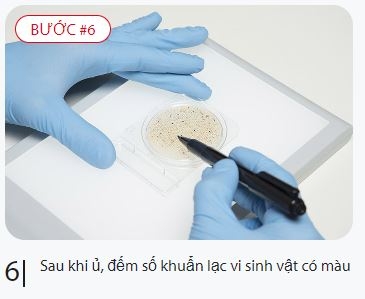
- Although some bacteria that are not Enterobacteriaceae may also grow and form white and/or yellow colonies on this plate, only red/red-purple colonies should be counted.
- Some Enterobacteriaceae may grow rapidly and alkalise the medium. As a result, red/red-purple colonies may lose their colour and form yellow colonies. If necessary, the plates can be counted at 18 hours.
- Colonies of some Enterobacteriaceae can be diffuse. In that case, count the dark spot at the centre of each diffuse colony.
 FeaturedShimadzuCompact Dry Staphylococcus Aureus plates | Compact Dry X-SA Staphylococcus Aureus | Shimadzu
Code: 54057 · +1 order codes
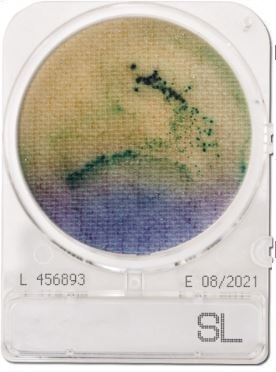 FeaturedShimadzuCompact Dry Salmonella plate | Compact Dry SL Salmonella | Shimadzu
Code: 54058 · +1 order codes
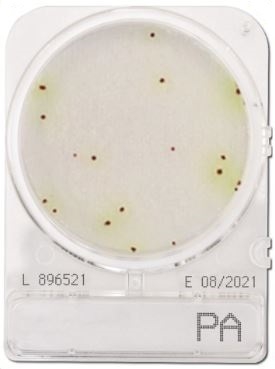 FeaturedShimadzuCompact Dry Pseudomonas Aeruginosa plate | Compact Dry Pseudomonas Aeruginosa | Shimadzu
Code: 54062 · +1 order codes
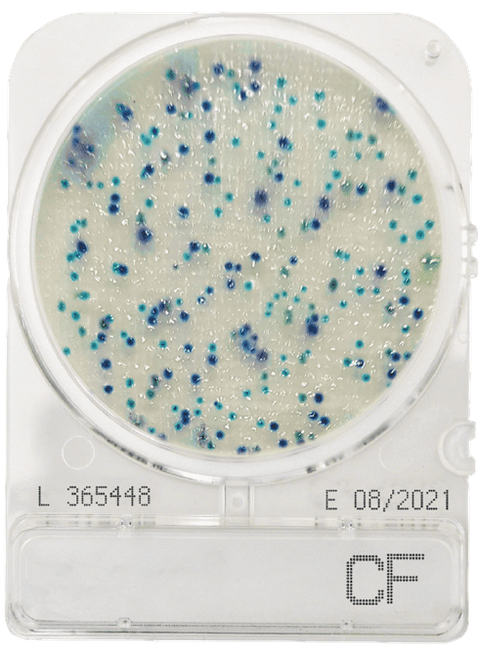 ShimadzuCompact Dry CF Coliform plates | Compact Dry CF Coliform | Shimadzu
Code: 54053 · +1 order codes