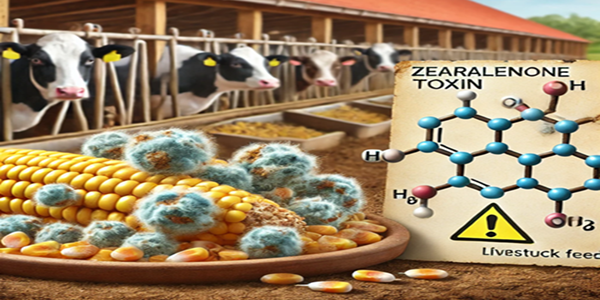
- Fusarium fungi typically grow on cereals such as wheat, corn, barley, oats and cereal-derived products under humid conditions and moderate temperatures.
- Zearalenone has no distinctive smell or color, yet it can seriously affect human and animal health by causing endocrine disruption.
1. Chemical properties and mechanism of action
1.1. Chemical properties
- Chemical formula: C18H22O5
- Molecular weight: 318.37 g/mol
- Melting point: 164–165 °C
- Zearalenone is a stable compound that withstands high temperatures during food processing. This makes removing the toxin by heat difficult.
1.2. Mechanism of action
- Zearalenone is an estrogen-like compound (an estrogenic mycotoxin). Once in the body, ZEA competes with endogenous estrogen hormones to bind to estrogen receptors, causing hormonal imbalance. This leads to reproductive disorders, abnormal growth and other health problems.
2. Harms of zearalenone toxin
2.1. For animals
- Cattle and poultry: reduced fertility, leading to miscarriage or premature birth, udder swelling, reproductive cycle disorders and reduced productivity.
- Pigs: Pigs are the species most sensitive to zearalenone and are easily poisoned through feed. Common signs are vaginitis, uterine enlargement and increased vaginal discharge.
2.2. For humans
- Endocrine effects: early puberty in children, effects on women's reproductive systems, causing menstrual disorders or infertility.
- Long-term effects: prolonged exposure to zearalenone can increase the risk of breast cancer, ovarian cancer and other hormone-related diseases.
2.3. Contamination levels in food
- Zearalenone is often detected in cereals, bread, beer and corn-based processed foods. The toxin can also remain in milk, meat and other animal products from animals fed mold-contaminated feed.
3. Regulatory limits for zearalenone in food
Many countries have set safety limits to control the amount of zearalenone in food:
- European Union (EU)
+ Animal feed: 100–500 µg/kg (depending on the animal).
+ Cereals and cereal products: 50–350 µg/kg.
- Codex Alimentarius: a maximum limit of 100 µg/kg in cereals used as food. Vietnam currently applies a zearalenone control standard equivalent to international recommendations.
4. Methods for detecting zearalenone toxin
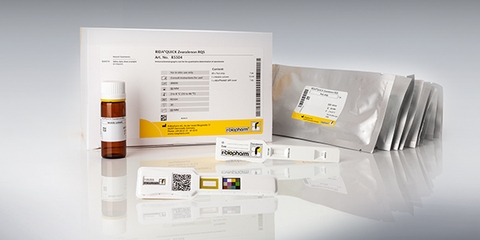
4.1. Qualitative method with the zearalenone rapid test strip
- Principle: usually based on immunochromatography technology (lateral flow immunoassay).
* Advantages:
- Easy to use, requiring no highly specialized technicians.
- Fast testing time, from 5 to 15 minutes.
* Disadvantages:
- Sensitivity and accuracy not as high as more complex analytical methods.
- Difficult to quantify the toxin level precisely.
Refer to the zearalenone rapid test kit here.

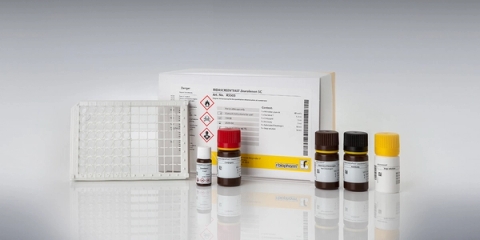
4.2. ELISA (Enzyme-Linked Immunosorbent Assay)
- Principle: uses enzyme-linked specific antibodies to detect and quantify zearalenone.
* Advantages:
- High sensitivity, capable of detecting zearalenone at low levels.
- Reasonably good quantification capability.
* Disadvantages:
- Requires special equipment and chemicals.
- More complex technique than rapid test strips.
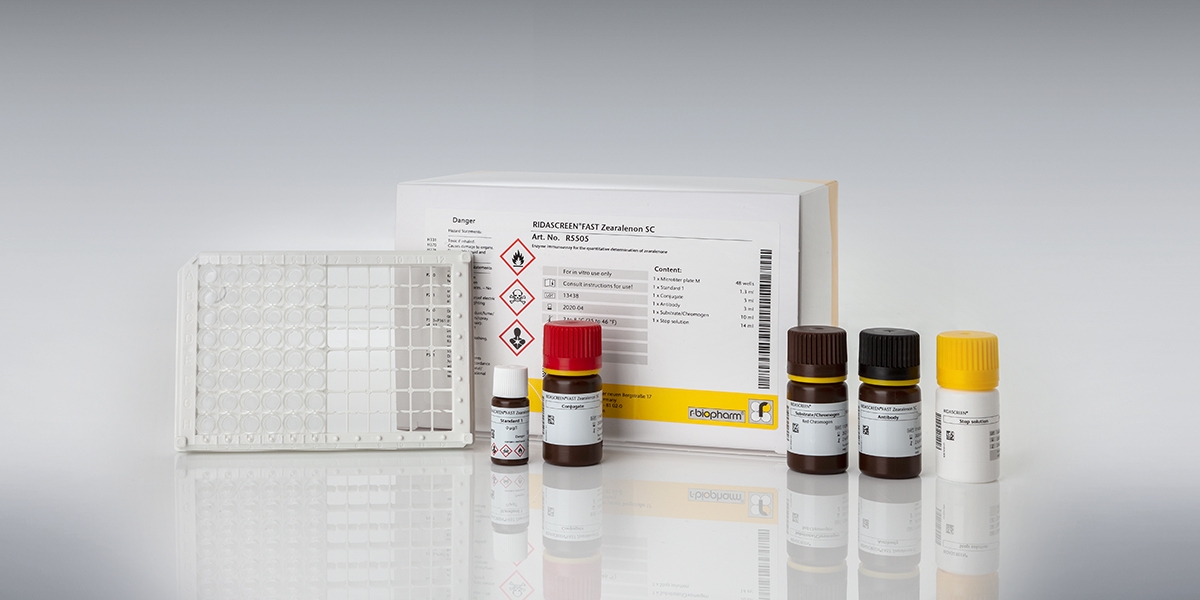
Refer to the ELISA zearalenone test kit here.
4.3. Chromatography methods
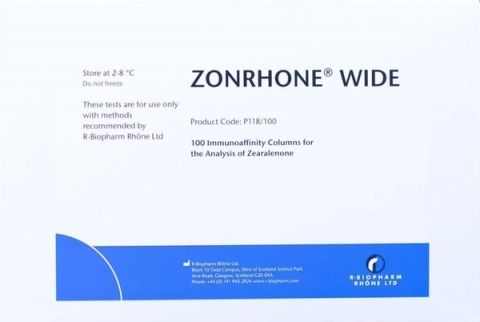
4.3.1. HPLC (High-Performance Liquid Chromatography)
- Principle: separates sample components based on the physicochemical interaction between the sample and the stationary phase in the chromatography column.
* Advantages:
- High accuracy and sensitivity.
- Zearalenone can be quantified clearly.
* Disadvantages:
- Requires expensive equipment.
- Sample preparation and analysis take considerable time.
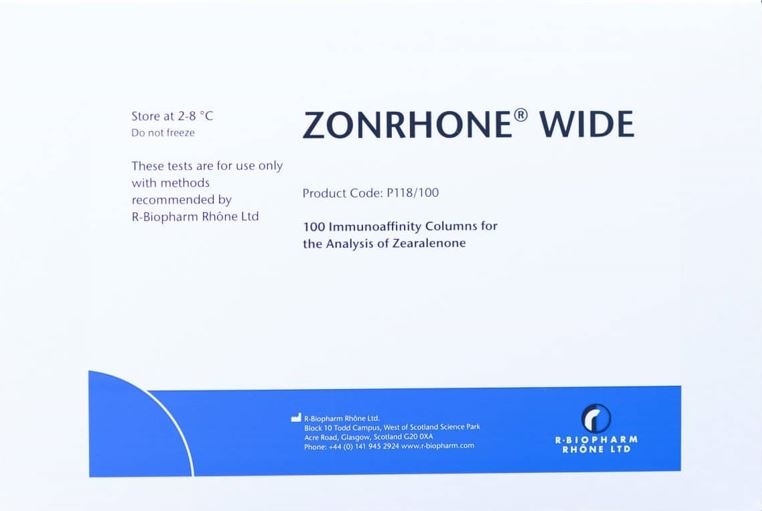
Refer to the HPLC zearalenone immunoaffinity column product here.
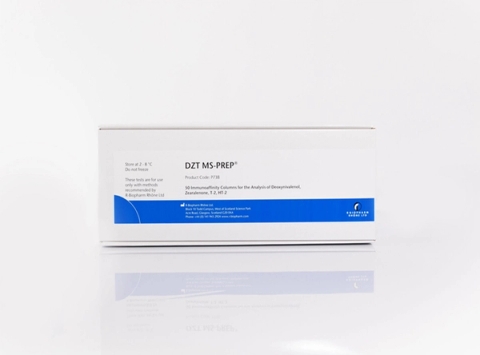
4.3.2. LC-MS/MS (Liquid Chromatography-Tandem Mass Spectrometry)
- Principle: combines liquid chromatography with mass spectrometry to analyze and quantify substances, even at trace levels.
* Advantages:
- The highest sensitivity and accuracy among the methods.
- Can detect many different toxins at the same time, not only zearalenone.
* Disadvantages:
- Requires modern equipment and complex operation.
- High analysis cost.
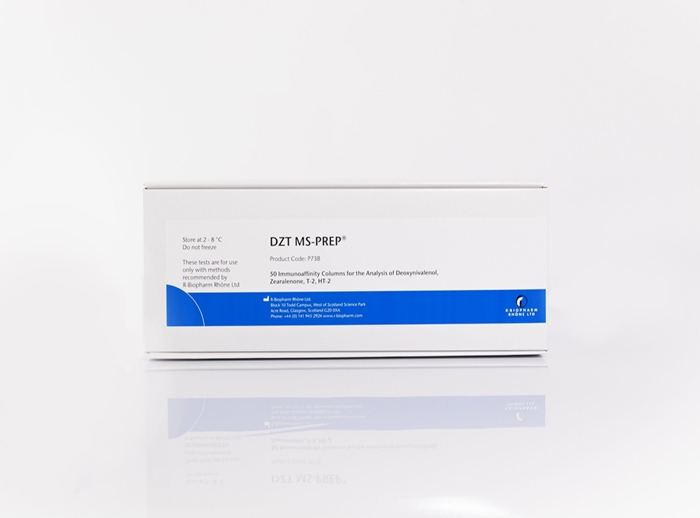
Refer to the column that simultaneously analyzes DON, zearalenone and T-2/HT-2 by LC-MS/MS here.
4.4. Mass spectrometry method GC-MS (Gas Chromatography-Mass Spectrometry)
- Used for qualitative and quantitative determination of zearalenone after extraction and derivatization.
- High accuracy but requires complex techniques.
4.5. Electrochemical Biosensor method (Biosensors)
- Uses biosensors specially designed to detect ZEA.
- High sensitivity and can be optimized for field use.
- Advantages: fast analysis, potential for developing mobile tools.
- Disadvantages: accuracy may be lower than traditional methods.
5. Choosing the right method
- Rapid testing: suitable when zearalenone must be detected quickly in large sample batches.
- ELISA: suitable for semi-quantitative laboratory testing.
- HPLC or LC-MS/MS: suitable for detailed testing and result confirmation.
6. Practical applications
- Food testing: cereals, bread, beer and cereal-derived products.
- Feed testing: assessing the risk of zearalenone contamination in cattle and poultry feed products.
- Scientific research: determining the long-term effects of ZEA in the food chain.
The choice of method depends on the testing goal, the budget, and how accurate the results need to be. Combining rapid screening methods with in-depth analysis is an effective approach for ensuring the safety of food and animal feed.
7. Prevention and control measures for zearalenone toxin
7.1. In agriculture
- Harvest at the right time to prevent mold growth.
- Store cereals in dry, well-ventilated conditions and reduce moisture below 14%.
- Use crop varieties resistant to Fusarium fungi.
7.2. In food processing and storage
- Heat treatment, but it must be combined with other methods to reduce the toxin.
- Apply toxin adsorbents (mycotoxin binders) in animal feed to reduce zearalenone absorption into livestock bodies.
- Periodically test products using modern analytical methods.
Zearalenone is a potential danger to human and animal health. Controlling this toxin depends not only on preventive measures in agriculture but also requires strict management from production, processing to food consumption. By combining detection, treatment and monitoring methods, we can minimize the risk of poisoning from ZEA and protect public health.