
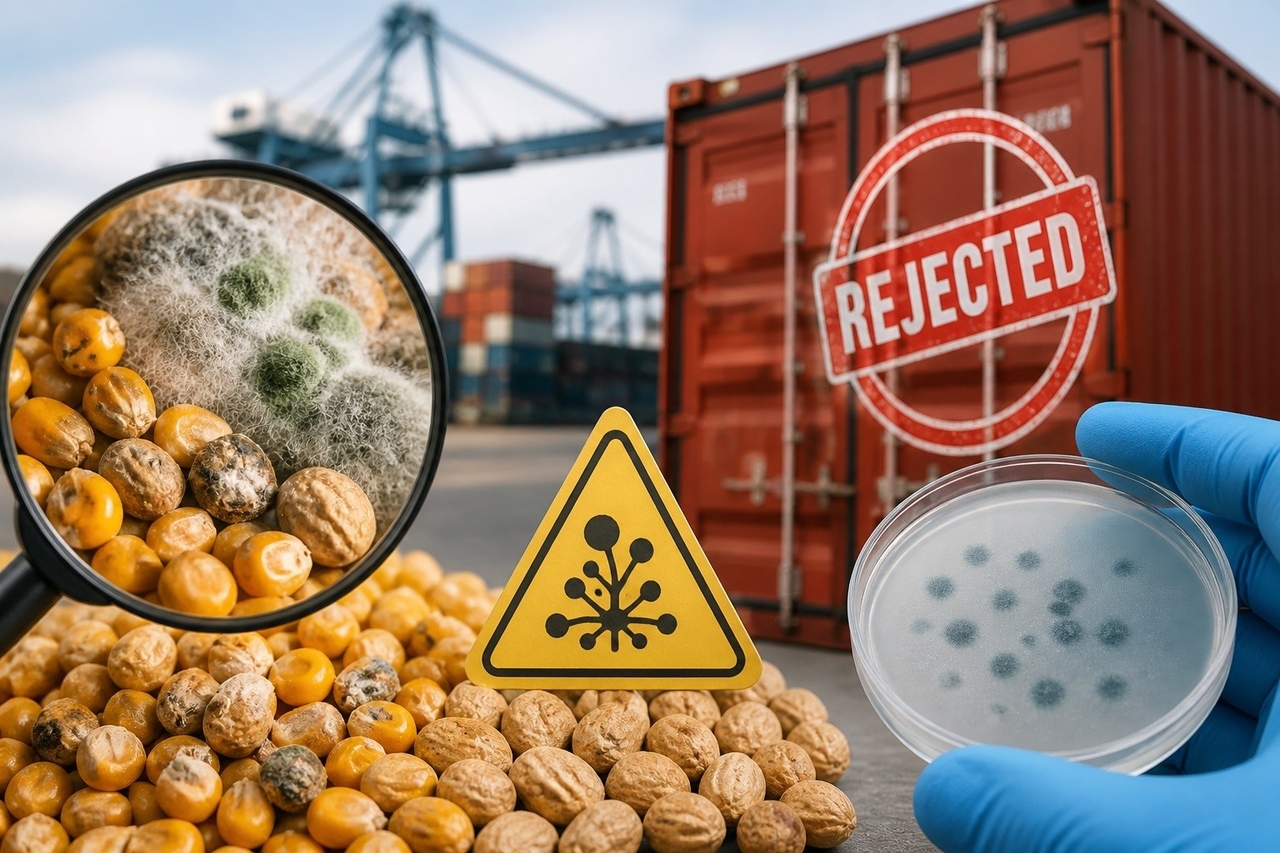
The common toxins include:
- Aflatoxin
- Ochratoxin A
- Zearalenone
- DON (Deoxynivalenol)
- Fumonisin
- T-2/ HT-2 toxin
They can cause cancer, liver damage, and immune suppression, so markets such as the EU, the USA, and Japan control them extremely strictly.

Why are export shipments rejected because of mycotoxins?
1. Exceeding international regulatory thresholds
- Every market sets maximum limits (MRL) for each mycotoxin. For example:
- EU: extremely low limits for Aflatoxin in grains and foods
- USA: strict control in animal feed and food
👉 Exceeding the threshold alone means the consignment can:
- Be denied import
- Be destroyed on the spot
- Or be sent back to the exporting country
2. Poor control of incoming materials
Many businesses run into problems right at this stage:
- Purchased materials are not checked carefully
- Materials were already contaminated with fungi beforehand
- No traceability system
in place
👉 This is the most common cause of rejected shipments.
3. Sub-standard storage conditions
Mycotoxins thrive when:
- Humidity is high
- Temperature is uncontrolled
- Warehouses lack ventilation
* Examples:- Maize and peanuts stored damp → easily contaminated with
Aflatoxin- Coffee stored incorrectly → easily contaminated with
Ochratoxin A
4. No testing before export
Many businesses:
- Do not test mycotoxins before export
- Or test with methods that lack sufficient accuracy
👉 When checks happen at the importing port, a failing result means the shipment is returned immediately.
5. Not keeping up with market regulations
International standards change constantly:- The EU frequently
tightens mycotoxin thresholds
- Some markets introduce new parameters
👉 If a business does not keep up, it can violate rules without knowing.
The consequences when a shipment is rejected
- Logistics costs (two-way shipping)
- Loss of credibility with international partners- Risk of a temporary export ban
- Higher control and testing costs afterwards
Solutions for reducing mycotoxin risk in exports
1. Control incoming materials
- Purchase only from compliant suppliers
- Test quickly as soon as goods arrive
👉 Use rapid mycotoxin tests for initial screening
2. Apply modern testing technology
Businesses should combine:
- Rapid tests (screening)
- ELISA
- HPLC / LC-MS/MS
👉 This ensures accuracy before exporting
3. Storage to standard
- Keep moisture below 13% (depending on the material)
- Ventilated warehouses with temperature control
- Use pallets, avoiding contact with the floor
4. Periodic checks during warehousing
Do not test just once — it is necessary to:
- Check on a schedule
- Track mycotoxin fluctuations
5. Work with a reputable solution provider
Businesses should use solutions from reputable brands such as R-Biopharm, offering:
- Rapid mycotoxin test kits
- Quantitative ELISA kits
- Testing solutions meeting international standards
See the test kits we supply here.