
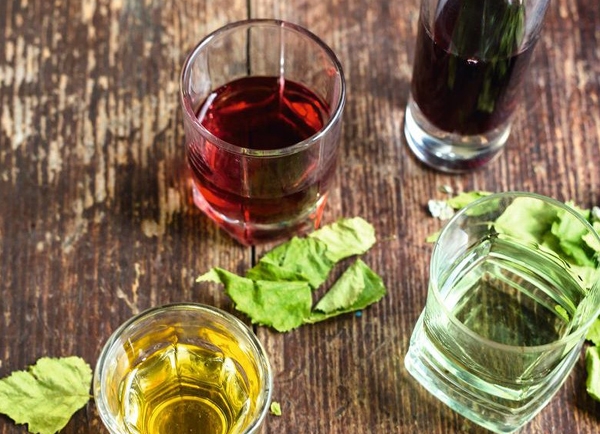
1. Alcoholic drinks
- Wine, beer, spirits: this is the group with the highest ethanol concentration (from a few percent to more than 40%).
- Cocktails, Sake: both contain ethanol because of fermentation or distillation.
2. Naturally fermented foods
- Bread: during baking, the yeast creates ethanol, although most of it evaporates some remains in small amounts.
- Drinking yogurt: because of lactic fermentation and sometimes added yeast creating ethanol at a low level (0.1–2%).
- Pickled vegetables, kimchi: during the fermentation stage, ethanol can form in very small amounts.
- Lightly fermented fruit juice: for example apple, grape, or mango juice kept for a long time easily produces natural ethanol.
3. Spices, flavorings, and processed foods
- Vanilla extract: often contains ethanol because alcohol is used to extract the flavor from vanilla pods.
- Soy sauce, miso, rice vinegar: can contain ethanol in small amounts because of the fermentation process.
- Sauces, liquid spices: some use ethanol as a solvent to dissolve flavorings.
- Foods for children or non-alcoholic drinks (but which can still contain traces of ethanol): some kinds of bottled juice or fermented non-alcoholic drinks (alcohol-free beer, kombucha) can still contain very low amounts of ethanol (below 0.5%).
- During storage or processing, some foods can produce ethanol at concentrations depending on their ingredients.
4. Why determine ethanol in food?
- Ensuring consumer safety: Ethanol at high concentrations can affect health, especially for children, pregnant women, or those sensitive to alcohol.
- Complying with legal regulations: many countries have strict rules on ethanol limits in food, especially for foods that are not alcoholic drinks. The control helps businesses avoid violating these rules.
- Supporting research and product development: determining the ethanol content helps manufacturers improve fermentation technology and control product quality.
- Transparent information for consumers: accurate labeling of the ethanol content reassures consumers choosing the product that suits their needs.
5. Methods for determining ethanol in food
Some of the common current methods are:
- Gas chromatography (GC-FID or GC-MS): high accuracy, often used in official testing.
- Enzymatic test kit: fast, simple, suitable for food laboratories.
- Infrared spectroscopy (FTIR): applied in rapid inline production control.
6. The Enzytec™ Liquid Ethanol E8340 ethanol-in-food test kit – a rapid analytical solution
6.1. Product introduction
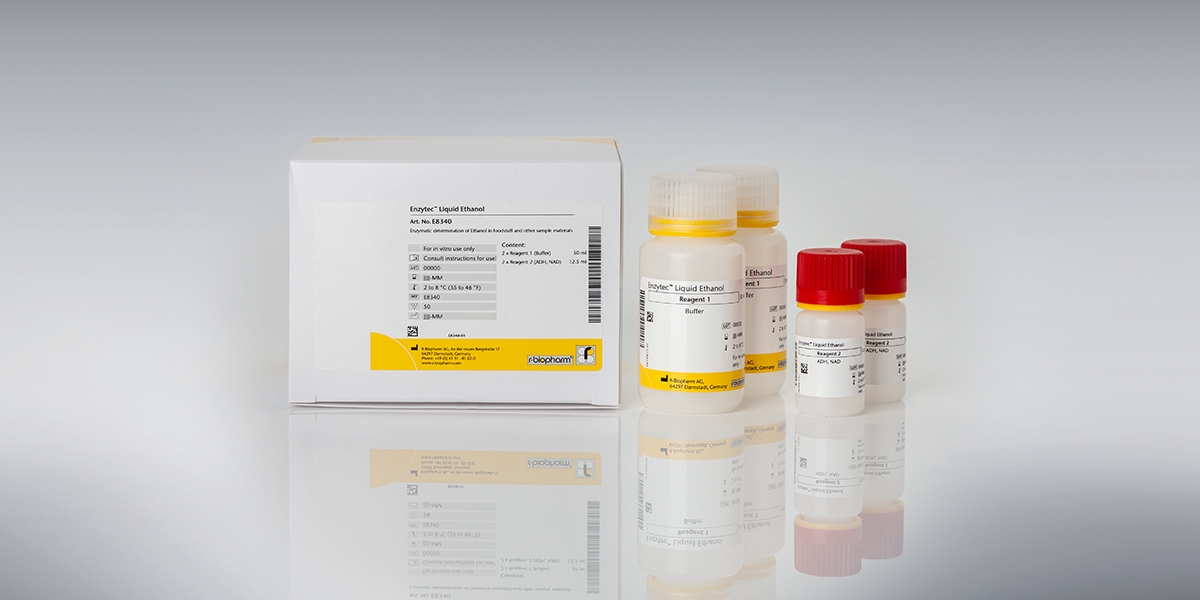
- Enzytec™ Liquid Ethanol E8340 is an enzymatic test kit developed by R-Biopharm (Germany), specially designed to quantify ethanol in food and drinks. The kit uses a modern enzymatic principle, giving high accuracy and suiting many kinds of samples.
- Product name: Enzytec™ Liquid Ethanol E8340.
- Manufacturer: R-Biopharm (Germany).
- Method: Enzymatic (absorbance spectroscopy at 340 nm).
- Application: determining ethanol in food and drinks.
6.2. The working principle
- Based on the enzymatic reaction: Ethanol is oxidized by alcohol dehydrogenase (ADH) into acetaldehyde, while NAD⁺ is reduced to NADH.
- The formation of NADH is measured spectrophotometrically at a wavelength of 340 nm.
- The NADH concentration is proportional to the amount of ethanol in the sample → allowing accurate determination of the ethanol content.
6.3. Applications of Enzytec™ Liquid Ethanol E8340
- Measuring the ethanol content in wine, beer, cider, sake.
- Analyzing ethanol in fruit juice, fermented drinks, kombucha.
- Testing ethanol in yogurt, kefir, bread, pickled vegetables.
- Determining ethanol in flavorings and extracts (vanilla extract, soy sauce, vinegar, sauces).
- Suitable for research, product development, and quality control (QC) in the food & beverage industry.
6.4. Outstanding advantages
- Accurate & reliable: based on an enzymatic reaction internationally recognized.
- Easy to use: ready-to-use liquid solution form, no complicated dissolution needed.
- Saves time: gives rapid results, suitable for QC rooms and research.
- Diverse analyzed samples: can be applied to many kinds of food, from alcoholic drinks to fermented foods.
- Recommended by AOAC, OIV, and IFU for ethanol testing.
R-Biopharm's Enzytec™ Liquid Ethanol E8340 kit is the ideal analytical tool for laboratories working in the food and beverage industry.
Controlling ethanol in food is necessary to protect public health, meet legal requirements, and raise the reputation of the business.