
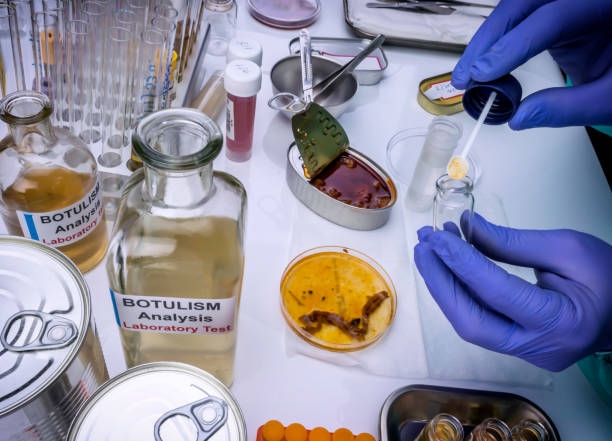
Botulinum toxin is particularly dangerous because it can occur in food without changing its taste, smell, color, or texture. Identifying and preventing botulinum poisoning in food is important to protect public health.
1. What is botulinum?
Clostridium botulinum is an anaerobic bacterium (living in an oxygen-free environment) capable of producing botulinum toxin. This toxin acts on the nervous system, causing muscle paralysis and potentially leading to death if not treated promptly. There are seven botulinum toxin types (from A to G), of which types A, B, E and sometimes F are associated with human food poisoning.
2. Which foods contain botulinum?
The bacterium Clostridium botulinum and its toxin can persist in many types of food if not properly processed and stored. Foods commonly contaminated with botulinum include:
2.1. Home-canned foods
- Canned vegetables (especially low-acid varieties such as green beans, corn, carrots, beets).
- Home-canned meats (pate, sausage, Spam).
- Canned fish and seafood.
2.2. Improperly fermented foods
- Manually fermented fish, meat, or seafood.
- Salted vegetables and pickles that do not reach the required acidity.
2.3. Foods stored in an anaerobic environment
- Foods sealed in nylon film or vacuum-packed.
- Foods stored in non-sterilized glass jars or plastic bags.
2.4. Honey and related products
Honey can contain bacterial spores of Clostridium botulinum, which are particularly dangerous for children under 1 year of age because their digestive system is not yet fully developed.
3. Symptoms of botulinum poisoning
Symptoms of botulinum poisoning usually appear between 6 hours and 10 days after consumption (usually 18-36 hours). Common symptoms include:
- Abdominal pain, fatigue, muscle weakness.
- Difficulty swallowing, difficulty speaking, dry mouth
- Muscle paralysis descending from top to bottom (starting in the facial area).
- Difficulty breathing, respiratory failure (severe cases can be fatal).

4. Reasons why botulinum persists in food
- Insufficient heating during processing: Clostridium botulinum and its spores are highly heat-resistant. Only 121°C for a sufficiently long time can destroy the spores.
- Anaerobic environment: The bacterium grows vigorously in an oxygen-free environment.
- Low acidity: Food with a pH above 4,6 is an ideal environment for the bacteria to grow.
- Improper storage: Food that is not frozen or kept at a suitable temperature.
5. Prevention of botulinum poisoning
To reduce the risk of botulinum poisoning, the following measures should be noted:
* Proper food preparation
- Heat canned food at 121°C for at least 20 minutes.
- Ensure fermented food reaches an acidity below 4,6 (pH test paper can be used to check pH).
* Safe food storage
- Store food at low temperature (below 4°C) to limit bacterial growth.
- Do not consume food that is swollen, leaking, or showing abnormal signs.
* Avoid giving honey to children under 1 year of age
* Check food before eating: do not use food with strange odors, that is moldy, or in damaged containers.
6. Handling botulinum poisoning
If botulinum poisoning is suspected, you should:
- Take the victim to the nearest medical facility immediately.
- Inform the doctor about the type of food consumed.
- Treat with antitoxin serum (botulinum antitoxin) if necessary.
Botulinum toxin is a hidden danger in food, especially in home-prepared food and food stored improperly. To protect health, food preparation and storage rules must be strictly followed, and awareness of this danger must be raised. Caution is the key to preventing the regrettable consequences of botulinum poisoning.
Become an informed consumer and learn how to protect your family from the danger of botulinum toxin!
We are currently offering a PCR-based Clostridium Botulinum test kit solution; customers can refer to this product at the following link:
https://food.r-biopharm.com/products/surefast-clostridium-botulinum-screening-plus-2/