
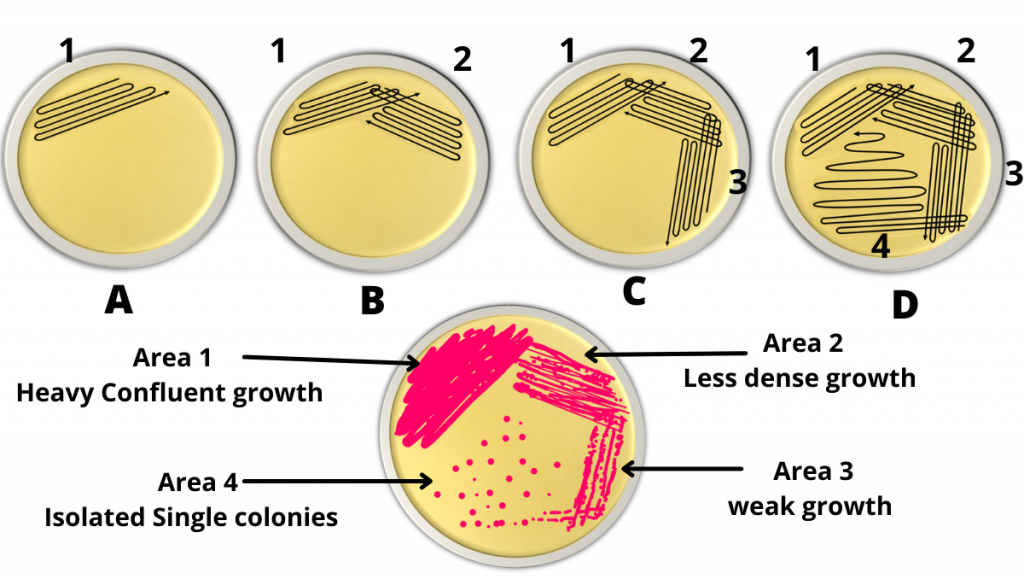
This method plays an important role in studying the properties, functions, and application potential of microorganisms.
1. What is microbial isolation?
– Microbial isolation is the process of separating an individual microbial strain out of its original environment or a mixed sample so it can be studied and applied.
– The result of isolation is a "pure" microbial sample that contains no other microbial species. These pure samples are the foundation for every later study of their metabolic, genetic, and pathogenic properties.
2. Methods for isolating microorganisms
The process of isolating microorganisms can be carried out through different steps, depending on the type of microorganism and the goal of the study.
2.1. Isolation by culture technique
This method relies on culturing microorganisms in artificial media to encourage the growth of the target strain and to restrict other kinds.
– Culturing on agar media: Commonly used to isolate bacteria and molds. The sample is spread over the surface of a solid agar medium and then incubated at a suitable temperature for the colonies to grow visibly.
– The dilution method: This method reduces the concentration of the sample by diluting it several times, then culturing it so the microorganisms form separate colonies that can be picked for a pure culture.
2.2. The membrane-filtration isolation method
This method uses a filter membrane with a small pore size to retain the microorganisms when a water or air sample is passed through, then the membrane is placed on culture media to grow exactly the retained organisms.
2.3. Isolating microorganisms by their special nutritional requirements
Some microorganisms have very special nutritional needs. A researcher can exploit this to design a selective medium containing only the substances that the target organism can use; the other organisms, unable to grow, are eliminated automatically.
3. Steps for isolating microorganisms
To isolate a microbial species successfully, the process can include the following basic steps.
Step 1: Prepare the sample
– Take the sample from an environmental source containing microorganisms, such as soil, water, air, or other biological samples (for example: pus, blood, or food).
Step 2: Culture the microorganisms
Choose a culture medium suitable for the type of microorganism to be isolated. For example, Gram-negative bacteria often grow well on media containing bile salts or crystal violet, which restrict Gram-positive bacteria.
Step 3: Isolate and purify
– Use a streaking or dilution technique to isolate separate colonies of the microorganism needed, and repeat until a completely pure strain is obtained.
Step 4: Check the purity of the microorganism
Use microscopy observation techniques or run biochemical tests to check whether the culture sample contains only one type of microorganism.
4. Applications of microbial isolation
Microbial isolation is a foundational technique in biological and medical research. Its applications span many fields:
– Medicine: Isolating disease-causing bacteria from biological samples helps identify the source of the disease and develop suitable antibiotic treatments.
– Agriculture: Nitrogen-fixing bacteria can be isolated and used in producing biofertilizers, which improves soil fertility without synthetic chemicals.
– The food industry: Isolating useful microorganisms, such as lactic acid bacteria, helps produce products like yogurt and cheese.
- Environment: Isolating microorganisms that can break down waste and polluting compounds allows applications in biological wastewater treatment.
5. Challenges in microbial isolation
Microbial isolation also faces several difficulties, especially when isolating microorganisms from a complex environment or a sample with many species.
– Growth ability: Some microorganisms have growth conditions that are especially hard to meet, or grow very slowly, making them difficult to observe and isolate.
– Cross-contamination: Infection from the environment or from other microorganisms in the sample can affect the results and lead to wrong conclusions.
– Difficulty with the selective medium: Setting up a selective medium to isolate fastidious microorganisms requires deep knowledge of their biological properties and nutritional requirements.
Microbial isolation is an important and indispensable step in microbiology and related fields. Mastering the isolation methods and steps helps researchers obtain pure strains, the foundation for every later application in medicine, agriculture, food, and the environment.