
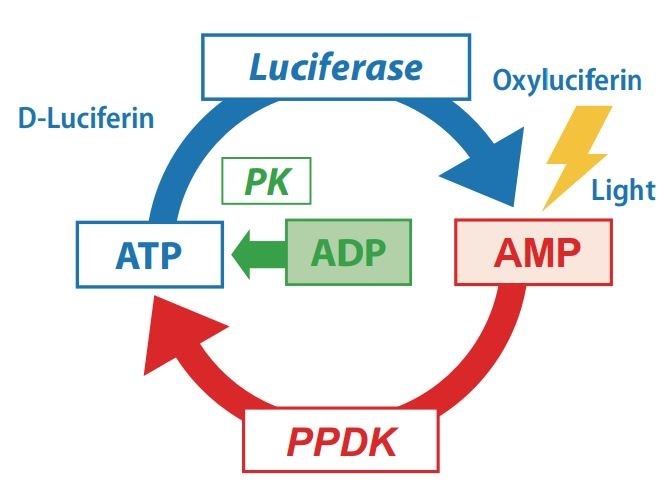
1. ATP energy and the role of ATP in microbiological testing
- ATP energy is a molecule used as an energy source in every living organism. It also exists in various organic matter, as well as in microorganisms such as bacteria, foods (for example meat, fish, and vegetables), and body fluids (for example human sweat, saliva, and so on). The presence of ATP means living cells are present. Detecting a large amount of ATP indicates the presence of food residue, usually from ineffective cleaning. It can lead to an increased risk of bacterial growth in food production facilities. The risks can include infectious agents in medical facilities, and dirt remaining on surfaces due to ineffective cleaning.
- ADP (adenosine diphosphate) and AMP (adenosine monophosphate) are molecules converted from ATP energy during processing such as heat treatment and fermentation. ATP, ADP, and AMP are present in bacteria and food residues.
- It is also known that a relatively large amount of ADP and AMP is contained in the cells of living foods such as meat, fish, and dairy products, and in processed foods such as smoked meats and sausages.
- Kikkoman developed an assay for measuring ATP (called Kikkoman A3) using soy-sauce brewing technology. Kikkoman's ATP method not only detects and measures ATP, it also measures both ADP and AMP, which other methods and devices had overlooked.
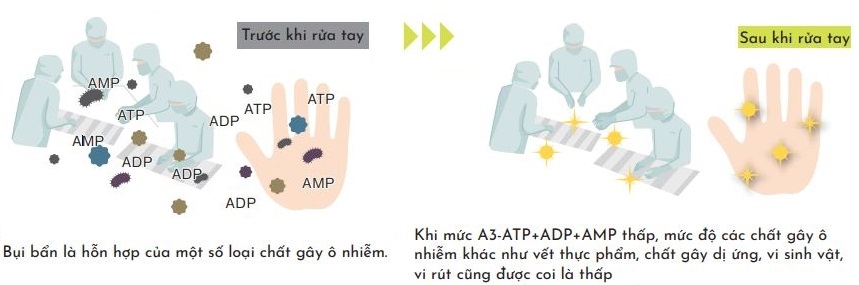
- Kikkoman improved the conventional ATP test with Kikkoman A3. This method uses advanced chemistry to detect the three forms ATP+ADP+AMP at once, improving sensitivity and detection.
2. Advantages of the ATP measurement method
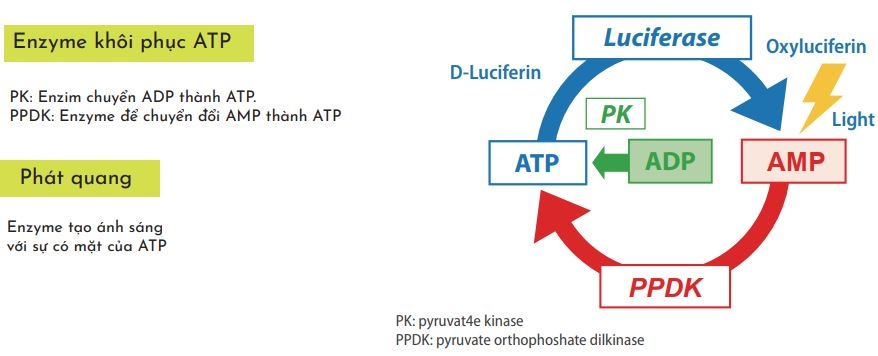
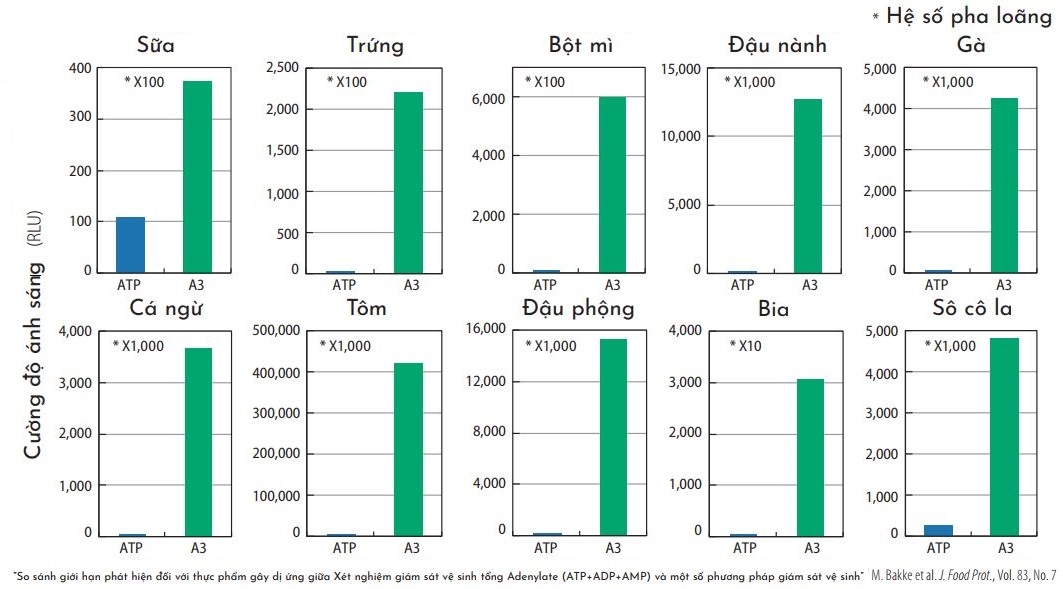
- Measuring ATP + ADP + AMP shows superior sensitivity and stable detection of organic residues left by food, as well as allergens, compared with conventional ATP testing. (The ATP + ADP + AMP hygiene monitoring system, the A3 test, was originally named by Kikkoman).
- Food residues with high levels of ADP and AMP, such as meat, fish, and processed foods, are detected with higher sensitivity by Kikkoman A3.
- Hygiene procedures are critical to food safety. Kikkoman A3 prevents ineffective cleaning by monitoring contamination of the working environment. Many food processing plants use Kikkoman A3 as part of their sanitation programs to verify how effective their cleaning procedures are.
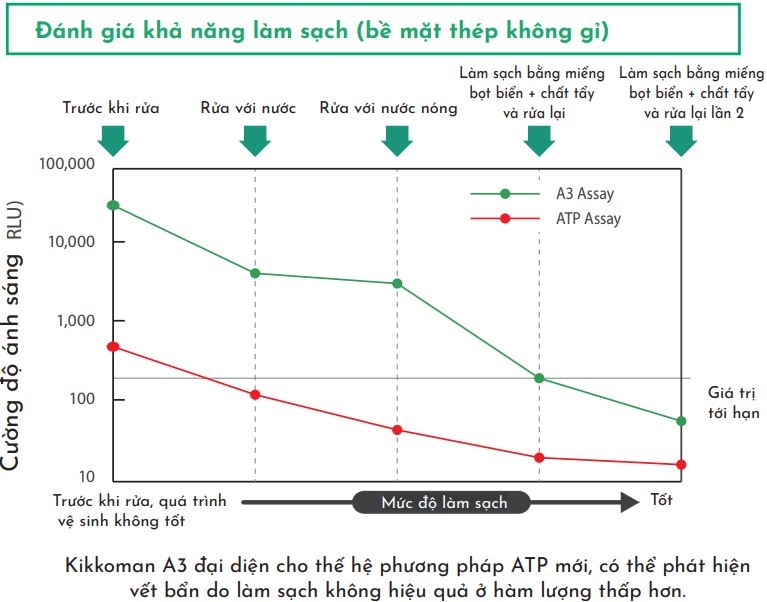
Example of evaluating cleanliness with the ATP method (stainless steel surface)
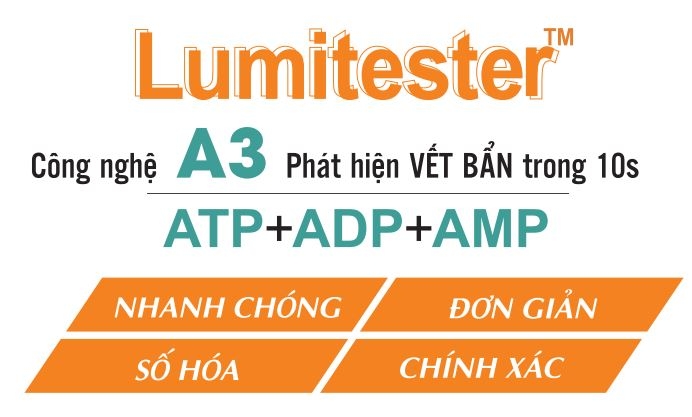
3. Daily hygiene and microbiological monitoring for easier hygiene management with the ATP Lumitester Smart
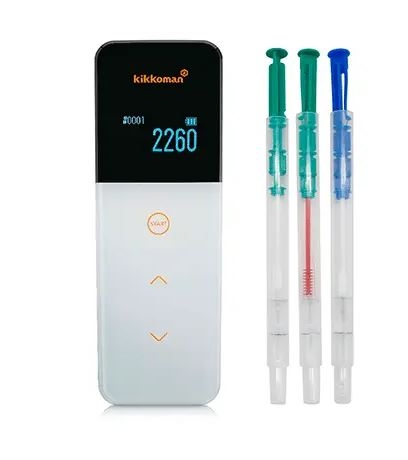
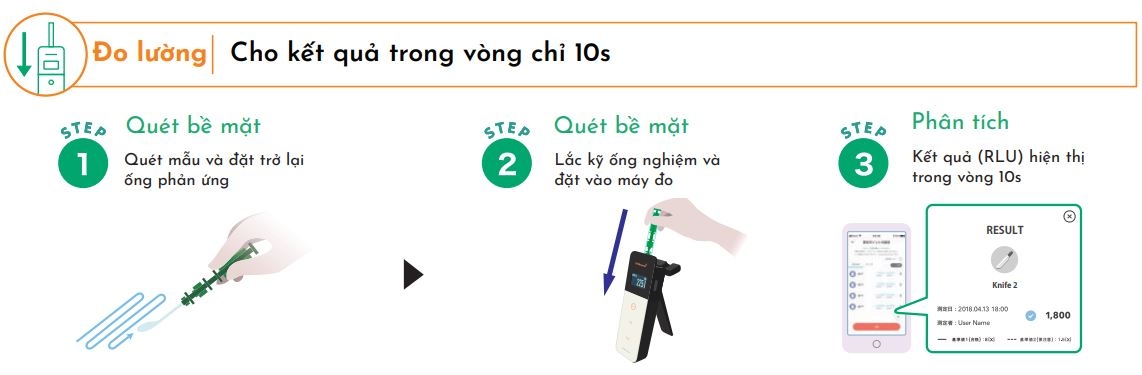
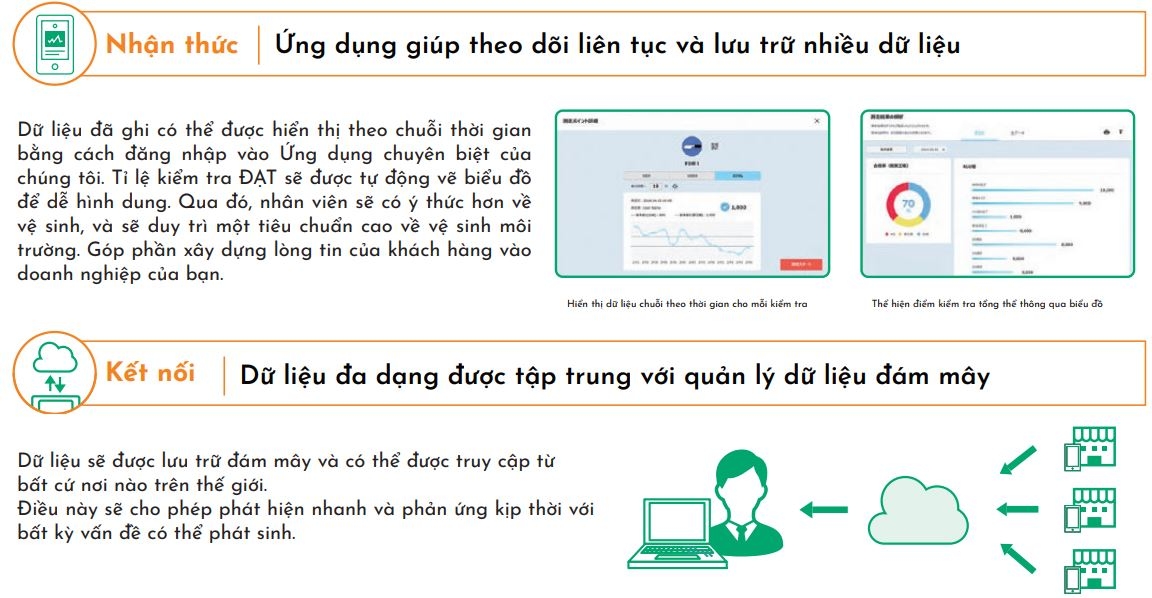
For more detailed information about the Lumitester Smart device and ATP swabs, please visit the following link:
https://pacificlab.vn/vi/shops/group/que-atp-kiem-tra-ve-sinh-be-mat/