
What Is a Culture Plate? To understand this concept better. First, let us look at the main components of a culture plate
nutrients
1. Components of a culture plate (bacteria culture plate)
To grow, bacteria need at least the following nutrients: water, a carbon source, a nitrogen source and some mineral salts
1. 1 Water
Water plays a fundamental role in dissolving nutrients, transporting them and ensuring hydrolysis reactions. Some bacteria need free water for their growth. If evaporation occurs during agar incubation, this water can be lost, leading to smaller colonies and inhibition of bacterial growth.
1.2 Carbon source
Carbon is the most abundant structural element in bacteria. Bacteria need to build carbon molecules, such as lipids, carbohydrates, proteins and nucleic acids, to stay alive. Bacteria can use inorganic carbon sources, such as carbon dioxide, or organic sources such as sugars and alcohols.
1.3 Nitrogen source
For the nitrogen source, it can be found in a large number of compounds used in the composition of culture media. It is found in organic form: corresponding to protein hydrolysates, especially peptone, proteose-peptone. Or in inorganic form such as nitrate. Nitrogen allows bacteria to synthesise their proteins.
1.4 Other mineral salts
Finally, among the common mineral salts, phosphate, sulfate, magnesium or calcium are usually found.
1.5. Energy source
There are two types of bacteria,
Phototrophic bacteria, such as Thiocapsa roseopersicina. They use light as an energy source by converting it into a proton electrochemical gradient.
Chemotrophic bacteria, which use the energy of mineral or organic compound oxidation as an energy source.
for example Listeria monocytogenes.
Therefore, by analysing the requirements of each specific microorganism, manufacturers and technicians will prepare culture plates suitable for cultivation or to buy ready-to-use culture plates for each specific parameter.
2. Classification of culture plates
Culture media can be classified in three ways: based on consistency, nutritional composition and application
References:
https://conductscience.com/culture-media/
2.1 Classification of culture media based on consistency
Solid media:
In these media, agar is a long, unbranched polysaccharide chain added at a concentration of 1,5-2,0%. Most commonly, 1,3% agar is used to prepare solid media in the laboratory. Media containing agar solidify at 37 ºC. Sometimes, instead of agar, other inert solidifying agents are used, such as gellan gum.
Solid media are used to grow microorganisms in their full physical form, to prepare pure bacterial cultures or to isolate bacteria for the study of colony characteristics. Bacterial growth on solid media takes various shapes such as slimy, round, wrinkled, rough, filamentous, irregular and punctate. The medium is not hydrolysed by microorganisms and contains no growth inhibitors. Examples of solid media are blood agar, nutrient agar, McConkey agar and chocolate agar.
Semi-solid media
This medium has an agar concentration of 0,2-0,5% . It is mainly used to study the motility of microorganisms, to distinguish between motile and non-motile bacterial strains (using U-tubes and Craigie tubes) and to culture microaerophilic bacteria – bacteria on this medium appear as a dense streak.
Examples of semi-solid media are: Hugh and Leifson oxidative fermentation medium, Stuart and Amies medium, and Mannitol motility medium.
Liquid media:
These media do not contain solidifying agents such as agar or gelatin, and extensive growth of bacterial colonies can be observed in the medium. Liquid media allow bacterial strains to grow evenly and turbidly when incubated at 37ºC for 24 hours. The medium is used for vigorous growth of microorganisms and for fermentation studies.
2.2 Classification by nutritional composition
Simple media:
These are general-purpose media that support the growth of non-"fastidious" bacteria. They are mainly used to isolate microorganisms. For example peptone and nutrient agar.
Complex media:
These are media containing nutrients added in undetermined amounts to create a specific characteristic of the microbial strain. For example tryptic soy broth, blood agar...
Synthetic media:
This is a chemically defined medium produced from pure chemicals. The medium has known concentrations of components, such as sugars (glucose or glycerol) and a nitrogen source (for example ammonium salts or nitrate in the form of inorganic nitrogen). It is often used in scientific research and in selective microbiological testing...
2.3 Classification of culture media based on application/chemical composition
Basal media:
These are simple, routinely used media with carbon and nitrogen sources that promote the growth of many microorganisms, and are non-selective media.
Basal media are suitable for growing Staphylococcus and Enterobacteriaceae.
They are commonly used to isolate microorganisms in the laboratory or in subculture procedures. For example , nutrient agar and peptone water.
Enriched media:
This medium is prepared by adding supplements such as blood, serum or egg yolk to basal medium. It is used to grow fastidious microorganisms because they need additional nutrients and growth-promoting substances. For example chocolate agar, blood agar....
Selective media:
These are selective media: they allow the growth of some bacteria while inhibiting the growth of others. This medium is used to isolate microorganisms in the laboratory. Selective bacterial growth is determined by adding substances such as antibiotics, dyes, bile salts or by adjusting the pH.
Find out more about the components in scientific literature:
Bacterial culture through selective and non-selective conditions: the evolution of culture media in clinical microbiology
Today, many manufacturers have improved on replacing traditional culture plates with ready-to-use culture plates that offer many advantages. Join PacificLAB to find out more about this ready-to-use culture plate range
3. Ready-to-use culture plates
A ready-to-use culture plate is a paper or plastic plate precoated with a layer of selective medium to detect 1 species or 1 family of microorganisms.
Advantages of ready-to-use culture plates
- Reduced preparation time
- Saves chemical preparation costs, chứng
- Biochemical characteristics can be confirmed
- Reliable results within 1 – 4 hours
- Convenient, no autoclaving required
- Saves storage costs
Some culture plates available in Vietnam
1. Compactdry plates
Origin: Japan
Storage: Room temperature
Design: compact lightweight plastic blister with a lid
Cost: Good
Accuracy: Good
Certification: AOAC, Microval
Some parameters:
| Product | Analysis parameter | Incubation time | Incubation temperature | Certification (Ref.No.) | ||
| MicroVal | NordVal | AOAC-RI | ||||
| COMPACT DRY TC | Total aerobic plate count | 48 ± 3h | AOAC: 35 ± 2ºC MicroVal/NordVal: 30 ± 2ºC | 2007LR01 | 033 | 010401 |
| COMPACT DRY EC | Coliform E.Coli | 24 ± 2h | AOAC: 35 ± 2ºC MicroVal/NordVal: 37 ± 1ºC | MV0806-004LR | 036 | 110402 |
| COMPACT DRY CF | Coliforms | 24 ± 2h | AOAC: 35 ± 2ºC MicroVal/NordVal: 37 ± 1ºC | MV0806-003LR | 035 | 110401 |
| COMPACT DRY YM | Yeast Mold | 3 – 7 days | AOAC/MicroVal/NordVal: 25 ± 1ºC | RQA2008LR10 | 043 | 100401 |
| COMPACT DRY YMR | Yeast and Mold Rapid | 2 – 3 days | AOAC: 25 ± 1ºC MicroVal/NordVal: 25 ± 1ºC | 2016LR61 | 050 | 092002 |
| COMPACT DRY X-SA | Staphylococcus Aureus | 24 ± 2h | AOAC: 35 ± 2ºC MicroVal/NordVal: 37 ± 1ºC | 2008LR14 | 042 | 081001 |
| COMPACT DRY PA | Pseudomonas Aeruginosa | 48 ± 3h | MicroVal: 35 ± 1 ° C | 2017LR66 | = | - |
| COMPACT DRY ETB | Enterobacteriaceae | 24 – 48h ± 2 | AOAC: 35 ± 1ºC MicroVal/NordVal: 37 ± 1ºC | 2008LR02 | 034 | 012001 |
| COMPACT DRY X-BC (BC) | Bacillus cereus | 24 – 48h ± 2 | MicroVal/NordVal: 30 ± 1ºC | 2019LR87 | 045 | _ |
| COMPACT DRY ETC | Enterococcus | 24 – 48h ± 2 | MicroVal/NordVal: 30 ± 1ºC | 2014LR48 | - | 111902 |
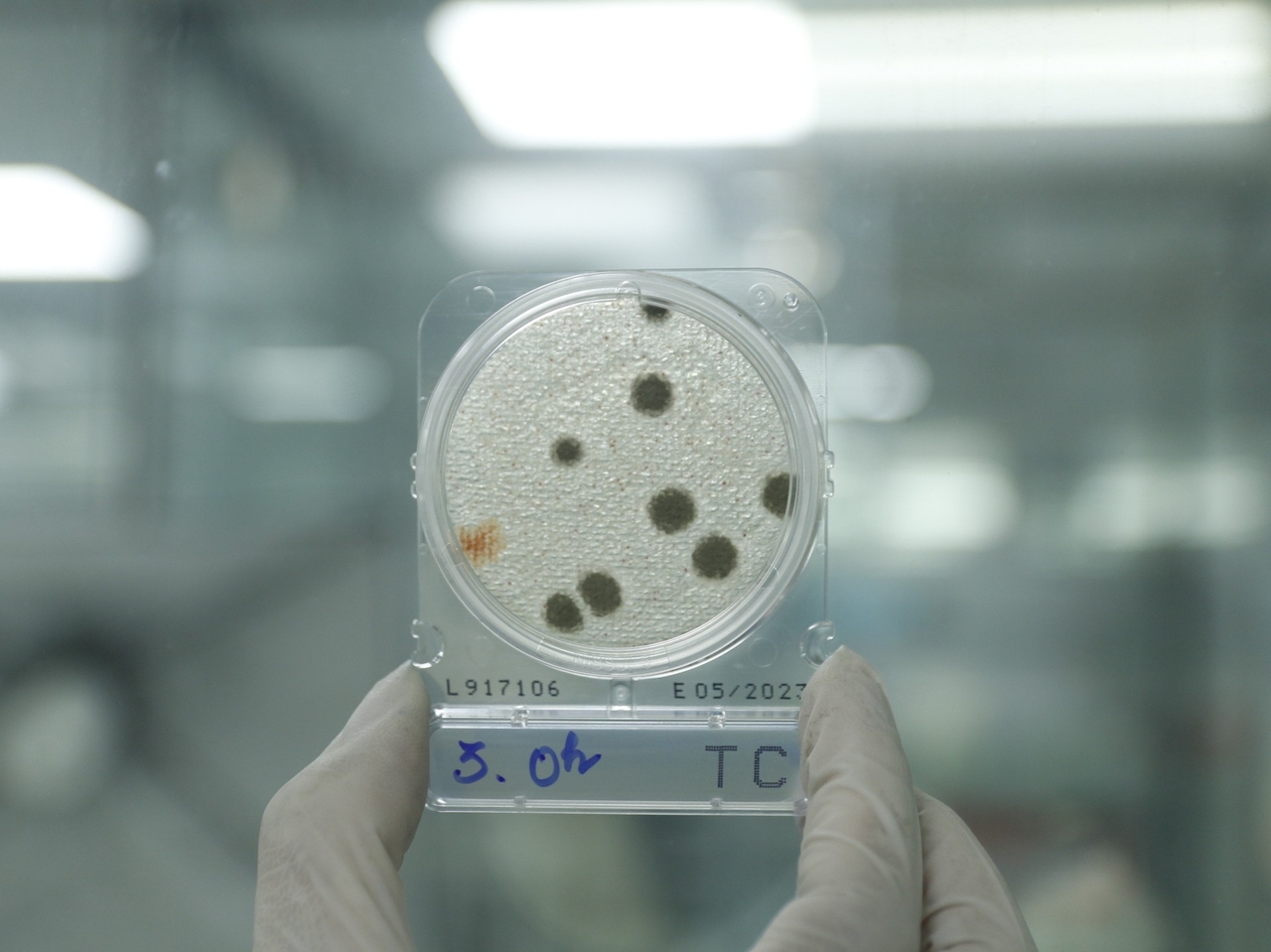
Compactdry ready-to-use culture plates
2. 3M petrifilm plates
Origin: USA
Storage: 2-8 degrees C
Design: paper plate coated with a plastic film
Cost: Relatively high
Accuracy: Good
Certification: AOAC, Microval, TCVN
Some parameters:
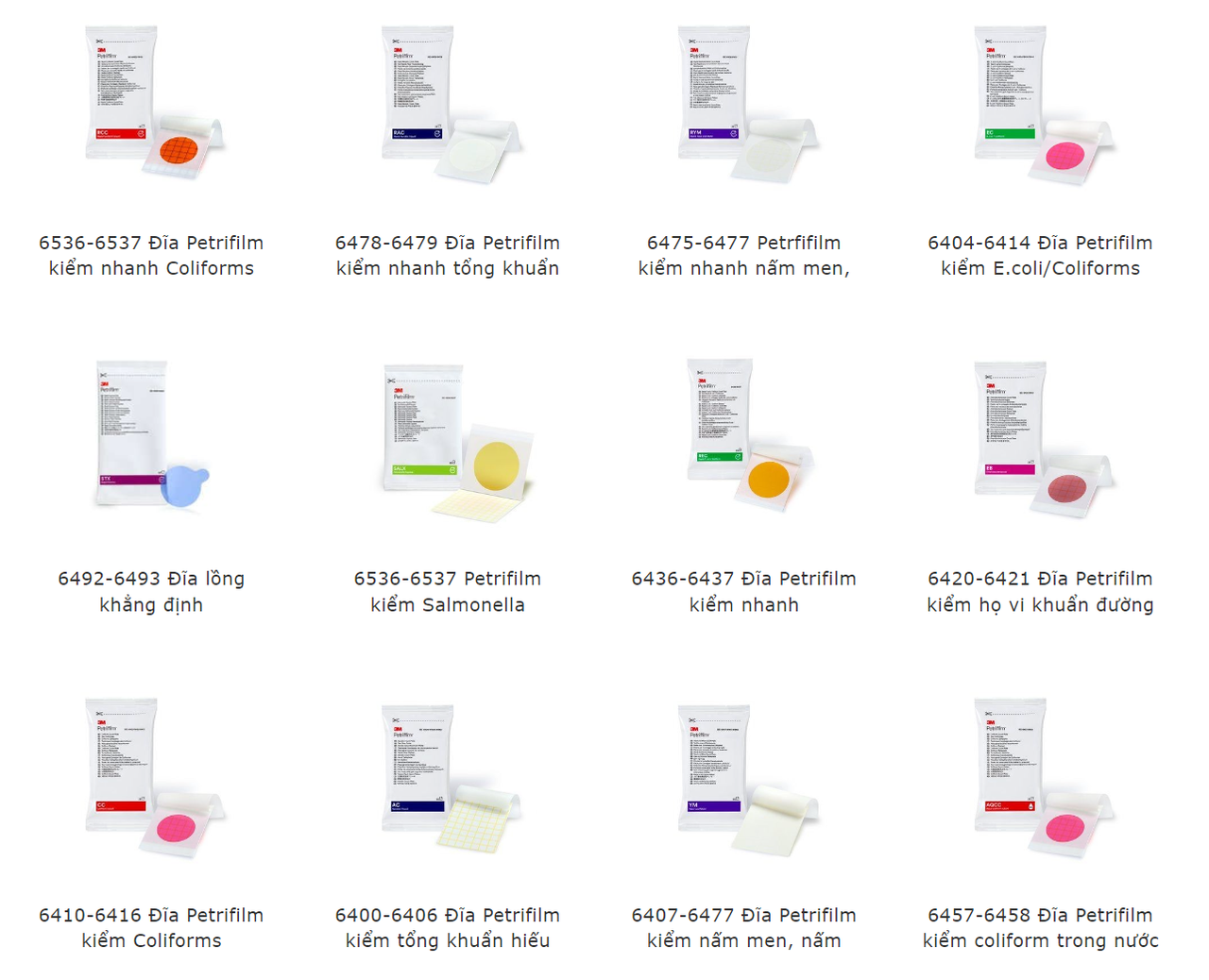
Petriflm ready-to-use culture plates
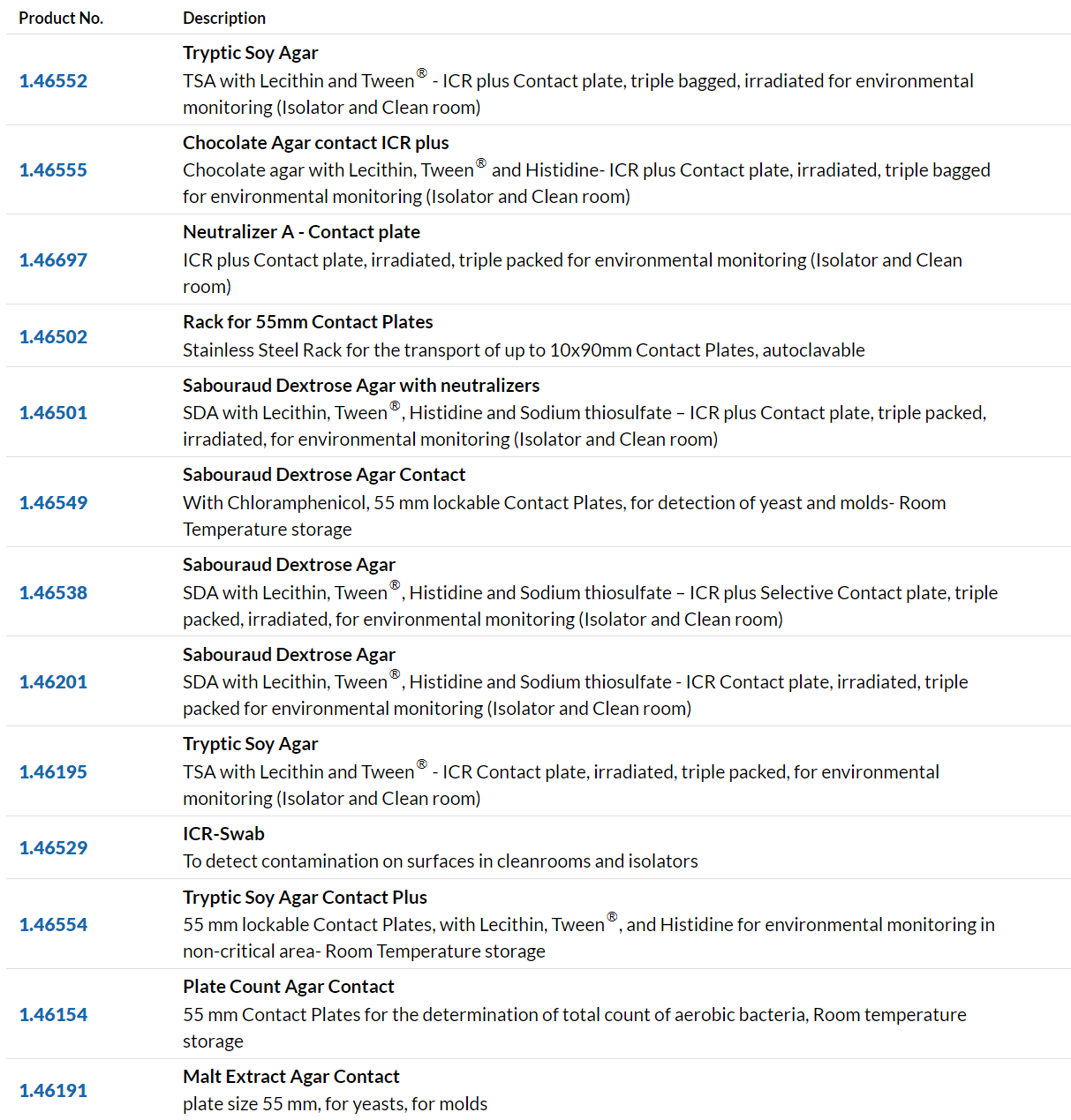
3. Contact / settle culture plates
Origin: Germany
Storage: 15-25 degrees C
Design: plastic plate with a lockable lid
Cost: High
Accuracy: good
Certification: -
Some parameters:
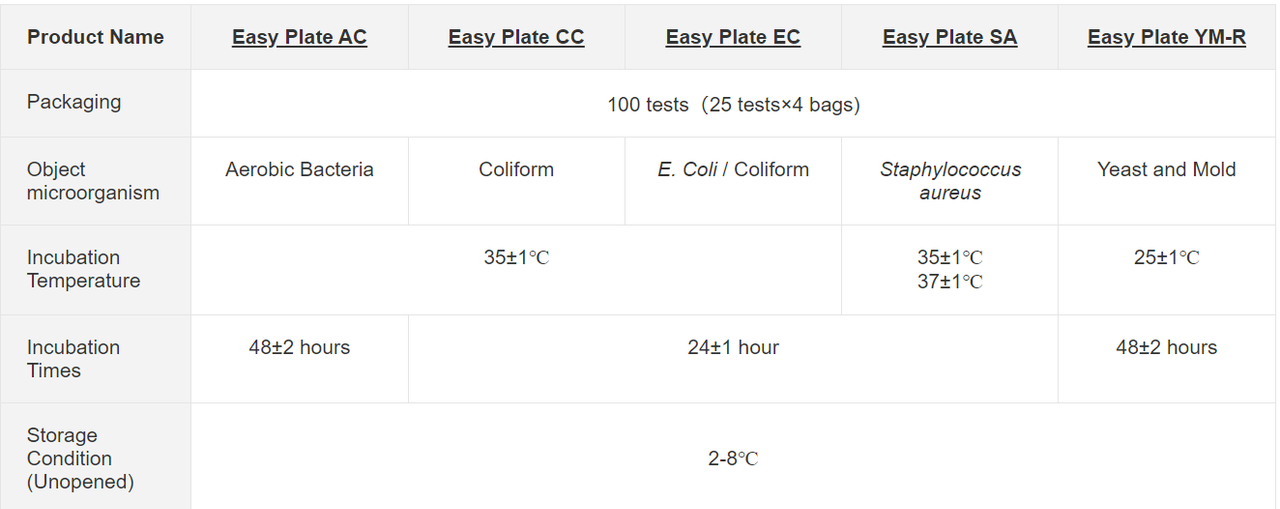
4. Easy Plate
Origin: Japan - Kikkoman
Storage: 2-8 degrees C
Design: paper plate coated with a plastic film
Cost: Relatively high
Accuracy: good
Certification: AOAC RI PTM
Some parameters:
So PacificLAB has summarised some information about culture media in general and ready-to-use culture plates - a new fast and convenient solution for you. The main references used in this article are:
Bacterial culture through selective and non-selective conditions: the evolution of culture media in clinical microbiology
New Microbes New Infect. 2020 Mar; 34: 100622.
Published online 2019 Nov 30
For any questions about culture plates, please contact the PacificLAB team