1. What is vitamin B12
- Vitamin B12, also known as cobalamin, is a water-soluble vitamin of the B group that plays an extremely important role in the
- Vitamin B12 participates in red blood cell formation, DNA synthesis and the normal functioning of the nervous system. Vitamin B12 deficiency
2. Which foods contain vitamin B12
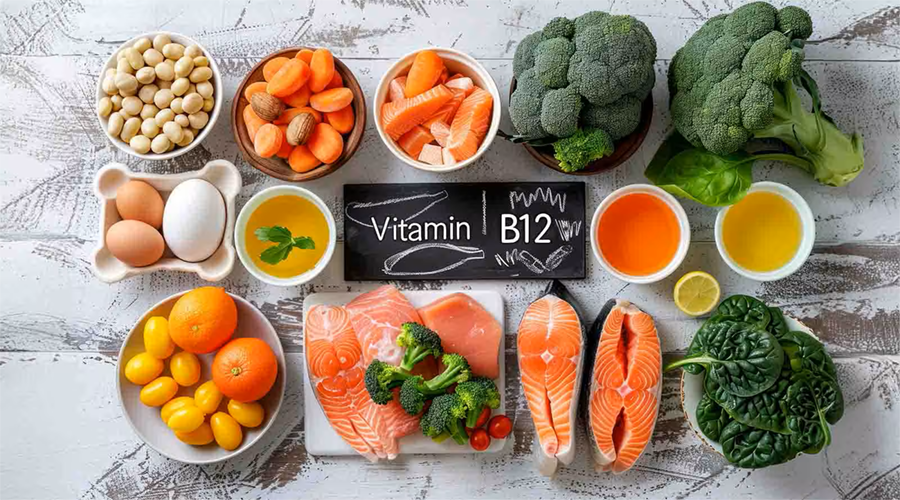
Vitamin B12 is found mainly in animal-origin products such as:
- Liver, kidney, heart (especially beef liver)
- Red meat, poultry
- Eggs, milk, cheese
- Seafood: salmon, tuna, oysters
- Fortified products or fortified foods (such as breakfast cereals fortified with vitamin B12)
Because it is absent from natural plant foods, strict vegetarians are at risk of vitamin B12 deficiency and need suppleme
3. Why the vitamin B12 content of food must be tested
Accurately determining the vitamin B12 content of food is important for:
- Controlling the quality of functional-food products
- Verifying nutrition label information
- Nutrition research and fortified food formulation
- Supporting clinical studies related to vitamin B12 supplementation
4. Methods for testing vitamin B12 in food
Several methods are currently used to quantify vitamin B12, the two most common being ELISA and the immunoaffinity column (IAC), each with its own advantages.
4.1. The ELISA method (Enzyme-Linked Immunosorbent Assay)
- ELISA is an immunoenzymatic technique that quantifies vitamin B12 through a specific antigen–antibody reaction.
* Working principle
- The food sample is processed and vitamin B12 is extracted.
- The sample reacts with enzyme-labelled specific antibodies in a microplate well.
- After washing away unbound material, the substrate is added; the enzyme-catalysed reaction produces a colour signal.
- The colour intensity is inversely proportional to the vitamin B12 content of the sample (in the competitive ELISA format).
- An ELISA reader measures the optical absorbance and calculates the vitamin B12 concentration.
* Advantages
- High sensitivity and specificity.
- Suitable for many matrices: milk, meat, functional foods,…
- Cost-effective and easy to run with standard laboratory equipment.
- Suitable for testing many samples at once.
* Disadvantages
- Requires careful sample handling to avoid errors.
- Results can be affected by interfering substances if no appropriate clean-up step is used.
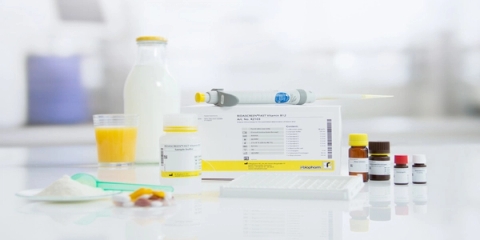
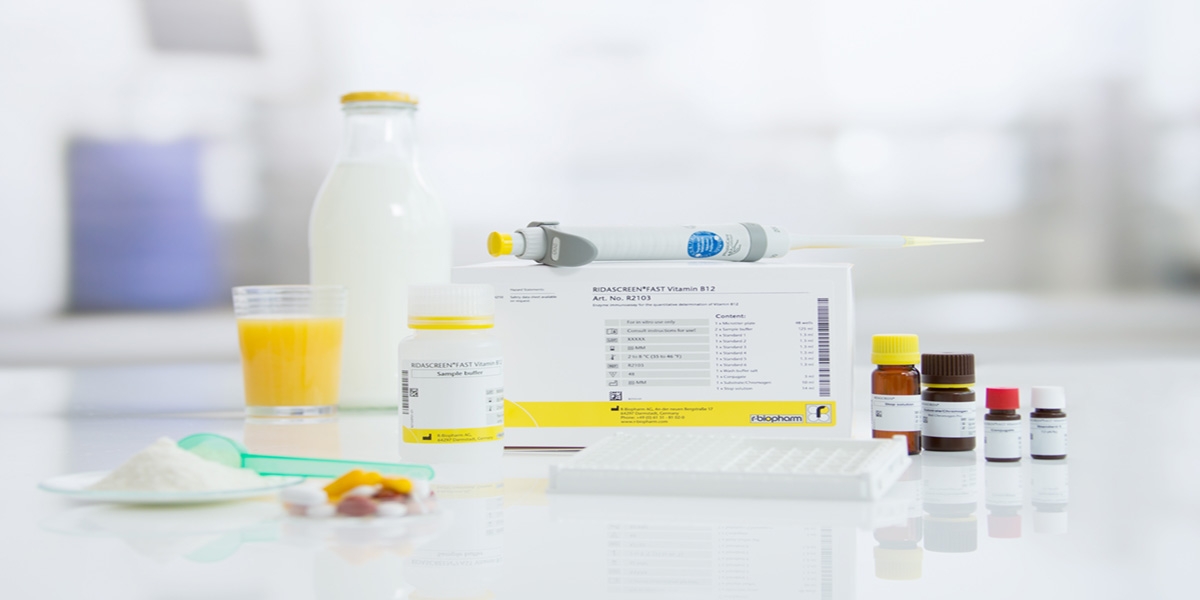
-> See the Elisa kit for Vitamin B12 testing | RIDASCREEN®FAST Vitamin B12 we supply here.
4.2 The immunoaffinity column (IAC) method
The immunoaffinity column (IAC) is an effective tool for cleaning up and isolating vitamin B12 before analysis by chromatograp
* Working principle
- Vitamin B12 from the sample is extracted and passed through a column carrying immobilized specific antibodies.
- Vitamin B12 binds to the antibodies in the column while impurities are washed away.
- Vitamin B12 is then eluted from the column with a special solvent.
- The eluate is used for quantification by analytical methods (usually HPLC or LC-MS).
* Advantages
- Very high sample clean-up power, improving the accuracy and sensitivity of the follow-up measurement.
- Suitable for vitamin B12 analysis in complex matrices (milk, meat, fortified cereals, capsules…).
- Pairs well with modern techniques such as HPLC and LC-MS/MS to reach low detection limits.
* Disadvantages
- The relatively high cost of IAC columns.
- The procedure requires many manual steps and dedicated equipment.
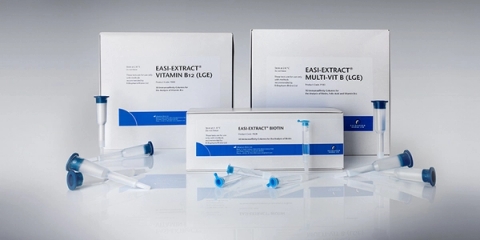
-> See the immunoaffinity column for Vitamin B12 analysis | EASI-EXTRACT® VITAMIN B12 (LGE) we supply here.

5. Conclusion
- Vitamin B12 is an essential micronutrient in nutrition, especially important in functional foods and fortified pro
- The two common methods today are ELISA and immunoaffinity columns, each with strengths depending on the analytical goal and sample type. In practice, the two methods can be com