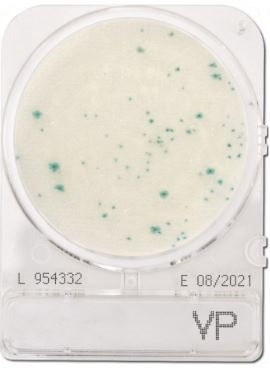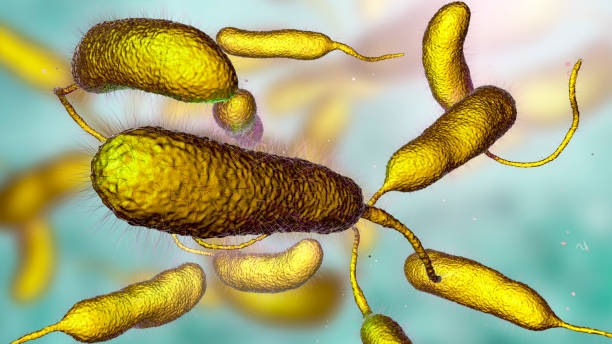
1. Vibrio parahaemolyticus colonies
– Vibrio parahaemolyticus particularly causes acute hepatopancreatic necrosis disease AHPND/EMS, making shrimp sick; dying, dying in large numbers; seriously damaging the farming process. Therefore, the control of the bacterium Vibrio is the most pressing concern, including in shrimp seed farming and commercial shrimp farming.
– The bacterial species Vibrio parahaemolyticus is extremely common in brackish and saltwater environments and on shrimp. Therefore, whether the shrimp are sick or not; they can all carry this bacterium. The global scientific community has identified hundreds of different strains of Vibrio parahaemolyticus belonging to this species.
– Some diseases caused by Vibrio, such as the luminous disease caused by Vibrio harveyi, are major pathogens attacking shrimp larvae and causing mass mortality.
- Vibrio vulnificus.
- Vibrio fluvialis
- Vibrio parahaemolyticus.
- Vibrio alginolyticus.
- Vibrio damselae (Photobacterium damselae).
- Vibrio mimicus and V. cholera. are related to white feces disease (WFD).
These strains have devastated shrimp farming in Vietnam and in shrimp-producing countries around the world.
2. The danger of Vibrio parahaemolyticus for shrimp ponds
– Vibrio parahaemolyticus is an opportunistic pathogen naturally present in the water environment and common in commercial shrimp ponds. When the weather changes; environmental parameters such as water temperature; pH, dissolved oxygen fluctuate; the pond has high organic matter and toxic gas levels; at this point the weakened animal body creates conditions for pathogens to attack and can lead to mass mortality.
– After the shrimp acute hepatopancreatic necrosis agent was announced; many questions arose about how to diagnose the pathogen early to avoid losses for shrimp farmers. In the normal way of thinking, for bacterial diseases we can isolate and identify them on agar medium.
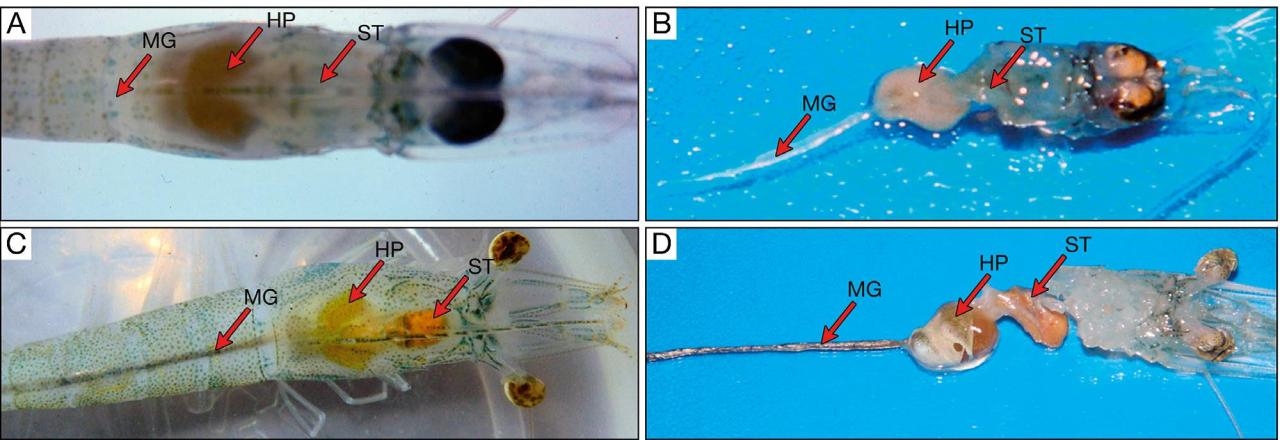
– However, the case of the bacterium causing acute hepatopancreatic necrosis in shrimp is completely different; we can isolate and even identify the bacterial species Vibrio parahaemolyticus by isolation on agar medium, but it is not certain whether this bacterial strain is toxigenic and whether it is the causative agent, because there are many different strains belonging to the species Vibrio parahaemolyticus.
3. Method for testing Vibrio parahaemolyticus in shrimp ponds with Compact Dry VP plates
3.1. Advantages
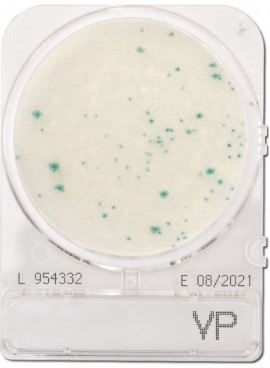
Compact Dry VP can isolate Vibrio strains. For Vibrio parahaemolyticus causing acute hepatopancreatic necrosis, the colonies are green, distinct from the plate background so they are very easy to count. Other strains such as V. vulnificus, V. cholerae and V.minicus form light pink colonies. Vibrio spp. form white colonies.
3.2. The convenience of using Compact Dry VP plates
-The back of the Compact Dry Vibrio parahaemolyticus plate has a built-in gridded counting chamber; convenient for counting colonies.
-Storage temperature 1-30 degrees C; suitable for the temperature in the refrigerator in VN; so a freezer is not needed.
– Incubation temperature 32 – 35 degrees C; equivalent to the outdoor temperature in VN; so an incubator is not needed.
-The plates are sealed so sterile media cannot be contaminated, so no laboratory is needed.
One extremely important advantage is that the operation is VERY SIMPLE
– Step 1: Open the lid
– Step 2: drop 1ml of pond water into the center of the plate
– Step 3: close the lid.
– Step 4: Put the plate in an aluminum bag, place it at an outdoor temperature of 32-35 degrees and check the result after 24 hours.
With these simple operations; shrimp farmers can do it right at the pond and the results are still like those of a lab.
PACIFICLAB SCIENTIFIC AND TECHNICAL EQUIPMENT COMPANY LTD is the exclusive distributor of Compact Dry plate products from Shimadzu Diagnostics (Japan). For more detailed product information, please visit the following link:
https://pacificlab.vn/vi/shops/phong-thi-nghiem/dia-compact-dry-vibrio-parahaemolyticus-compact-dry-vp-vibrio-parahaemolyticus-shimadzu.html