- With the ability to clean up and concentrate the target toxin from complex sample matrices, the IAC column helps improve the reliability of analytical results before the quantification steps.
- In the solution portfolio of R-Biopharm, the IAC immunoaffinity column lines are developed specifically for each mycotoxin group such as Aflatoxin, Ochratoxin A, Fumonisin, Zearalenone and Deoxynivalenol (DON).
What is an immunoaffinity column IAC?
- IAC – Immunoaffinity Column or immunoaffinity column is a type of column that uses highly specific antibodies to retain one or one group of target analytes.
- In mycotoxin analysis, the basic principle can be understood as follows:
Sample extraction → Load the sample through the IAC column → Mycotoxin is retained → Wash away impurities → Elute the toxin → Quantitative analysis
- Thanks to the specificity of the antibodies, the IAC column can significantly remove interfering components in the sample matrix, while helping to clean up and concentrate mycotoxin before analysis by methods such as HPLC, LC-MS/MS or other suitable techniques.
- This is especially useful when analysing complex matrices such as cereals, nuts, coffee, spices, feed and many other food products.
Why should immunoaffinity columns be used when analysing mycotoxins?
- Mycotoxins usually exist at very low levels in the sample, while the matrix contains many other compounds that can affect the analysis process.
- The use of IAC columns for mycotoxin brings several notable benefits:
1. High specificity
The antibodies on the column can recognize the target toxin, helping the cleanup process focus on the substance to be analysed.
2. Matrix cleanup
Undesired components in the extract can be removed during the column washing step, helping the cleaned extract be more suitable for the next analytical step.
3. Toxin concentration
In some workflows, IAC helps recover the target toxin in a smaller volume than the initial extract, supporting the detection of low concentration levels.
4. Supports improved result quality
When the amount of impurities is reduced, the ability of the matrix to affect the analysis can also be limited.
5. Suitable for many matrices
IAC columns designed specifically for each mycotoxin can be applied to many types of food, raw materials and feed, depending on the workflow confirmed by the manufacturer.
Popular types of R-Biopharm IAC immunoaffinity columns for each toxin
- One of the important points when choosing R-Biopharm immunoaffinity columns is to correctly identify the type of mycotoxin to be analysed.
- Below are the common toxin groups.
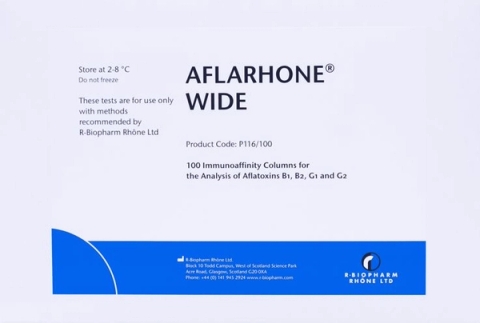
1. Aflatoxin IAC Column – Aflatoxin B1, B2, G1 and G2
- Aflatoxin is a group of mycotoxins that receives particular attention in food and feed safety control.
- The aflatoxin forms that are commonly of interest include:
- Aflatoxin B1
- Aflatoxin B2
- Aflatoxin G1
- Aflatoxin G2
- Among them, Aflatoxin B1 is one of the most important aflatoxins in mycotoxin control programmes.
- Aflatoxin IAC column uses the immunoaffinity mechanism to retain the target aflatoxin during sample cleanup. After the washing step, the aflatoxin is eluted for further analysis.
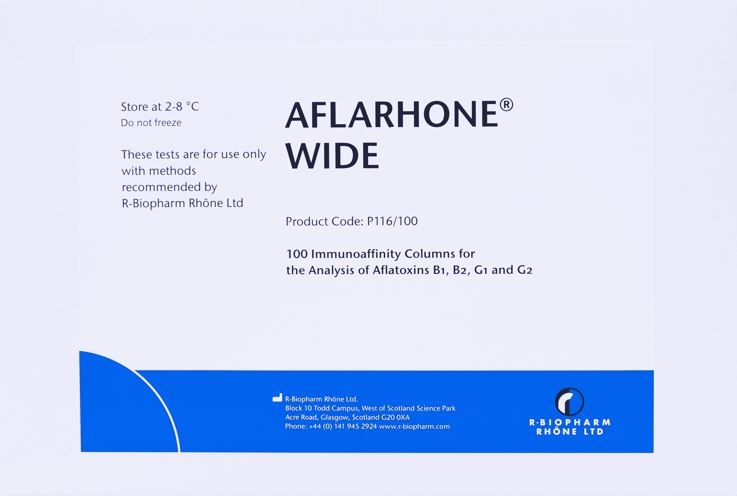
- See product details Aflatoxin Analysis Immunoaffinity Column | AFLARHONE® WIDE
* Applications
- The aflatoxin IAC column can be used in the following analysis workflows:
- Cereals and cereal products
- Nuts and nut products
- Feed
- Spices
- Food products at risk of aflatoxin contamination
- Other agricultural raw materials
2. Ochratoxin A IAC Column
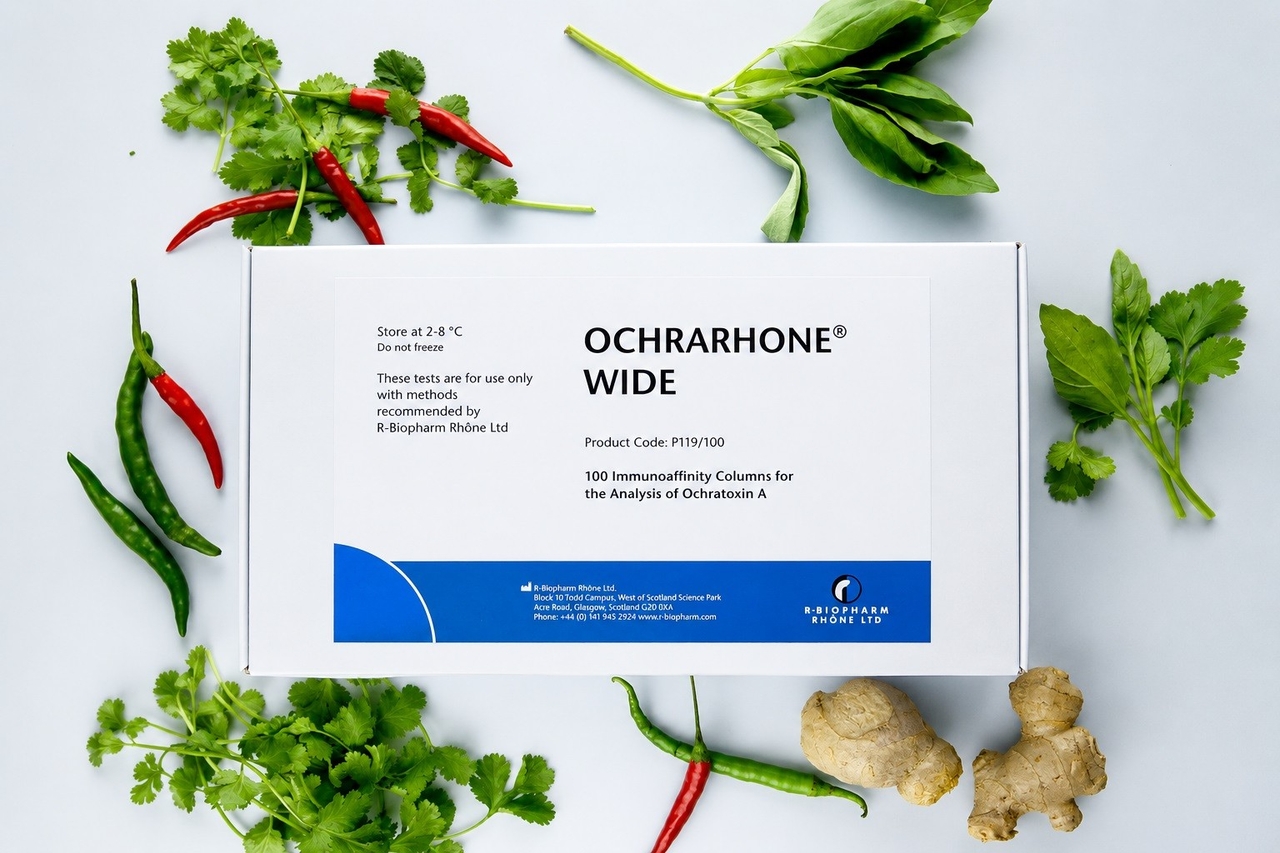
- Ochratoxin A (OTA) is a mycotoxin that is commonly of interest in the quality control of many raw materials and foods.
- Matrices that can be considered for OTA analysis include:
- Cereals
- Coffee
- Grapes and grape products
- Spices
- Feed
- Some other food products
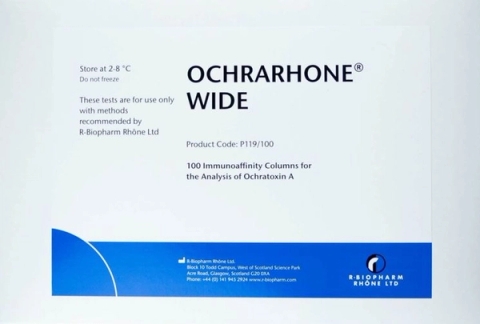
- Ochratoxin A IAC Column is used to clean up the extract and retain OTA based on the specific interaction between the antibody and the toxin.
- After the sample loading and washing process, OTA is eluted from the column to proceed to the analysis step.

- See product details Ochratoxin Analysis Immunoaffinity Column | OCHRARHONE® WIDE
3. Fumonisin IAC Column
- Fumonisin is a group of mycotoxins commonly of interest in products with raw material sources from corn and cereals.
- The fumonisin forms that are commonly analysed include:
- Fumonisin B1
- Fumonisin B2
- Fumonisin B3
- Among them, Fumonisin B1 and B2 are often the important analytes in many testing workflows.
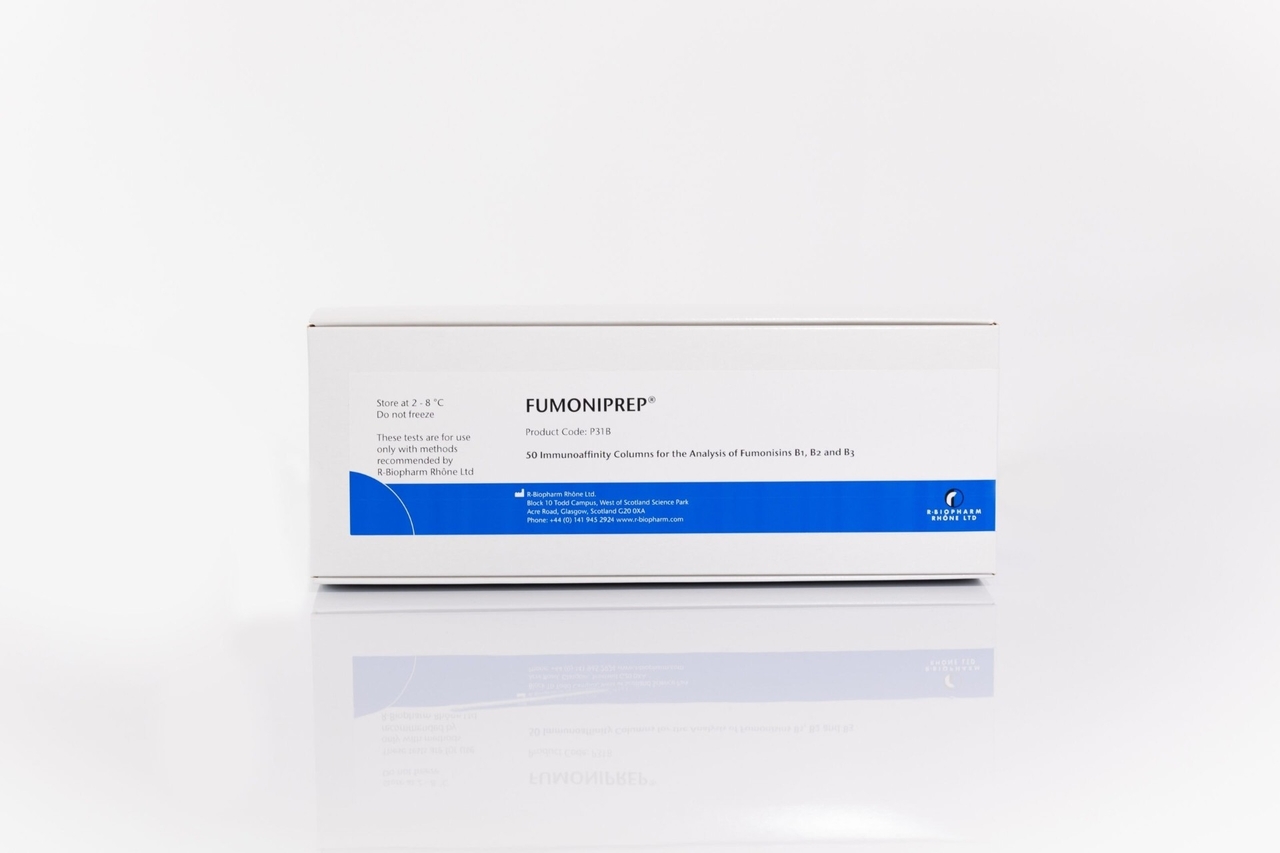
- Fumonisin IAC Column helps clean up and concentrate the target fumonisin group from the sample extract before performing the quantification step.
- Some matrices that can be analysed
- Corn
- Corn meal
- Cereals
- Feed
- Corn-derived raw materials
- For laboratories that routinely analyse fumonisin, the use of fumonisin immunoaffinity columns can help standardize the sample processing step and reduce the influence of the matrix.
- See product details Fumonisin Analysis Immunoaffinity Column | FUMONIPREP®
4. Zearalenone IAC Column
- Zearalenone (ZEN) is a mycotoxin that is commonly controlled in cereals, feed raw materials and related products.
- One of the difficulties when analysing mycotoxins is that the matrix may contain many components that affect the quantification process.
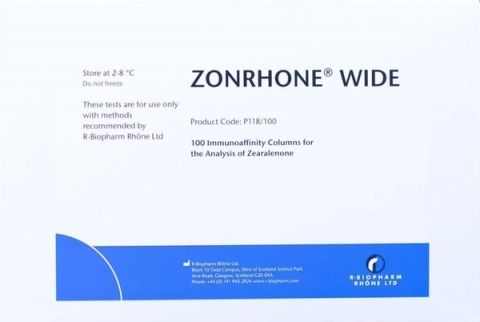
- Zearalenone Immunoaffinity Column is used as a dedicated cleanup step, helping retain ZEN through the antigen – antibody interaction mechanism.
- Then, the toxin is eluted for further analysis.
* Applications of the Zearalenone IAC column
- Can be considered in the following analysis workflows:
- Cereals
- Feed
- Feed production raw materials
- Products at risk of Zearalenone contamination
- See product details Zearalenone Analysis Immunoaffinity Column | ZONRHONE® WIDE
5. Deoxynivalenol (DON) IAC Column
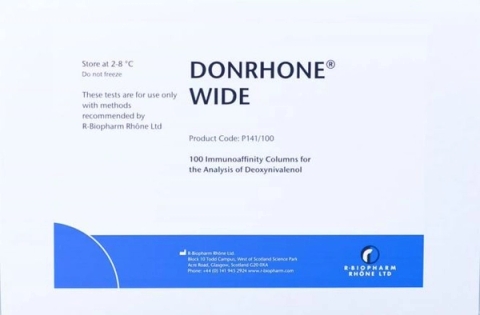
- Deoxynivalenol (DON), also known as vomitoxin, is one of the mycotoxins commonly of interest in cereal and feed control.
- DON can occur in raw materials such as:
- Wheat
- Corn
- Barley
- Other cereals
- Feed
- In the DON analysis workflow, the sample cleanup step plays an important role in limiting the influence of the matrix on the measurement.
- DON IAC Column is designed to support the cleanup and sample processing for Deoxynivalenol according to the corresponding application workflow.
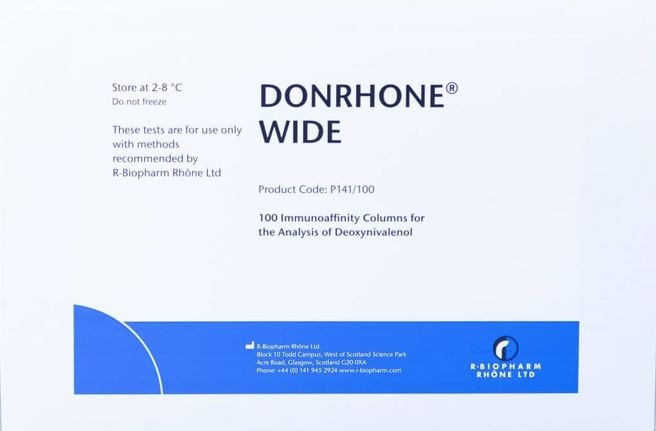
- See product details DON Analysis Immunoaffinity Column | DONRHONE® WIDE
Summary table of immunoaffinity columns by mycotoxin
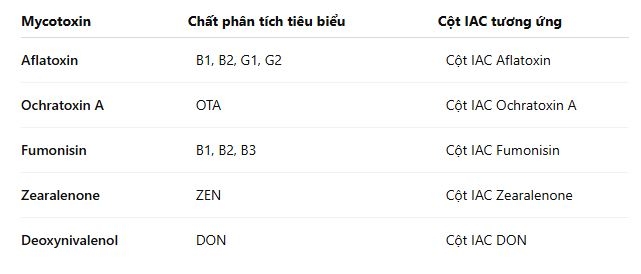
- The column selection should be based on the target mycotoxin, matrix, analytical method and specific application workflow.
Workflow for using an IAC immunoaffinity column in mycotoxin analysis
A typical IAC workflow usually includes the following steps:
1. Sample preparation and homogenization
↓
2. Extracting mycotoxin from the sample
↓
3. Filter/adjust the extract according to the workflow
↓
4. Load the extract through the IAC column
↓
5. The target mycotoxin is retained on the column
↓
6. Wash the column to remove impurities
↓
7. Elute the mycotoxin
↓
8. Quantification with a suitable analytical method
The important difference of IAC lies in the step selective cleanup with antibodies, instead of relying only on adsorption mechanisms or conventional physical separation.
Which laboratories are R-Biopharm IAC immunoaffinity columns suitable for?
The R-Biopharm immunoaffinity columns can be worth considering for:
- Food testing laboratories
- QC departments of food factories
- Feed manufacturing plants
- Agricultural production and processing companies
- R&D departments
- Testing centers
- Mycotoxin analysis departments
- Research units on food safety
In particular, for laboratories that need to analyse many different mycotoxin groups, choosing the right IAC dedicated to each toxin can help build a sample processing workflow suitable for each test.
IAC and ELISA: two solutions that can complement each other in mycotoxin testing
- R-Biopharm is known for many mycotoxin testing solutions, including ELISA and cleanup solutions using immunoaffinity column.
- ELISA has the advantage of handling many samples and is suitable for screening programmes, while IAC is often used as a sample cleanup and concentration step before in-depth quantitative analysis methods.
- Therefore, depending on the testing purpose, the laboratory can choose a suitable method or combine the solutions within the same analysis workflow.
How to choose the right IAC column?
The column should not be chosen only based on the toxin name. Some factors to consider are:
- Mycotoxin to be analysed: clearly determine whether to analyse Aflatoxin, Ochratoxin A, Fumonisin, Zearalenone, DON or another toxin group.
- Matrix: cereals, coffee, spices, feed and other food products may require different sample preparation workflows.
- Quantification method: it is necessary to consider the analytical method after the IAC step, such as HPLC, LC-MS/MS or another method according to the confirmed workflow.
- Workflow and recovery: it is recommended to refer to the manufacturer's technical documentation to select the correct product code, sample volume, loading/washing/elution workflow and application conditions.
R-Biopharm – mycotoxin testing solutions
- In the control of mycotoxin in food and feed, the sample preparation and cleanup step significantly affects the quality of the analysis.
- The R-Biopharm immunoaffinity columns are developed with selective recognition of the target mycotoxin, supporting laboratories in carrying out the sample cleanup step before quantification.
- The popular column groups can be mentioned as follows:
- Aflatoxin IAC Column
- Ochratoxin A IAC Column
- Fumonisin IAC Column
- Zearalenone IAC Column
- DON IAC Column
- If a company is building a aflatoxin, ochratoxin A, fumonisin, zearalenone or DON testing workflow, choosing the right IAC column according to the matrix and analytical method is an important step to optimize the sample processing workflow.
Conclusion
- IAC immunoaffinity column is a useful tool in the mycotoxin analysis workflow thanks to the ability to clean up and selectively retain the target analyte.
- With the Aflatoxin, Ochratoxin A, Fumonisin, Zearalenone and Deoxynivalenol (DON) groups, choosing a dedicated IAC column helps the testing laboratory build a sample processing workflow suitable for each type of mycotoxin.
- If you are looking for an aflatoxin IAC column, ochratoxin column, fumonisin column, zearalenone column or DON column from R-Biopharm, you should compare the product codes, matrices and analytical methods in the corresponding technical documentation before choosing.
- PacificLAB can support you with advice on R-Biopharm immunoaffinity column solutions suitable for the mycotoxin testing needs of laboratories and businesses.