

1. Prevalence and importance of tree nut allergy
- Tree nut allergy is one of the most common food allergies, affecting about one percent of the population. These allergies can cause severe reactions, making accurate detection and labelling important for consumer safety.
2. Definition and allergenicity of tree nuts
- The term “tree nut” is used to refer to nuts that grow on trees, as distinct from peanuts, which grow underground and are technically legumes. Not all tree nuts have the same level of allergenicity.
- For example, pecan allergy is particularly common, while almonds or coconut are generally tolerated better. Allergy testing can help determine which tree nuts are safe to consume for people with nut allergies.
3. Regulatory labelling requirements for tree nuts
Tree nuts must be declared as ingredients on food packaging under EU Directive 2007/68/EC, because they are among the most significant allergens. However, cross-contamination can occur in both nut-processing and nut-free facilities, especially during the production of confectionery, baked goods, chocolate, biscuits, cereals, or ice cream. To mitigate this risk, some manufacturers make precautionary statements such as "May contain traces of nuts" on their products.
4. Ensuring nut-free products
- For people allergic to nuts, it is important to trust that a product labelled “nut-free” truly contains no nut allergens. Therefore, thoroughly checking production areas and finished products is essential. R-Biopharm AG offers a comprehensive range of test kits for detecting various nut types, ensuring the highest standards of food safety.
* R-Biopharm AG tests for tree nuts
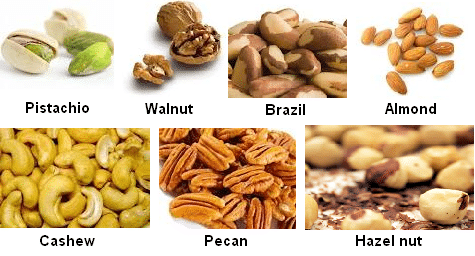
Our product range includes test kits for detecting the following nuts:
- Almond
- Brazil nut
- Cashew
- Coconut
- Pecan
- Macadamia nut
- Peach
- Hazelnut
- Pine nut
- Pistachio
- Walnut
5. Screening strategy for tree nuts by PCR
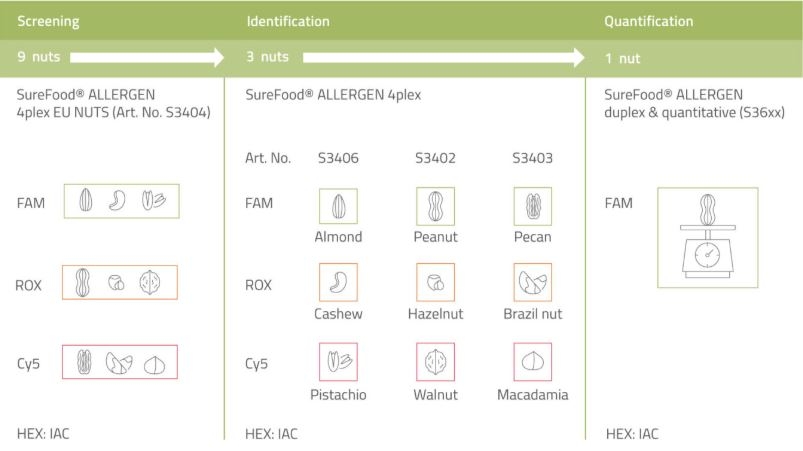
- We offer a robust screening strategy that begins with broad screening for the eight relevant tree nuts and peanut, in compliance with Regulation (EC) 1169/2011. Positive results can be further identified with one of our three multi-nut kits if needed. Quantification can also be performed using the SureFood ALLERGEN qualitative and quantitative kit.
6. Main benefits of monitoring tree nut allergens
- Consumer safety: protecting people with tree nut allergies from severe allergic reactions by ensuring accurate detection and labelling of tree nut allergens in food products.
- Regulatory compliance: Helping manufacturers comply with food allergen labelling regulations, such as EU Directive 2007/68/EC and other international standards, ensuring that all products containing tree nuts are labelled correctly.
- Quality assurance: Maintaining the integrity and safety of food products by accurately identifying and quantifying tree nut allergens, preventing accidental exposure.
- Cross-contamination prevention: Ensuring the food production environment is free of tree nut allergens, preventing cross-contamination and ensuring safety for non-allergenic products.
- Advanced detection methods: Using detection techniques with high sensitivity and specificity, such as ELISA and real-time PCR, to accurately detect and quantify traces of many tree nut types, even in processed foods.
Monitoring tree nut allergens is essential to protect consumer health, ensure regulatory compliance, and maintain product quality. By using advanced detection methods such as ELISA and Real Time PCR, manufacturers can accurately identify and quantify tree nut contamination, prevent allergic reactions, and ensure the safety of their products. This proactive approach supports strong allergen management, maintains food safety standards, and builds consumer confidence in nut-free products.
* See the catalogue of test kits we offer at:
https://pacificlab.vn/vi/shops/group/phan-tich-chat-gay-di-ung/