
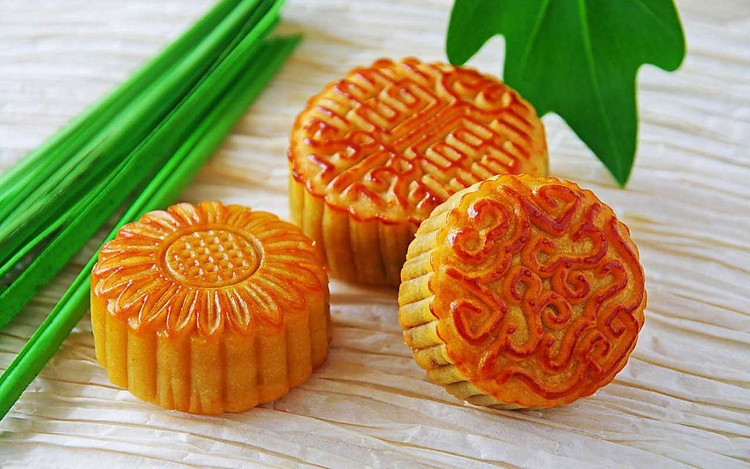
The truths about mooncake quality
1. Nutritional factors in mooncake quality
How many calories does a mooncake provide
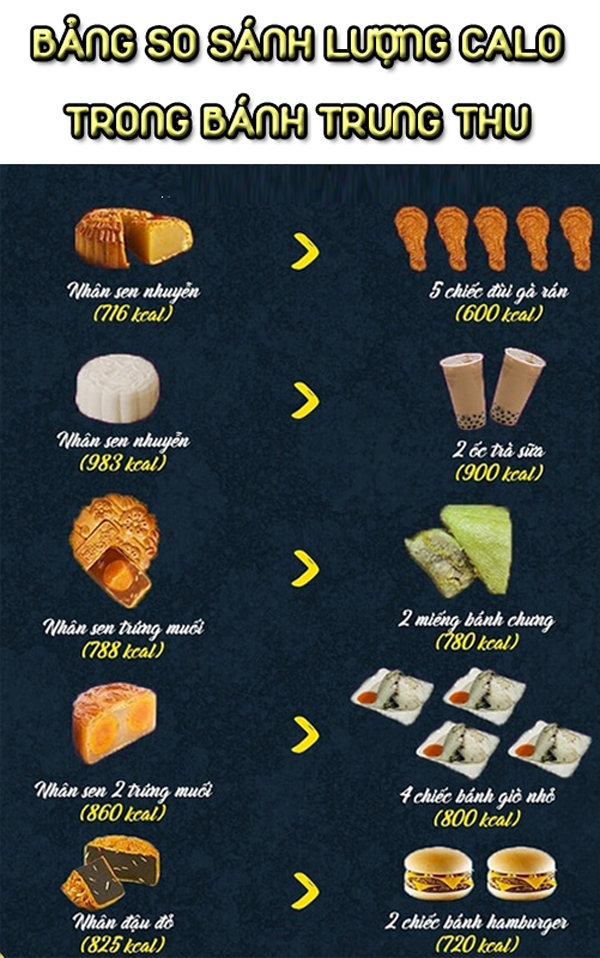
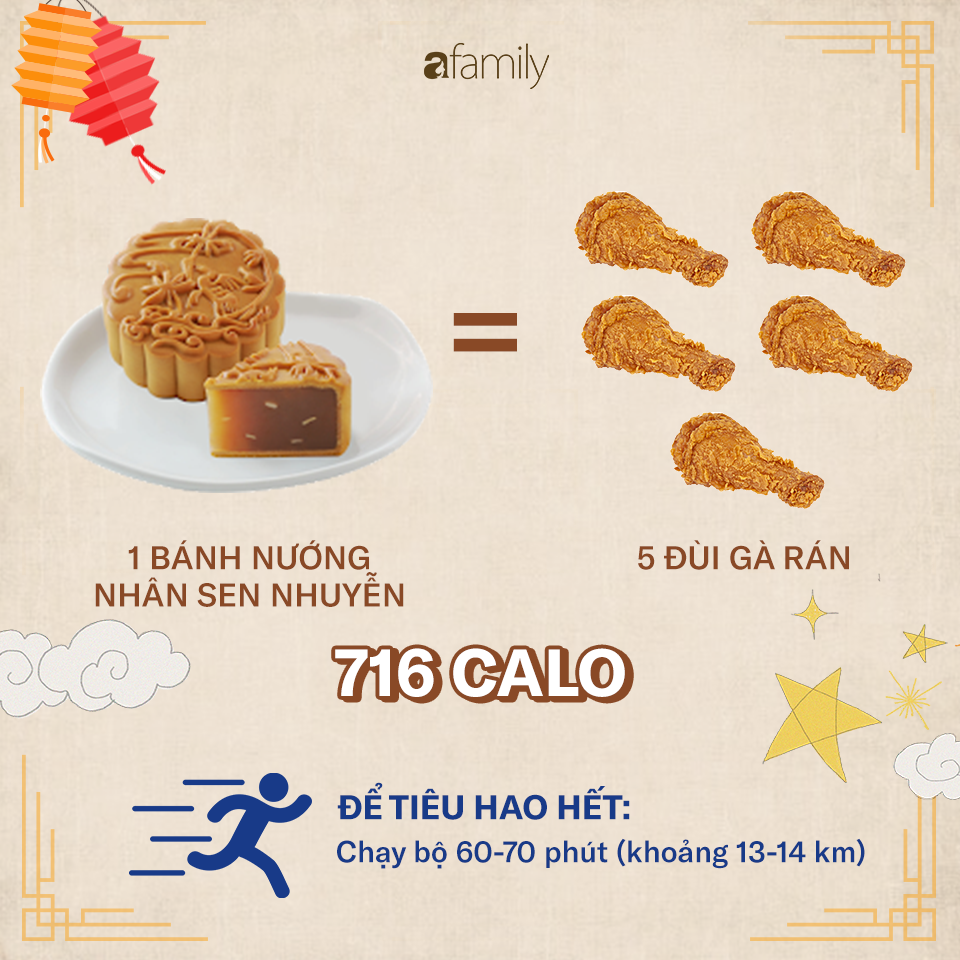
Typically a traditional 200-gram baked bánh nướng mooncake with 2 egg yolks and assorted mixed or cereal fillings such as lotus seeds, mung beans, taro, red beans… contains about 800 kcal. This energy is equivalent to four bowls of rice, 15 spoons of sugar and 9 spoons of oil or fat (teaspoons). The more egg yolk, the higher the energy the cake provides). A round cake 4x10 cm in diameter can contain: 5–12g protein; 60–90g carbohydrate, 30–45g fat. According to another document,
- 1 mixed-fill baked mooncake of 176g provides 706 kcal, 18g protein, 31.5g lipid and 87.5g glucid;
- 1 baked mooncake with one egg and mung-bean filling, 176g, provides 648 Kcal, 19.5g protid, 27.5g lipid, 80.6g glucid. That means to burn off this energy we need:
- A person walking at an average speed of 4.8 km/h needs 106 minutes
- A person running at an average speed of 9.6 km/h needs 38 minutes
- A person cycling at 16 km/h needs 55 minutes That is why you should divide the mooncake into several portions to share with the family. Could this also be why the Mid-Autumn Festival is the “festival of reunion”?
Who should limit eating mooncakes?
As clearly stated above, the mooncake provides a lot of energy, so the cake must be eaten in moderation. Especially for people with many chronic diseases such as diabetes, being overweight, high blood fat, high blood pressure, coronary heart disease,…
The main ingredients of mooncakes are various cereal flours, sugar, butter and fats/oils. The crust of traditional mooncakes is all soaked with much oil and cooked at high temperature, so attention should be paid to the level of transfat — one of the factors showing the quality of mooncakes
Salted egg yolk and the nuts used as fillings also provide a significant amount of cholesterol . This too can become a burden for the cardiovascular system. (See more about cholesterol analysis)
With picky children, after eating cake they often lose their appetite for the main meal. This then causes the child's picky eating. So pay attention to when you give your child mooncakes.
2. Choosing good-quality mooncakes
How to avoid "dirty" mooncakes
The following criteria will to some extent help you avoid buying baked mooncakes 2 eggs
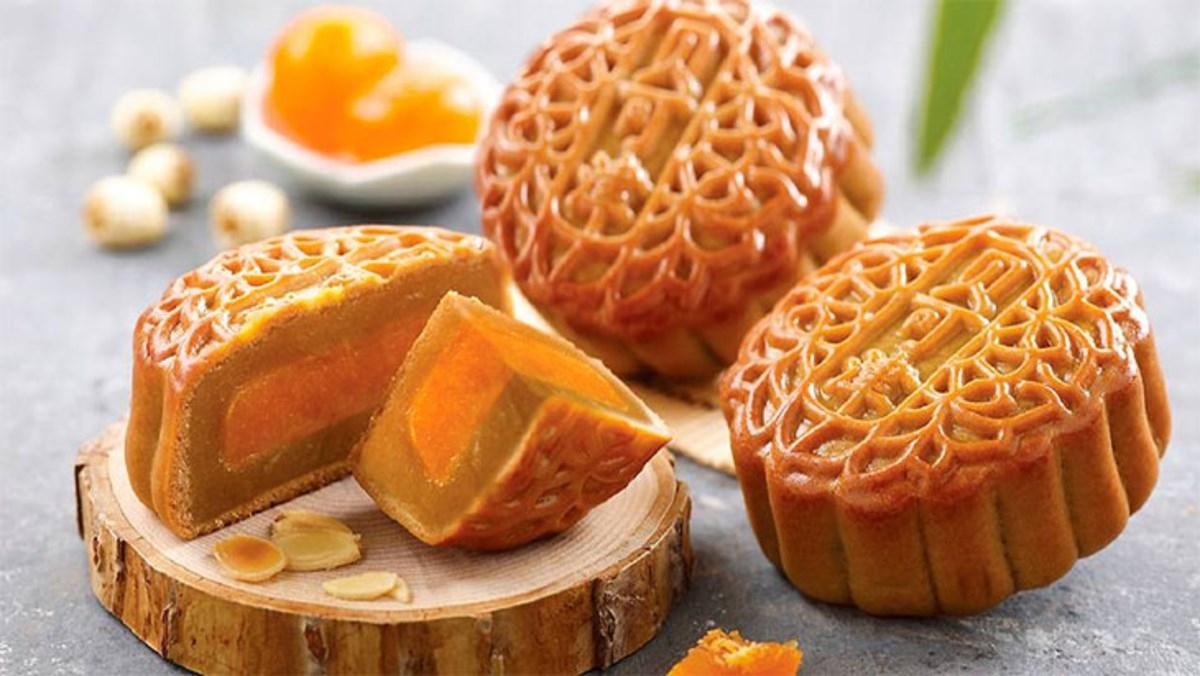
Baked mooncake (bánh nướng): choose a cake with moderate shine; when pressed, the crust feels soft and slightly elastic. Avoid very shiny cakes, which may have been stored quite long and have leaked oil
- Modern soft mooncake (bánh dẻo)
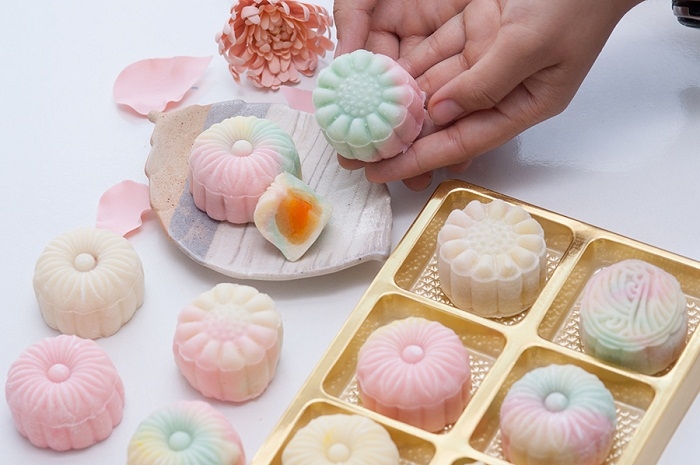
Soft mooncake (bánh dẻo): choose one still coated with a thin layer of flour on the surface. When pressed, the crust feels soft but not sticky or sludgy. Do not buy cakes with unnatural colors — this is a sign of poor-quality mooncakes. Especially when the bag holding the cake is swollen, a sign of fermentation producing CO2 gas, the cake is old and should not be eaten anymore.
- *
Fermentation commonly found in mooncakes is ethanol fermentation. This is an anaerobic fermentation process in which yeast converts sugar into ethanol while producing CO2 gas.The product must have a clear origin: the mooncake has the manufacturer's name, the address of the production site, instructions for use, and storage guidance...
- 3.
Food coloring and the “handmade cake brands” flooding the market Handmade mooncakes
have become a hot phrase today. Especially in Ho Chi Minh City, when people are having to limit going out. Many households choose to buy online the sets of ready-made crusts and fillings. Making the cakes becomes simple: just wrap the filling, press the mold and bake in an air fryer. Because of the preference for
safe food and consumers' need to protect their health, many shops selling crust flour, ready-made fillings, natural food coloring for cakes,… all promise not to use preservatives and industrial colorants. Precisely because there are no preservatives, sellers usually advise the “home bakers”: the longest shelf life is about one month in the fridge and a whole year if frozen. The fillings are usually stored in the fridge as small round balls wrapped rather carelessly in cling film. Worth noting here, the packaging carries no labels giving the manufacturer's information, quality-inspection declarations, or the minimum information needed on a product
As for the unique floating-flower mooncakes. The secrets for making
natural colors from many foods — carrot, pumpkin, pandan leaf, butterfly pea flower,.. — are shared widely online. However, reality shows that many bright, v synthetic colorants. Floating-flower handmade mooncakes with eye-catching colorants
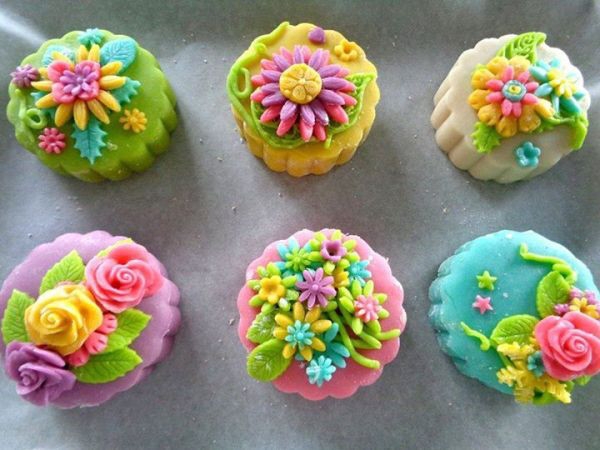
Discussing food colorants in food, Dr. Phan The Dong (working at Hoa Sen University) added: some food colorants are still permitted for use in Vietnam but have been banned in the US market and some EU countries. Let me tell you about some colors causing controversy now:
Red No. 3 (Erythrosine):
the cherry-red colorant is commonly used in candy, ice pops and cake-decorating gel. It is also the color whose effects are most controversial. Many experiments with this color on male mice show an increased risk of thyroid tumors. Blue No. 1 (Brilliant Blue):
the blue-green colorant is used in ice cream, canned peas, packaged soups, ice pops and cake icing. Blue No. 2 (Indigo Carmine):
the royal-blue colorant is found in candy, ice cream, cereals and snacks. There are some studies on brain tumors in rats given this color, but the data is not yet certain. Red 40, Yellow 5 and Yellow 6 may contain contaminants known to be carcinogens. Benzidine, 4-aminobiphenyl and 4-aminoazobenzene are the substan
- Red No. 40 (Allura Red): a dark red used in sports drinks, candy, condiments and cereals.
- Yellow No. 5 (Tartrazine): lemon yellow found in candy, soft drinks (energy drinks), potato chips, popcorn and cereals.
- Yellow No. 6 (Sunset Yellow): used heavily in candy, sauces, baked goods and preserved fruit.
- Yellow No. 6 (Sunset Yellow): used heavily in candy, sauces, baked goods and preserved fruit.
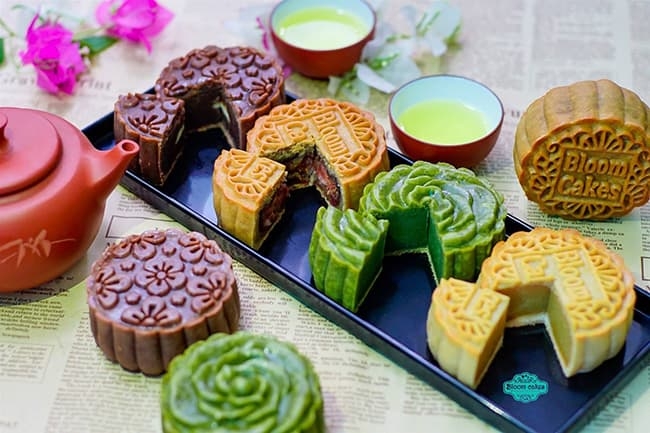
Mooncakes use many colorants. Many synthetic colorants are banned; if used for a long time, beyond permitted levels, they can cause cancer. So think carefully when eating overly colorful cakes or ones that do not clearly name the food colors used.
In the next part, Pacificlab will share more concretely about testing mooncake quality. Please follow along here.