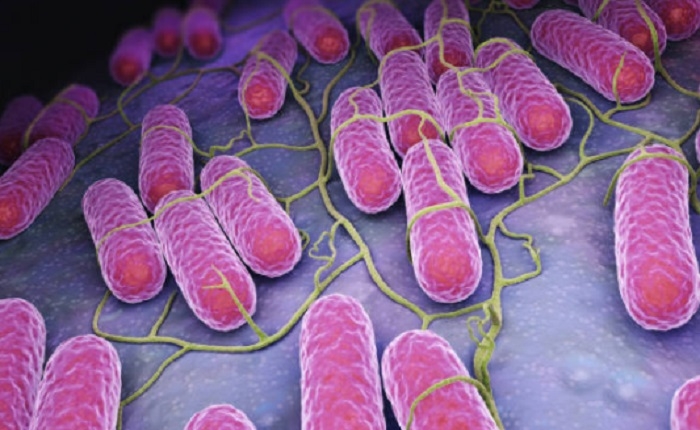
The Salmonella bacterium is classified into two main groups:
- Salmonella typhi: causes typhoid fever in humans, a serious systemic bacterial infection.
- Non-typhoidal Salmonella: includes many species causing gastrointestinal infections (salmonellosis) from mild to severe.
1. Characteristics of the Salmonella bacterium
- Morphology: Salmonella is a rod-shaped, gram-negative bacterium, not forming spores but able to move thanks to flagella.
- Growth conditions: Salmonella can grow in many types of environments and often survives in improperly stored food, especially poultry meat, eggs, milk and dairy products.
2. Methods for detecting Salmonella in food
There are several different methods for detecting the presence of Salmonella in food. The main methods include:
2.1. The traditional method (microbiological method)
- The microbiological method is the most common and most frequently applied method for detecting Salmonella in food.
- Sampling: the food sample is collected from the shipment or product to be tested.
- Sample enrichment: the sample is put into a non-selective culture medium to help Salmonella grow. Media such as Buffered Peptone Water (BPW) are commonly used, incubated at 37 °C for 18–24 hours.
- Isolation on selective media: after enrichment, the sample is plated onto selective media such as Xylose Lysine Deoxycholate (XLD) or Brilliant Green Agar (BGA), and incubated under suitable conditions. On XLD, Salmonella colonies are red with a black center, while on BGA colonies are pale pink.
- Biochemical identification: suspected colonies are identified through biochemical tests such as Triple Sugar Iron (TSI), Urease, Indole, and Motility.
- Serotyping (serological antigen test): for suspected strains, an antigen test is performed to determine the Salmonella serotype.
2.2. The Compact Dry SL Salmonella plate method
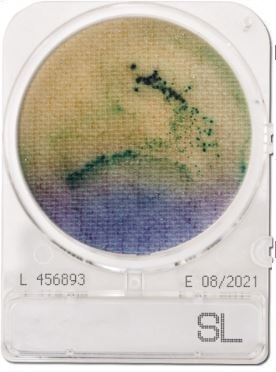
Compact Dry is a rapid and easy-to-use microbiological test method for detecting bacteria in food, including Salmonella. The method is based on a dry, freeze-dried ready-poured agar plate, pre-loaded with medium and color indicators to detect bacteria quickly and easily. The Compact Dry Salmonella method is widely used thanks to its flexibility and convenient handling. See the detailed product information here.
* Process for detecting Salmonella with the Compact Dry plate
1. Preparing the food sample
- Take the food sample to be tested.
- The food sample must be prepared for dilution and mixed evenly with a buffered water medium (usually Buffered Peptone Water - BPW).
- The dilution ratio usually follows specific standards, such as 1g of food/10mL of buffer
2. Preliminary enrichment incubation
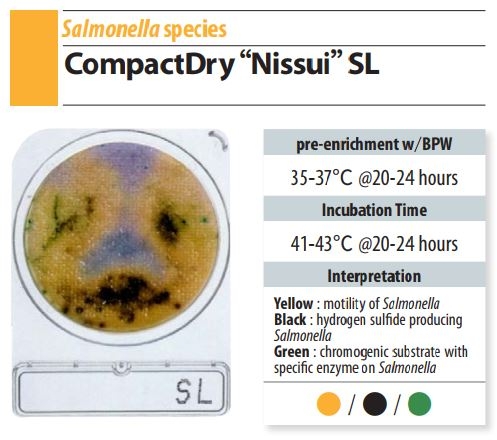
- The diluted sample is incubated at 37 °C for 24 hours to enrich the bacteria, giving Salmonella the conditions to grow and increase in number.
- The common preliminary enrichment medium is BPW or another specific medium.
3. Preparing the Compact Dry SL Salmonella plate
- The Compact Dry plate for Salmonella comes pre-designed, containing dry selective medium and color indicators for detecting bacterial growth.
- When the sample is added to the Compact Dry plate, the dry medium on it absorbs the solution and turns into a gel-type bacterial culture medium.
4. Inoculating the sample onto the Compact Dry SL Salmonella plate
- After enrichment, an aliquot of the culture (usually 1 mL) is dropped directly onto the surface of the Compact Dry plate.
- The sample distributes evenly over the plate surface thanks to the self-diffusing property of the gel medium on the plate.
5. Incubating the sample
- After inoculation, the Compact Dry plate is incubated at 37 °C for about 20–24 hours.
- Salmonella bacteria, if present, develop into colonies with distinctive colors and morphology.
6. Reading the results
- Salmonella colonies grown on the Compact Dry plate have a characteristic color, making them easy to distinguish from other bacteria.
- Salmonella colonies usually appear red or violet thanks to the color indicator in the selective medium.
- The number of colonies can be counted directly on the plate, from which the number of Salmonella bacteria in the sample is estimated.
* Advantages of the Compact Dry SL Salmonella method:
- Fast and easy to use: no complicated culture media or expensive equipment required.
- Convenient: Compact Dry plates are compact, easy to store and transport.
- High accuracy: the method allows precise detection of Salmonella in food thanks to the selective medium and color indicator.
- Visual results: results can be observed directly by the naked eye through the colonies' growth and colors.
* Disadvantages:
- Sample incubation time: although fast, the method still needs 20–24 hours of incubation for colonies to develop.
- Only detects Salmonella in sufficiently large numbers: the method may miss bacteria in very low numbers, especially if the bacteria have not been enriched enough.
2.3. Rapid detection by PCR (Polymerase Chain Reaction)
- PCR is a technique for detecting bacterial DNA in the food sample, shortening test time compared with the traditional method. See the Salmonella PCR test kit here.
- Principle: PCR amplifies a characteristic DNA segment of Salmonella to detect the presence of this bacterium in the sample. The technique has high sensitivity and specificity.
- Time: results come faster than the traditional method, usually from a few hours to one day.
2.4. The ELISA method (Enzyme-Linked Immunosorbent Assay)
- Principle: ELISA is based on the binding between antibodies and Salmonella-specific antigens. When the antigen (protein of the Salmonella bacterium) is present,
- Time: this method can also give fast results, usually within 24 hours
2.5. Rapid detection by LAMP (Loop-mediated Isothermal Amplification)
- Principle: the LAMP technique is a DNA amplification method similar to PCR but run at constant temperature. The method can detect Salmonella with high accuracy in a short time.
- Advantage: this method is fast and does not require expensive thermal-cycling equipment like PCR.
2.6. The Most Probable Number (MPN) counting method
- Principle: based on the ability of Salmonella to grow in liquid media, the MPN method estimates the number of bacteria in the food sample.
- Application: this method is usually used to quantify Salmonella in liquid or highly homogeneous food samples.
3. Conclusion
Detecting Salmonella in food is an important process in food safety control. The traditional microbiological method is the gold standard; however, newer methods such as the Compact Dry plate, PCR, ELISA and LAMP shorten test time and raise accuracy.