
1. Introduction
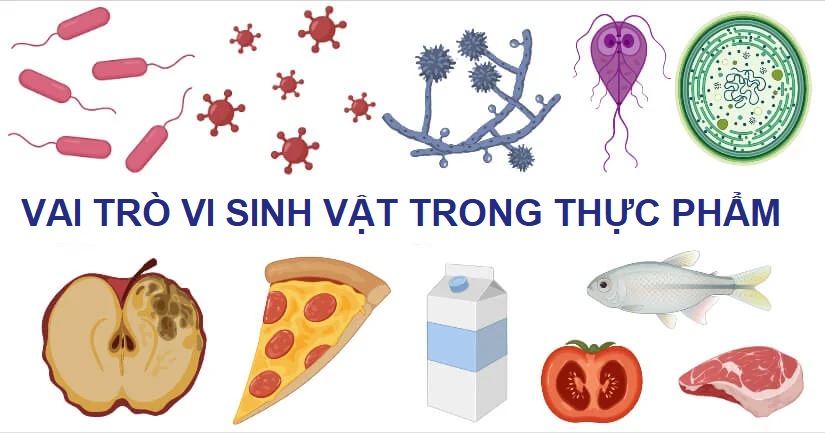
- Microorganisms (microorganisms) are a group of extremely small organisms including bacteria, yeasts, molds, and microalgae. They are found everywhere in nature, from soil and water to the food processing industry.
- Rather than only causing spoilage or contamination, many kinds of microorganisms bring enormous benefits, helping create the characteristic flavors, textures, and nutritional values of food.
2. Classifying the roles of microorganisms in food processing
🔹 2.1. Beneficial microorganisms in food processing
Some microorganisms are selected by humans and applied in fermentation processes to create food and drink products with special properties.
The main groups are:
Lactic acid bacteria (Lactic acid bacteria)
The group of bacteria that produce lactic acid during fermentation. They are widely used in:
- Yogurt, cheese, kefir
- Pickled vegetables, kimchi, sour pork rolls (nem chua)
- Fermented drinks (kombucha, kvass)
→ They improve flavor, extend shelf life, and raise nutritional value.
Yeast (Yeast)
The species Saccharomyces cerevisiae is widely used in:
- Wine and beer production
- Bread making (leavening)
→ Its main role is converting sugar into ethanol and CO₂, creating characteristic flavor and making dough rise.
Molds (Mold)
Some beneficial molds such as Aspergillus oryzae and Penicillium roqueforti are used to:
- Ferment soybean paste, fish sauce, miso, and soy sauce (through producing enzymes that break down protein and starch)
- Process blue cheese (blue cheese)
→ They contribute to creating the characteristic color, smell, and flavor of foods.
🔹 2.2. Harmful microorganisms in food processing
- Alongside the beneficial strains, many microorganisms cause spoilage or food toxicity, lowering product quality and threatening consumer health.
- Pathogenic bacteria: Salmonella, Listeria monocytogenes, E. coli O157:H7, Staphylococcus aureus… → Cause food poisoning or foodborne illnesses.
- Toxin-producing molds: Aspergillus flavus and Fusarium sp.… → Produce mycotoxins such as aflatoxin and ochratoxin, which are dangerous for the liver and the immune system.
- Therefore, in food production, microbial control is the key factor in ensuring food safety.
👉 For this reason, microbiological testing of food is a mandatory step in every quality control process (HACCP, ISO 22000…).
3. Practical applications of microorganisms in food processing
- Traditional fermentation: producing wine, beer, soy sauce, pickled vegetables, and yogurt.
- Microbial enzyme technology: using microbial enzymes to improve the hydrolysis of starch, protein, lipids, and functional ingredients.
- Probiotic food production: adding beneficial bacteria (such as Lactobacillus, Bifidobacterium) to yogurt, milk, and dietary supplements.
- Food biotechnology: applying microorganisms in producing flavorings, amino acids, vitamins, and food additives.
4. Methods for controlling and testing microorganisms in food processing
To make sure products meet microbiological safety standards, businesses need to apply two groups of solutions together:
Microbial control in the production process
- Design workshops and processing areas following one-way-flow principles.
- Control water sources, incoming raw materials, and the air environment.
- Clean and disinfect equipment and production surfaces regularly.
- Train staff on personal hygiene and standard operating procedures (GMP, HACCP).
Periodic microbiological testing of raw materials and finished products
- The parameters commonly tested include: total aerobic microorganisms (TVC), Coliforms, E. coli, Salmonella, Staphylococcus aureus, and Yeast & Mold…
5. A rapid testing solution using Compact Dry plates – Shimadzu
- Among the testing methods available today, the Compact Dry plate is a rapid microorganism test trusted by many testing labs and food factories.
The outstanding advantages of the Compact Dry plate
- No medium preparation needed – the plate comes with nutrients and a color indicator.
- A simple operating procedure: drop 1 mL of sample onto the plate → incubate at a suitable temperature → read the result after 24–48 hours.
- Results are easy to observe and clear to the naked eye thanks to a color-change system characteristic of each kind of bacterium.
Many specialized plate types are available:
- Compact Dry TC – total aerobic microorganisms
- Compact Dry EC – E. coli and Coliforms
- Compact Dry YMR – yeasts and molds
- Compact Dry SA – Staphylococcus aureus
- Compact Dry SL – Salmonella
- ..............
- Today, the Pacific company is the official distributor of Shimadzu (Japan) Compact Dry plates in Vietnam.
Microorganisms play an essential role in the food industry – they bring great benefits but can also cause serious harm if not controlled tightly.
To exploit the positive side and control the negative side, businesses need to apply suitable testing technology, combined with standard production processes and contamination prevention.
👉 See also Rapid microorganism testing in food with Shimadzu Compact Dry plates