

- Food allergens affect not only individual health but also create challenges for the food industry, from production and processing to distribution and consumption.
- Knowing the list of common allergens, together with the labeling regulations, helps consumers make safer, smarter choices. At the same time, it supports producers controlling materials and processes tightly and ensuring compliance with food safety laws.
1. The concept of food allergens
- An allergen: a compound or ingredient in food capable of provoking an overreaction of the immune system, resulting in an allergic reaction.
- An allergic reaction: may be itching, hives, swelling of the lips or tongue, difficulty breathing, abdominal pain, nausea, or even anaphylactic shock. The degree of reaction depends on each individual's constitution and sensitivity.
2. The list of food allergens
- Although there are very many ingredients that can cause allergy, several common allergen groups have been established worldwide, usually required to be stated on food labels by international and national food safety organizations.
- Below is the "Big 8" (in the US) or "14 major allergens" (in the EU) — the groups causing most cases of food allergy.
2.1. The groups regulated most strictly
- Peanut: a very common ingredient in confectionery, peanut butter, peanut oil and many Asian dishes.
- Tree nuts: include almonds, walnuts, cashews, pistachios, hazelnuts, Brazil nuts... These nuts usually appear in candy, chocolate, pastries
- Cow's milk: contains proteins such as casein and whey, easily causing allergy in children, present in fresh milk, cheese, yogurt, ice cream, butter...
- Eggs: the protein in chicken egg white (sometimes yolks too) can cause allergy, found in cakes, noodles and many processed products.
- Fish: proteins in fish (salmon, tuna, cod...) often cause reactions. Fish oil, fish sauce and fish-based sauces also need attention.
- Shellfish: includes shrimp, crab, clams, mussels, oysters... The protein in this group very easily causes anaphylaxis in allergic people.
- Soy: widely present in soy milk, sauce, tofu, soy sauce and soy lecithin (an emulsifier in many confectionery products).
- Wheat: gluten in wheat is the agent causing allergy or intolerance (such as celiac disease), found in bread, pasta, biscuits and countless other processed products.
2.2. Other allergens under European (EU) regulation
Besides the "Big 8" above, the EU also requires several more allergens to be labeled, including:
- Sesame: used in bread, pastries and sesame oil.
- Mustard: used as a condiment and in sauces.
- Lupin: used as a gluten-replacing ingredient, present in some gluten-free baked products.
- Sulfites (sulfite preservatives): commonly used in wine and dried fruit; can cause breathing problems.
- Celery: used in soups, stock and condiments.
- Molluscs: such as snails, squid and octopus.
3. Rules for allergen labeling around the world
- In the United States: the Food and Drug Administration (FDA) requires the 8 main allergens to be stated clearly on food labels.
- In the European Union: EU regulation (such as Regulation (EU) No 1169/2011) requires 14 allergens to be stated. They must be printed in bold or highlighted in the ing
- In Australia and New Zealand: the FSANZ food standards body lists many allergens that must be declared.
- In Japan: there is a separate list including several allergens that must be declared.
- In Vietnam: although the management and labeling of allergens are receiving growing attention, the regulatory system is still being completed to fit the internat
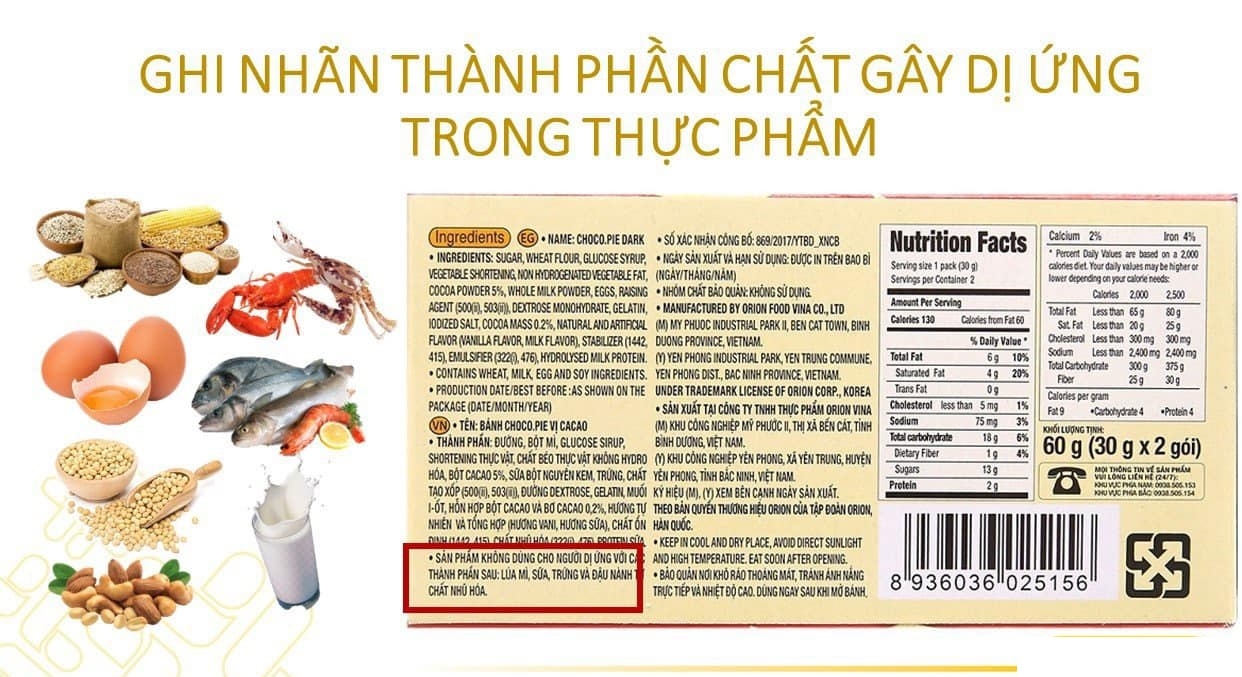
4. The meaning of allergen labeling
- Protecting consumers: clear labeling lets people with allergies choose safe products, avoiding health risks.
- Transparent information: showing the producer's responsibility and reputation, helping consumers trust the brand.
- Legal compliance: helping producers meet legal requirements, avoiding fines and maintaining the ability to export goods to international markets.
5. Practice in producing and controlling allergens
- Material control: producers need to check the input material sources and make sure they contain no allergens, or the lowest possible levels.
- Cross-hygiene procedures: must be controlled tightly in the factory, avoiding allergenic materials touching production lines for food that does not contain them
- Staff training: staff must be trained in food allergy knowledge, labeling methods, hygiene procedures and material handling.
6. Advice for consumers
- Read labels carefully: when shopping, pay attention to the allergen information on the packaging.
- Care when eating out: when eating at a restaurant, tell your allergy situation clearly to the waiters or the cooks.
- Consult a medical expert: if you suspect a food allergy, see a doctor or nutrition specialist for diagnosis and advice.
The list of food allergens is not only a medical concept, it also has great practical meaning in everyday life. Understanding and managing them well and labeling t
Pacific is currently a leading business in Vietnam in the field of providing rapid tests for food. Our food test-kit products are all licensed and hold certified, inspected credentials. Customers can be 100% reassured using the tests for allergens in food. Please contact us if you have questions about the product for further detailed support.
You can refer to the allergen test-kit solution we supply at the following link:
https://pacificlab.vn/vi/shops/group/phan-tich-chat-gay-di-ung/page-3/