

1. VACCINATION VACCINE ACTIVATES THE IMMUNE SYSTEM AGAINST COVID 1
Vaccination is a successful measure that protects global health and saves millions of people every year from infectious diseases. Vaccine reduces both the risk of infection and the severity of symptoms by activating your body's natural immune system to build a protective barrier. Vaccination has prevented 2-3 million deaths every year from diseases such as diphtheria, tetanus, pertussis, influenza and measles (WHO data).
Vaccination is an important measure of the health care system. It is also one of the best investments in health you can buy with money. Vaccine is also very important in preventing and controlling infectious disease outbreaks.
Fighting the pandemic Covid-19 over the past two years. Vaccines have further affirmed their important role in countries' health care efforts. The sharp drop in mortality among people vaccinated against Covid 19 is an encouraging sign. However, the vaccine "industry" is facing continuous challenges as new variants of the Sars-cov 2 virus emerge .

2. WHAT IS NEEDED TO DEVELOP A NEW COVID 19 VACCINE?
In the context of continuously emerging corona virus variants. The production process of covid 19 vaccines necessarily has to be shortened. However, the required factors must still be ensured at the time of approval. The common stages of the vaccine development process for vaccines in general and for vaccines against covid 19 specifically are presented below
2.1 Vaccine research stage
This stage involves basic laboratory research and usually takes 2-4 years. In this stage, scientists seek to create antigens and identify natural or synthetic antigens that can help prevent or treat the disease. These antigens may include part of a virus, an attenuated virus/ bacteria, attenuated bacterial toxins or other substances derived from pathogens.
For Vaccines against Covid 19, this stage has been remarkably shortened. In just 3-6 months, scientists successfully isolated the first sars-cov 2 strain. In Vietnam, on 7/2/2020, the Central Institute of Hygiene and Epidemiology announced the successful isolation of this virus strain for the first time.
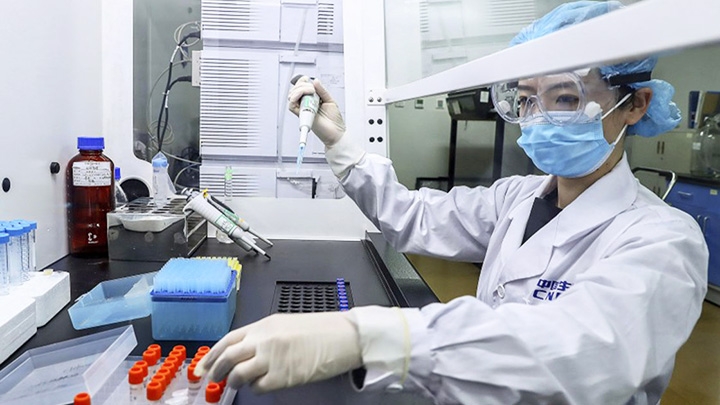
a. Antigen creation
Pathogen proteins or DNA are developed and harvested through several mechanisms:
- Viruses are grown in host cells
- Bacteria are cultured in bioreactors
- Recombinant proteins derived from pathogens can be produced in yeast, bacteria or cell culture.
b. Release and isolation of the antigen
In this stage, the antigen is separated from the cells and isolated from the protein and other components of the growth medium.
c. Purification
In this step, the antigen is purified to obtain a high quality product. To purify the antigen, protein separation techniques based on differences in size, physicochemical properties, binding affinity or biological activity are used.
d. Formulation
The fourth step consists of adding substances such as:
- Adjuvants, which enhance the immune response of the recipient
- Stabilizers, which extend the shelf life - Preservatives to allow several types of antigen to be safely combined when needed (combination vaccines). This type of vaccine is more difficult to develop.
2.2 The preclinical stage in general vaccine research and in research on covid 19 vaccines specifically
Preclinical studies use tissue or cell culture systems and animal testing. They are intended to evaluate the safety of vaccine and its immunogenicity (or its ability to induce an immune response). Animal subjects such as mice and monkeys. These studies allow the immune responses expected in humans to be predicted. This makes it possible to propose a safe starting dose for the next research stage as well as a safe method of vaccine administration.
In this stage, scientists also adjust the vaccine formulation to make it more effective. Challenge studies in animals are also carried out. That is, the vaccine is injected into animals and then an attempt is made to infect them with the pathogen to verify this.The preclinical stage normally takes 1-2 years, however for covid 19 vaccines, the preclinical stage can be shortened to less than one year.
References:
CDC Amerrica https://www.cdc.gov/vaccines/basics/test-approve.html
The history of Vaccine: https://www.historyofvaccines.org/content/articles/vaccine-development-testing-and-regulation
Journal of Preventive Medicine: http://www.tapchiyhocduphong.vn/tin-tuc/dien-dan-y-hoc-du-phong/thu-nghiem-lam-sang-vac-xin-khau-quan-trong-bao-dam-tinh-an-toan-cua-tiem-chung--o81E21038.html