- Testing microorganisms in food aims at early detection of pathogenic agents, so that appropriate measures can be taken in a timely manner.
- Currently, there are many methods for microbiological testing in food, including traditional culture, immunological techniques and molecular biology. Among them, the PCR method (Polymerase Chain Reaction) is a powerful tool that helps detect pathogenic microorganisms quickly, accurately and specifically.
1. Principle of the PCR Method
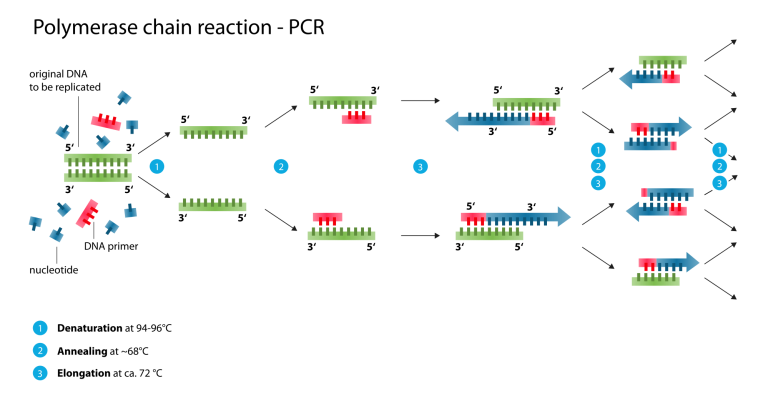
- PCR is an in vitro DNA amplification technique based on a thermal cycle, which allows detection of specific DNA segments of pathogenic microorganisms. The main principle of PCR includes three main steps:
- Denaturation: The DNA sample is heated to a high temperature (about 94-98°C) to separate the double strand into two single strands.
- Annealing: The temperature is lowered to 50-65°C so that the specific primers bind to the target DNA segment.
- Extension: DNA polymerase (usually Taq polymerase) synthesizes a new DNA strand from the primers with the addition of nucleotides at 72°C.
This cycle is repeated many times (usually 25-40 times) to amplify a large amount of target DNA, making it easy to detect pathogenic microorganisms even when they are present at very low concentrations.
2. Process for Testing Microorganisms in Food by PCR
* Step 1: Sample preparation
- The food sample is taken and processed to release the DNA of the microorganisms within it.
- Common sample types include meat, milk, water, vegetables, and ready-to-eat foods.
- DNA extraction techniques usually use commercial kits or traditional methods (using lysis by heat, chemicals or enzymes).
* Step 2: PCR reaction preparation
The PCR system includes the following components:
- Extracted DNA sample.
- Specific primer pairs (primers) for the bacterium or microorganism to be detected.
- dNTPs (deoxynucleotide triphosphates) - the material for synthesizing new DNA.
- Thermostable DNA polymerase (Taq polymerase).
- Buffer solution and Mg2+ ions necessary for enzyme activity.
* Step 3: Run PCR
- The PCR reaction mixture is placed in a PCR machine to perform the DNA amplification cycle.
- PCR run time usually takes from 1 to 2 hours, depending on the type of microorganism to be detected.
* Step 4: Result analysis
- After PCR is complete, the amplified DNA product is analyzed by electrophoresis on agarose gel and stained with ethidium bromide or SYBR Green.
- If a DNA band appears at the expected position, this indicates the presence of pathogenic microorganisms in the food sample.
- Besides electrophoresis, the real-time PCR (qPCR) method can be used to accurately quantify the number of microorganisms in the sample.
3. Advantages and limitations of the PCR method
3.1. Advantages:
- High sensitivity: Can detect microorganisms at very low concentrations.
- Fast speed: Only takes a few hours to get results, compared with culture methods which may take several days.
- High specificity: Can distinguish pathogenic microorganisms from non-pathogenic bacteria based on genetic characteristics.
- Quantification capability (with qPCR): Helps accurately determine the number of microorganisms in the sample.
3.2. Limitations:
- High cost: PCR equipment and reagents are usually more expensive than traditional culture methods.
- High technical requirements: A standard-compliant laboratory and qualified staff are needed.
- Cannot distinguish live from dead microorganisms: PCR only detects DNA, so it may also detect microorganisms that have been killed.
4. Applications of PCR in food testing
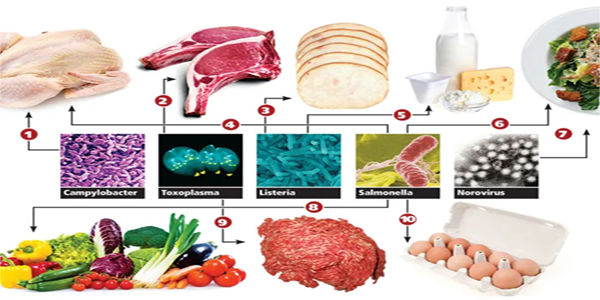
- Detection of Salmonella spp. in chicken, eggs, milk.
- Detection of Escherichia coli O157:H7 in vegetables, beef.
- Detection of Listeria monocytogenes in milk and ready-to-eat foods.
- Detection of Vibrio parahaemolyticus in seafood.
- Testing other pathogenic agents such as Staphylococcus aureus, Campylobacter spp., Clostridium botulinum.
The PCR method has been and is becoming an important tool in testing pathogenic microorganisms in food. With high sensitivity and specificity, PCR helps detect pathogenic agents quickly, contributing to ensuring food safety and protecting public health. However, due to high costs and complex technical requirements, PCR is often combined with other methods to optimize testing efficiency.
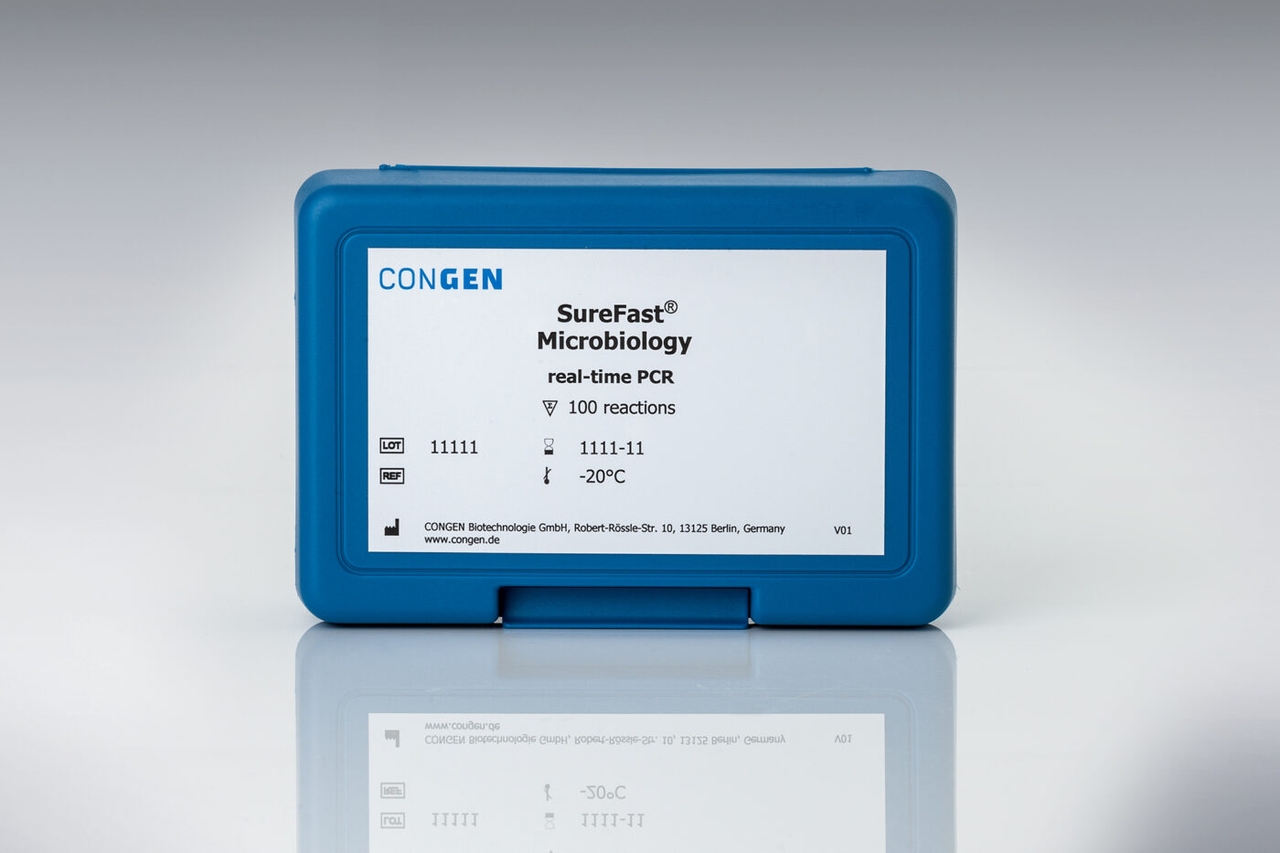
PacificLAB specializes in providing Real Time PCR test kits used to test pathogenic microorganisms in food. For any information requests and quotation details about products, please feel free to contact us!