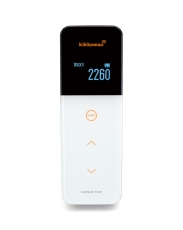
CIP (Cleaning In Place) and RO (Reverse Osmosis) water systems are commonly applied to ensure hygiene, removing microorganisms and impurities. However, testing and monitoring the water quality in these systems needs to be done rigorously, quickly, and accurately. The ATP Lumitester Smart has become an advanced tool that supports this process effectively.
1. The role of CIP water and RO water in production
– CIP water (Cleaning In Place) is the automatic cleaning system inside equipment, piping, and production surfaces that requires no disassembly. This is an extremely important process for ensuring hygiene, blocking microbial growth, and removing impurities during production, especially in the food and pharmaceutical industries.
– RO water (Reverse Osmosis) is water that has been filtered through an RO membrane to remove impurities, microorganisms, and unwanted ions; it is commonly used in processes that require pure water. RO water quality plays an important part in making sure the final products are not contaminated by foreign factors.
To assure the effectiveness and safety of these two types of water, accurate testing methods are needed to assess the level of microorganisms present, and the ATP Lumitester Smart is one of the optimal solutions.
2. The ATP Lumitester Smart and how it works
– The ATP Lumitester Smart is a device using Adenosine Triphosphate (ATP) detection technology — an energy molecule present in all living cells, including microorganisms. When a quantity of ATP is detected, it is a sign of the presence of microorganisms, dirt, or organic impurities in the water.
– The device works based on the bioluminescence reaction, in which ATP reacts with the luciferase enzyme to produce light. This brightness is then measured by the device and converted into an ATP index, reflecting the level of microbial contamination in the water sample. With the ability to deliver results within seconds, the Lumitester Smart instantly assesses the quality of CIP and RO water.

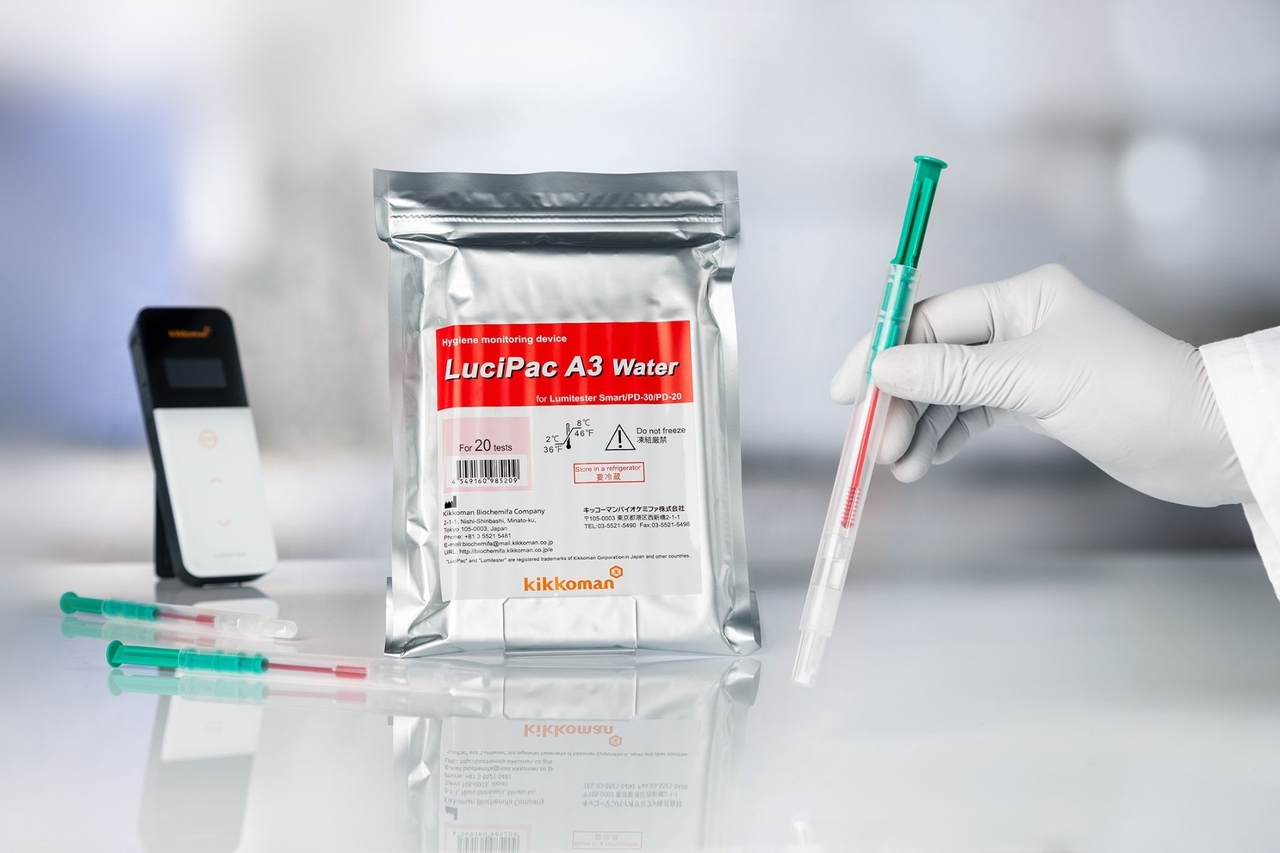
– The Lucipac A3 Water ATP swab is used together with the Lumitester Smart to test CIP and RO water. The Lucipac A3 Water swab uses luminescent technology to test the amount of ATP and AMP (Adenosine Monophosphate) present in water or on contact surfaces. ATP is the energy compound present in all living cells, including microorganisms. Detecting ATP reveals the presence of microorganisms or organic impurities, which assesses how clean the tested water source or surface is.
– The Lucipac A3 Water swab from Kikkoman detects not only ATP but also measures AMP and ADP (Adenosine Diphosphate), increasing the accuracy and sensitivity of the test. This is very important for circulating water systems, drinking water, domestic water, production water in the food industry, and even medical environments that require strict disinfection.

3. Testing CIP water with the ATP Lumitester Smart
The CIP cleaning process requires complete removal of organic impurities and microorganisms. Therefore, monitoring the quality of CIP water is the crucial factor in ensuring the cleaning process is effective.
– Measuring ATP in CIP water: with the Lumitester Smart, operators can quickly check the residual ATP concentration after cleaning. If the ATP level is low or negligible, it shows the CIP process has completely removed microorganisms and organic dirt. Conversely, if the ATP level is high, it is a warning sign that the cleaning process does not meet requirements and needs adjustment.
– Regular checks: carrying out scheduled ATP testing in the CIP water system detects any failure in the cleaning process early, cutting the risk of cross-contamination in production.
4. Testing RO water with the ATP Lumitester Smart
RO water is commonly used in processes that require highly pure water. Even though the RO filtration process removes most microorganisms and impurities, monitoring and testing the water quality remains necessary to ensure safety.
– Monitoring RO water quality: using the Lumitester Smart, managers can quickly assess the ATP level in RO water. A low ATP concentration shows the RO system is running effectively and the water meets the purity requirement. Conversely, a high ATP level may mean the filtration system needs checking or maintenance.
– Optimizing the filtration process: monitoring ATP in RO water not only assesses filtration effectiveness but also optimizes the process, ensuring the water reaches standard before being used in the critical stages of production.
5. The benefits of using the Lumitester Smart in testing CIP and RO water
– Rapid testing: instead of waiting for results from traditional methods such as microbial culture, the Lumitester Smart delivers results within just 10 seconds, saving the business time and raising flexibility in production.
– High accuracy: thanks to modern luminescence technology, the device can detect very small ATP levels, ensuring that even the smallest microorganisms or impurities are not missed.
– Easy to use: the device is compact and simple to operate, suitable even for non-specialists in microbiological testing. In particular, the Lumitester Smart can connect with a phone or tablet so data can be managed and stored with ease.
The ATP Lumitester Smart is an effective tool for testing and monitoring the quality of CIP and RO water. With fast, accurate, easy-to-use results, the Lumitester Smart has become an optimal solution that helps businesses assure production quality, raising the reliability and safety of their products. As hygiene and quality requirements rise, adopting advanced technology such as the Lumitester Smart is the right and necessary step.
You can see our products at the following link: