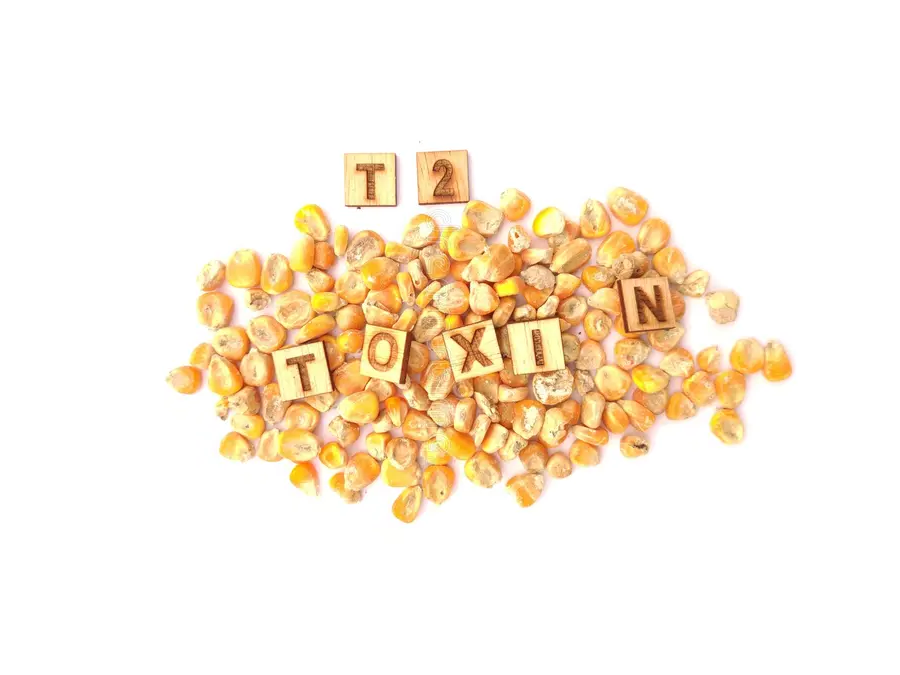
- T-2 and HT-2 toxins belong to the trichothecene group, characterized by extreme toxicity: they inhibit protein synthesis, destroy cells and cause a wide range of negative effects on animals and humans.
- T-2 toxin is usually converted into HT-2 during digestion, so both toxins are usually assessed together when analyzing risks in animal feed.
1. Effects of T-2 and HT-2 toxins on livestock
T-2 and HT-2 toxins can seriously harm livestock health, depending on the dose and duration of exposure:
- For cattle: causes ulceration of the oral mucosa, gastric and intestinal bleeding, reduced digestion and nutrient absorption. Growth performance and fertility are also seriously affected.
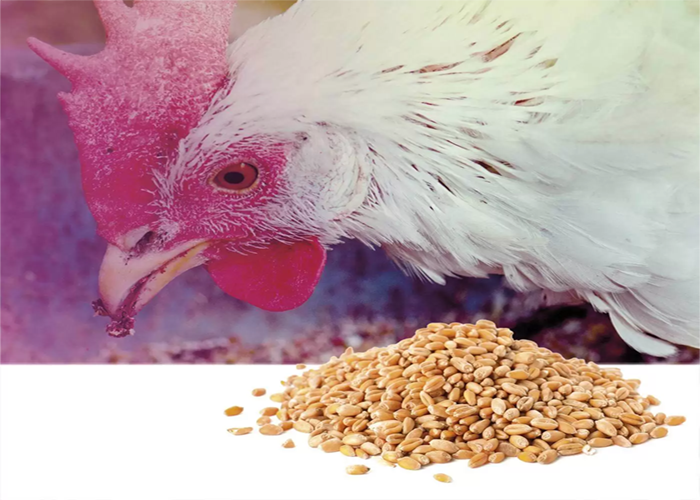
- For poultry: reduced egg production, higher embryo mortality, liver and kidney damage, plus digestive problems.
- For pigs: causes vomiting, diarrhea, reduced feed intake and a weakened immune system, leading to a risk of secondary infections.
- For aquaculture: affects liver and kidney function, reducing growth and survival rates.
- T-2 and HT-2 toxins cause not only acute poisoning but also chronic problems such as cancer and immune system impairment with prolonged exposure.
2. Factors affecting toxin formation
- Weather conditions: high temperature and humidity are ideal conditions for Fusarium fungi to grow and produce toxins.
- Storage stage: improper storage of raw materials, especially in humid environments, can easily lead to toxin contamination.
- Storage duration: the longer the storage, the higher the risk of toxin accumulation.
3. Regulations on T-2 and HT-2 toxin limits in animal feed
Today, many countries and international organizations have set maximum limits for T-2 and HT-2 in animal feed. The European Commission (EC) recommends the following combined limits for T-2 and HT-2:
- Compound feed for pigs: 250 µg/kg.
- Compound feed for poultry: 100 µg/kg.
- Unprocessed cereals: 200 µg/kg.
- However, these standards may vary depending on the region and the animal species.
4. Methods for controlling T-2 and HT-2 toxins
To minimize the risk of T-2 and HT-2 contamination in animal feed, the following solutions can be applied:
- Raw material control: choose high-quality raw material sources free of mold, and ensure shipments do not exceed the permitted threshold.
- Proper storage: store feed in a dry, well-ventilated environment with humidity below 14% to limit Fusarium growth.
- Use of toxin adsorbent additives: add adsorbents such as bentonite, zeolite or toxin-degrading enzyme products to the diet.
- Periodic analysis: regularly check T-2 and HT-2 levels in raw materials and finished feed using modern analytical methods such as HPLC or ELISA.
- Livestock process management: reduce stress for the animals and ensure adequate nutrition to strengthen natural resistance.
5. Methods for testing T-2 and HT-2 toxins in animal feed
5.1. Qualitative method with rapid test strips (Rapid Test)
- Principle: uses a test strip or rapid kit based on the immune reaction between the antigen (T-2/HT-2 toxin) and specific antibodies.
* Advantages:
- Fast, taking only 5–15 minutes.
- Easy to use, no complex equipment required.
- Suitable for on-site screening.
* Disadvantages:
- Lower accuracy than quantitative analytical methods.
- Only indicates whether the sample exceeds the threshold, without providing a specific level.
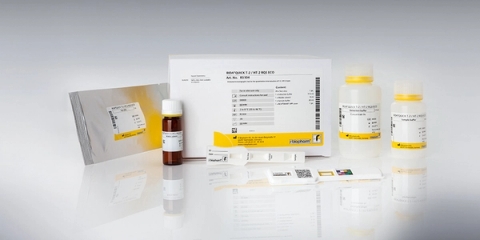
* Application: Commonly used at farms or feed production facilities for initial testing. See the T-2 and HT-2 rapid test kit product here.
5.2. Quantitative method with ELISA (Enzyme-Linked Immunosorbent Assay)
- Principle: uses specific antibodies to detect and quantify T-2 and HT-2 toxins through a color reaction.
* Procedure:
- Extract the toxin from the feed sample with a solvent.
- Put the sample into wells containing antibodies and enzyme.
- Read the results with a spectrophotometer.
* Advantages:
- High sensitivity, detects low concentrations.
- Lower cost than chromatographic methods.
- Suitable for large sample volumes.
* Disadvantages:
- Requires basic laboratory equipment and investment in auxiliary devices.
- May be affected by impurities in the sample (matrix interference).
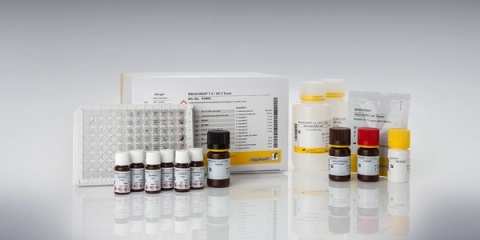
Please see the ELISA test kit for T-2 and HT-2 toxins we supply here.
5.3. High-Performance Liquid Chromatography (HPLC)
- Principle: separates and quantifies the toxin based on differences in physicochemical properties as it moves through the chromatography column.
* Procedure:
- Extract the toxin with a solvent (usually methanol or acetonitrile).
- Clean up the sample through an SPE column (Solid Phase Extraction).
- Analyze on an HPLC system connected to a UV or fluorescence detector.
* Advantages:
- High accuracy.
- Separates and quantifies T-2 and HT-2 at the same time.
* Disadvantages:
- High equipment investment cost.
- Complex process requiring experienced technicians.
5.4. Gas chromatography (GC - Gas Chromatography)
- Application: less common than HPLC but still used in some special cases, combined with a mass spectrometry detector (GC-MS).
- Advantages: high sensitivity and accuracy.
- Disadvantages: the sample requires derivatization to increase volatility.
5.5. Liquid chromatography–mass spectrometry (LC-MS/MS)
- Principle: combines liquid chromatography with mass spectrometry to detect and quantify toxins precisely.
* Advantages:
- The highest sensitivity and specificity of all the methods.
- Quantifies many different toxins in the same sample simultaneously.
- Suitable for in-depth research or large-scale testing.
* Disadvantages:
- Very high equipment and chemical investment costs.
- Requires specially trained staff.
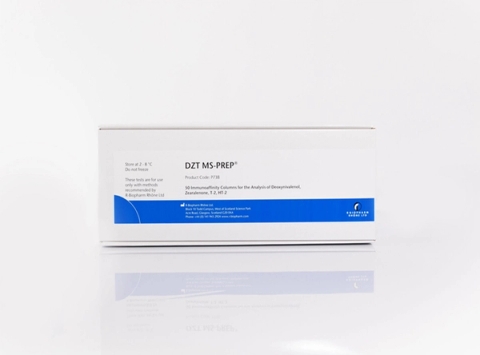
Please see the immunoaffinity column product for T-2 and HT-2 toxin analysis here.
5.6. Modern alternative methods
* Biosensors
- Principle: uses biosensors integrating enzymes or antibodies to detect toxins.
- Advantages: fast, accurate analysis with little sample required. Easy to integrate into automated systems.
- Disadvantages: still in development, not yet widely available.
* Microfluidics
- Principle: integrates sample analysis on small microchips, combined with immunoassays or chromatography.
- Advantages: high potential for rapid, low-cost testing.
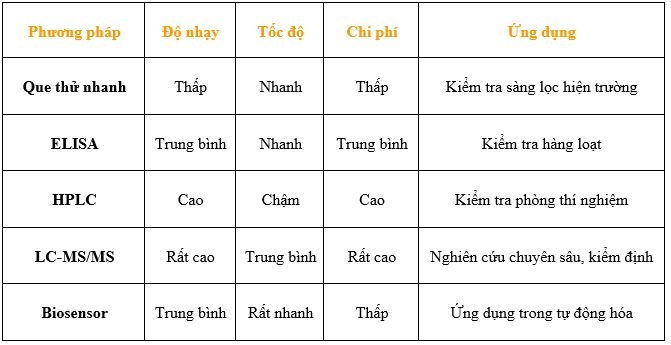
6. Comparing mycotoxin testing methods
7. Choosing the right method for mycotoxin testing
- Initial screening: rapid test strips or ELISA.
- Accurate quantitative analysis: HPLC or LC-MS/MS.
- In-production quality control: ELISA combined with periodic rapid testing.
- In-depth analysis or research: LC-MS/MS or GC-MS.
Depending on the goal, budget and infrastructure, you can choose the right method to control T-2 and HT-2 toxins, ensuring the safety and quality of animal feed.