

1. Surface hygiene testing with an ATP meter
1.1 Principle of the ATP meter
What are ATP, ADP, AMP?: ATP (adenosine triphosphate) - is the energy source required by living cells. ATP is a molecule present in the metabolism of all living organisms. ADP (adenosine diphosphate) and AMP (adenosine monophosphate) are produced from ATP when there is fermentation or heat treatment in the dephosphorylation process
Measurement target: ATP, ADP, AMP present in bacteria and leftover food
1.2 Disadvantages of surface hygiene testing with a conventional ATP meter
ATP can be unstable and be broken down into ADP and AMP. This means that conventional systems that only measure ATP may not find the actual presence of dirt and may give false negative results.
With breakthrough chemistry, the test strip Lucipac A3 simultaneously detects ATP, ADP and AMP with sensitivity many times higher than other products on the market. Ensures surface hygiene testing carried out properly will support a more effective hygiene control process. Aiming to reduce the presence of resident organisms and the risks of hidden pathogen residues in food.
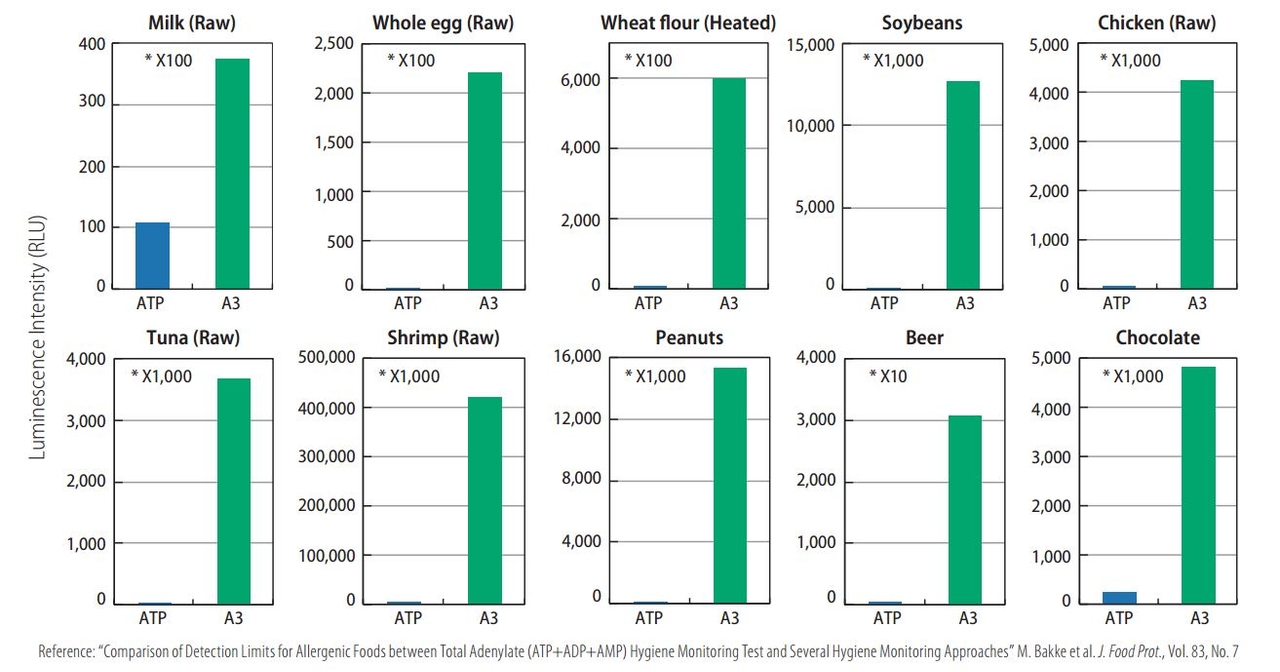
In particular, ATP in meat, seafood, eggs and fruit is broken down into ADP and AMP during processing, increasing the concentration of ADP and AMP. The A3 Hygiene System shows outstanding sensitivity and stability in detecting food residues compared to competing ATP meters on the market.
2. Surface hygiene testing with the Lumitester SMART ATP meter + Lucipac A3 test strip
2.1 Lucipac A3 test strip
Food and liquid samples can contain ATP, ADP and AMP due to improper facility sanitation or originate from hidden microorganisms in those samples. The device allows ATP + ADP + AMP measurement immediately, reflecting whether the cleaning process is adequate or not. For example: Inadequate surface hygiene testing for cooling water or other industrial treated water can be detected in time. This device will not guarantee that a given sample is not contaminated with bacteria.
*Please note that this kit must not be used to test or identify specific pathogenic bacteria specifically.
Lumipac A3 is an effective tool for monitoring surface cleaning and disinfection. The quantitative detection of Adenosine Triphosphates (ATP), Adenosine Diphosphates (ADP) as well as Adenosine Monophosphate (AMP) is performed in the Lumitester SMART handheld luminometer. The device enables rapid detection of food stains and microorganisms on product contact surfaces LuciPac ™ A3 surface. In addition, Kikkoman also launched the Lumipac A3 water which is used to check the cleanliness level of liquid samples.
2.2 Comparison of the surface hygiene testing capability of Lucipac A3 and conventional ATP meters
When conducting experiments comparing the sensitivity of conventional surface hygiene testing methods and the method using Lucipac A3. The results show the outstanding sensitivity of Lucipac A3. (See image)
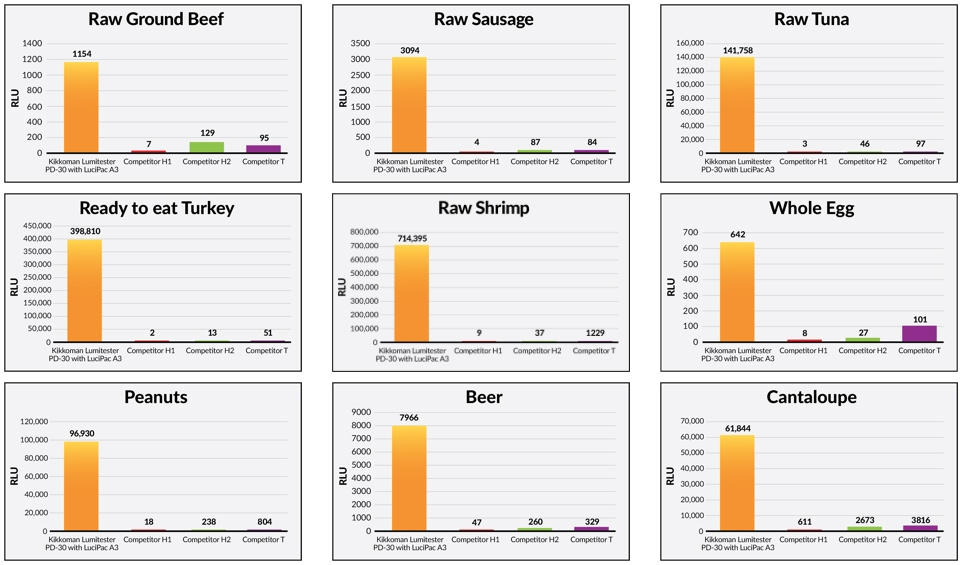
This sensitivity is achieved because the A3 measurement is many times more sensitive than the conventional ATP measurement.
2.3 Certification
The A3 ATP measurement method using the Lucipac A3 test strip and the Lumitester SMART handheld device has achieved certification
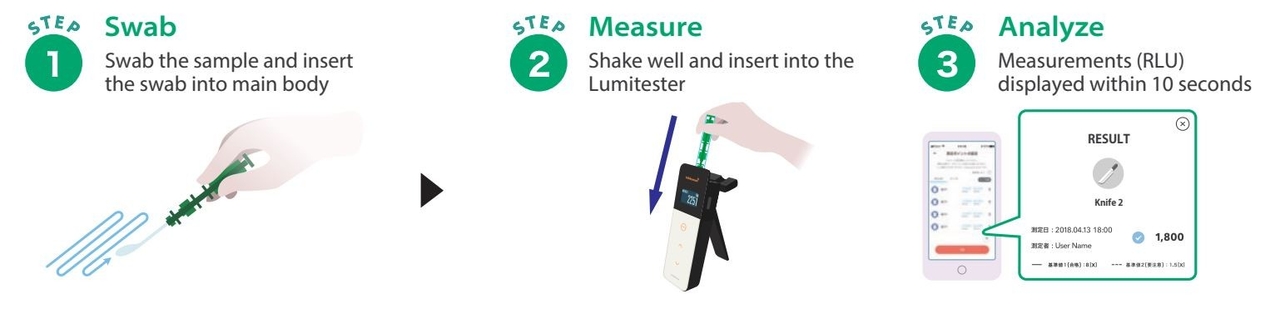
2.4 Simple three-step ATP measurement for surface hygiene testing
- Step 1: Swab test - Swab the surface and immerse the swab back into the measurement tube
- Step 2: Quantification - Shake well and place the measurement tube back into the Lumitester
- Step 3: Analysis - Results are displayed after 10s.
USB and Bluetooth connection to a phone or computer allows the results of the sanitation process to be saved as a report chart.
See more about the product: