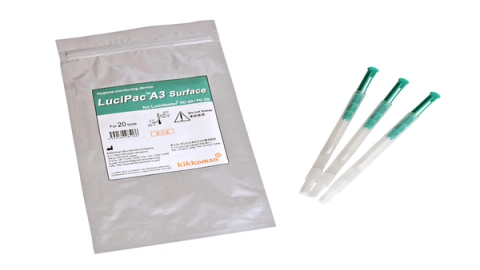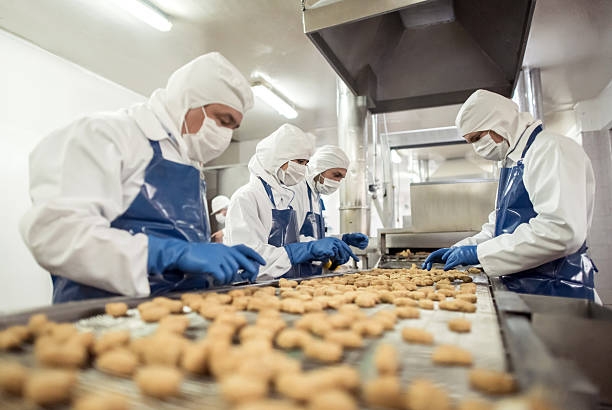
At a seminar presented by Mr Takayasu Watanabe from Kikkoman Food Products Co., Ltd., a typical study was shared, introducing the use of ATP Test (Kikkoman A3) to verify sanitation performance and monitor allergen cross-contamination in real production environments.
👉 See the information at the following link: https://biochemifa.kikkoman.com/download/?id=236&k=2
The role of ATP testing in allergen control
- Although ATP testing does not directly detect allergenic proteins, it can effectively measure the presence of residual organic substances (ATP, ADP, AMP), providing a fast and objective method to evaluate cleaning effectiveness. The ATP Test (Kikkoman A3) is unique in that it detects not only ATP but also ADP and AMP, increasing sensitivity compared with conventional tests that use ATP alone.
- ATP measurement is carried out with the Lumitester Smart device and LuciPac A3 swabs, with results expressed in Relative Light Units (RLU). Results are available within a few seconds, ideal for daily hygiene management.
Study confirmation: the correlation between ATP and protein contamination
To study the suitability of the ATP test for allergen control, the Kikkoman team carried out a confirmation experiment consisting of three steps:
1. Correlation between meat weight and ATP measurement
Meat samples (chicken breast, pork shoulder and beef thigh) were prepared and diluted. ATP concentration was measured and found to increase in proportion to sample weight (see Figures 3–5).
2. Protein content quantification
Using the Bradford method, the total protein content in the same samples was measured. A clear correlation between the ATP index and the protein content was established for all three types of meat (Figures 6–7).
3. Establishing the Pass/Fail limit: <500 RLU
- Based on the correlation data between ATP and protein, the pass/fail limit of 500 RLU or below was proven to correspond to cross-contaminating meat protein below 1 ppm—the threshold considered safe under Japan's allergen labelling exemption regulations.
- Example: If pork is processed before chicken and the equipment is not cleaned thoroughly, residual pork protein can cross-contaminate the chicken. The study shows that when the ATP index is below 500 RLU, the level of protein contamination is always below 1 ppm for all types of meat (see Table 3).
Practical application in daily hygiene management
At Kikkoman, this ATP testing method is implemented as follows:
- The swabbed area (10 cm x 10 cm) is measured after cleaning.
- <500 RLU = Pass.
If higher: cleaning must be repeated, then re-tested.
- Frequency: at least once a month. It can be temporarily increased to confirm the cleaning method or in case of risk.
- Supplementary test: occasionally use ELISA to confirm species-specific proteins.
- The combination of rapid ATP screening and ELISA confirmation helps ensure safe allergen control from raw materials to finished products.
Important disclaimer
The pass/fail limits, confirmation methods and allergen control processes shared here are for reference only. Each facility should set its own limits based on practical risk assessment, handling processes and current regulations.
Find out more: Allergen monitoring video series
This 3-part video series on YouTube will guide you through effective allergen monitoring measures by using the ATP Test (Kikkoman A3).