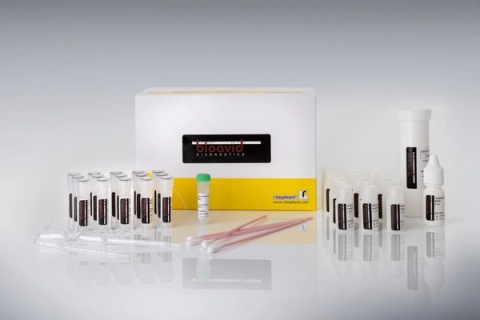
- Sesame is widely used in baked goods, cereals, chocolate, snacks, sauces, ready-to-eat foods and many other processed products. Besides being used as an ingredient, sesame can also occur unintentionally due to cross-contamination during production.
- For companies, sesame testing is not only about identifying ingredients that contain sesame, but also helps to control cross-contamination risk, support quality control and meet the requirements of customers or export markets.
- R-Biopharm offers sesame tests based on immunological methods, notably lateral flow rapid tests and quantitative ELISA, suitable for different testing needs in the plant and the laboratory.
What is a sesame allergen?
- Sesame allergens are proteins in sesame seeds that can cause allergic reactions in sensitive people.
- According to R-Biopharm, many allergenic proteins have been identified in sesame, including the groups of allergens known as Ses i 1–7. Allergic reactions to sesame can range from mild symptoms to severe reactions such as anaphylactic shock.
- Therefore, controlling sesame in food is an important part of the food allergen management. In particular, the risk does not only come from a company deliberately using sesame as an ingredient. Sesame can occur unintentionally when:
- Production lines are shared.
- Equipment or utensils are shared.
- Production line hygiene does not meet requirements.
- Ingredients are cross-contaminated during transport or storage.
- Products containing sesame are produced near products that do not contain sesame.
- Grinding, mixing or packing steps generate ingredient dust.
- Therefore, sesame allergen testing should be considered in raw material, production and finished product control alike.
Why do companies need sesame allergen testing?
1. Controlling cross-contamination risk in production
- A product that does not use sesame in its formulation may still be at risk of sesame contamination through contact with production lines or equipment that have handled ingredients containing sesame.
- Sesame allergen testing helps companies evaluate the effectiveness of hygiene and cross-contamination control procedures.
- In particular, sampling at high-risk points after cleaning can help companies quickly detect signs of sesame residue.
2. Supporting raw material and finished product quality control
- For products using many ingredients from different suppliers, sesame testing can be used as an additional control step.
- Companies can build a testing programme suitable for:
- Incoming raw materials.
- Work in progress.
- Finished products.
- Cleaning water/CIP.
- Equipment and production line surfaces.
- The choice of testing method should be based on the objective of each control step.
3. Meeting export market requirements
- Sesame is among the allergens subject to declaration requirements in markets such as the EU, Canada and Australia. For food exporters, allergen control requirements may come from:
- Legal regulations of the importing market.
- Labelling requirements.
- Customer standards.
- Food safety management standards.
- Plant cross-contamination control requirements.
- Therefore, sesame allergen testing can become a tool that helps companies control risk before products are exported.
Two R-Biopharm sesame allergen testing solutions
- R-Biopharm currently offers sesame detection solutions using several technologies. Two options that stand out for QC and food testing laboratories are:
1. Lateral flow rapid test – rapid testing on site
2. ELISA – detection and quantification of sesame in food
- These two methods do not necessarily replace each other but can be used at two different steps of the allergen control programme.
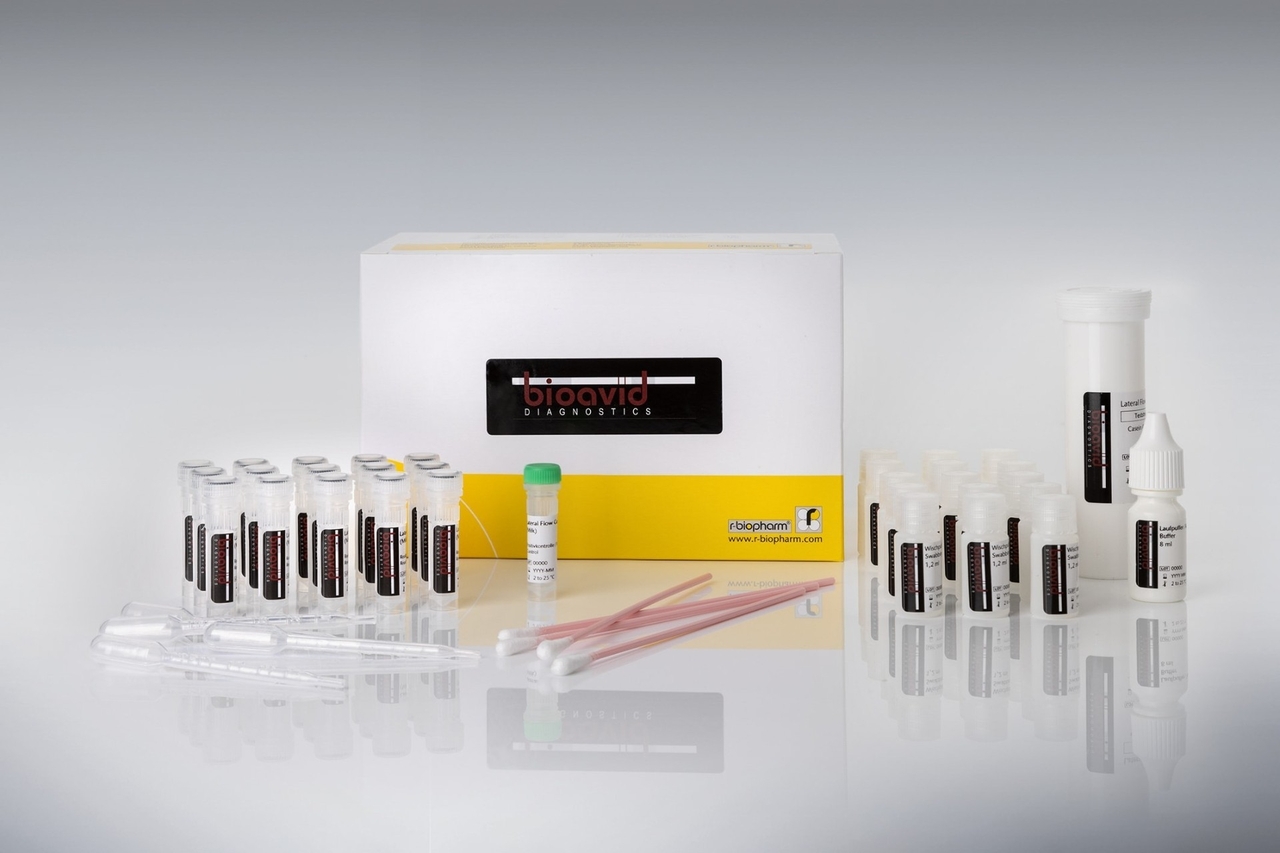
1. Sesame rapid test – bioavid Lateral Flow Sesame
- bioavid Lateral Flow Sesame from R-Biopharm is an immunochromatographic (immunochromatographic lateral flow) method designed for qualitative detection of sesame residue.
- The product can be used for testing:
- Production line surfaces.
- Equipment surfaces.
- Cleaning water/CIP.
- Certain suitable food samples.
- According to R-Biopharm product information, the test takes about 10 minutes, with results evaluated visually. The kit also has a hook line, which helps identify samples with high positive content.
* Advantages of the sesame rapid test
- Fast: results can be available within a short time, suitable for hygiene checking activities and line control.
- Simple: no ELISA reader system is required to read the results.
- Suitable for in-plant testing: can be used to test surfaces or cleaning water within a cross-contamination control programme.
- Supports quick decisions: if sesame is detected after cleaning, the company can re-clean and re-test before releasing the line for production.
- According to R-Biopharm's 2026 catalogue, the company's lateral flow line has a product for sesame and is listed among rapid allergen testing solutions.
* When should the sesame rapid test be used?
- Rapid tests are particularly suitable for situations where the company needs rapid qualitative testing.
- Example: after cleaning a bakery production line, QC takes swab samples at high-risk points to check whether sesame residue remains.
- If the results show sesame, the company can re-clean and re-test before starting production of the next product.
- In this way, the rapid test acts as a on-site screening tool.
- See the product we supply Sesame rapid test kit | bioavid Lateral Flow Sesame incl. Hook line | R-Biopharm
2. Sesame ELISA testing – RIDASCREEN®FAST Sesame
- When the company needs quantitative analysis of sesame in food, ELISA is a suitable option.
- RIDASCREEN®FAST Sesame – Art. No. R7202 from R-Biopharm is a sandwich ELISA method used for the quantitative analysis of sesame or its components in food.
- The product was developed for the analysis of food groups such as:
- Instant soups.
- Chocolate dessert.
- Bakery products.
- Crackers.
- R-Biopharm also notes that for other matrices, users need to verify the suitability of the method for each matrix.
- Some notable specifications
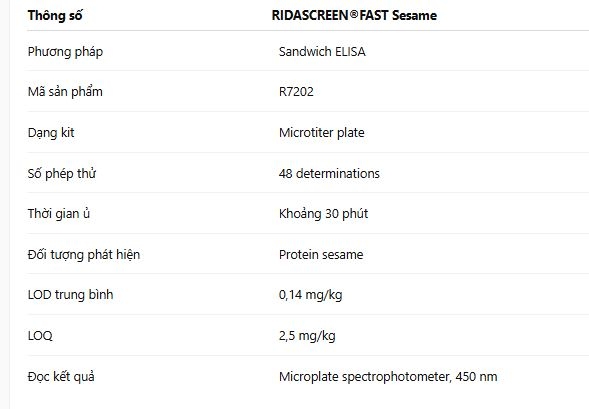
- LOD/LOQ values may depend on the matrix; R-Biopharm reports an LOD of approximately 0,08–0,20 mg/kg depending on the matrix.
How does the sesame ELISA work?
- RIDASCREEN®FAST Sesame uses the sandwich ELISA principle.
- The general workflow is:
Sampling → sample homogenisation → sample extraction → centrifugation → performing ELISA → reading OD with a microplate reader → calculating the results
- Antibodies in the ELISA system recognise sesame proteins in the sample. After the immunological reaction and colour development steps, the signal intensity is measured with a microplate reader.
- R-Biopharm states that ELISA is an antibody-based immunological method with high sensitivity and is widely used in food analysis. The RIDASCREEN®FAST line is designed for analyses that need to save time, with fast analysis times.
Rapid test or ELISA: Which method should a company choose?
- Not every sesame testing situation requires the same method.
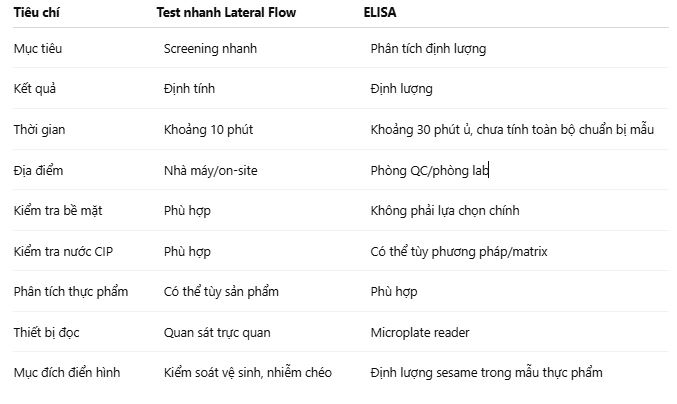
In simple terms:
- Rapid test = rapid testing in the plant
- ELISA = in-depth and quantitative analysis in the testing laboratory
Combining the two methods can create a more comprehensive sesame control process: using the rapid test for routine checks on the line and using ELISA for food samples that require quantitative analysis.
Proposed sesame allergen control process for the plant
Companies can build a process following this model:
* Step 1: Identify points at risk of cross-contamination
Identify the areas where sesame or sesame-containing products are used.
* Step 2: Clean the production line
Carry out the cleaning procedure according to the plant SOP.
* Step 3: Rapid testing with lateral flow
Take swab samples at high-risk points or test cleaning water, as appropriate for the method.
* Step 4: Take action if sesame is detected
If the screening result shows residue, re-clean and carry out a confirmation test.
* Step 5: Analyse food samples by ELISA
For samples requiring determination of sesame content, take samples and analyse them with RIDASCREEN®FAST Sesame.
* Step 6: Keep records
Keep the test results together with cleaning, production and allergen control records for quality management and traceability when needed.
Which products need to pay attention to sesame testing?
Sesame can occur in many different food groups. Some products at risk that should be considered include:
- Bread and bakery products.
- Crackers.
- Snack.
- Cereals.
- Chocolate.
- Instant soups.
- Protein bars and energy bars.
- Pasta.
- Sauces and dressings.
- Dips.
- Products using sesame oil or sesame paste.
- Vegetarian foods.
- Products using ingredients sourced from many different suppliers.
- For each product, the company should separately assess the matrix, production process and cross-contamination risk before choosing a testing method.
R-Biopharm – sesame allergen control solutions for the QC lab
- R-Biopharm has developed a portfolio of food allergen testing solutions including ELISA, lateral flow and real-time PCR, in which sesame is one of the supported parameters.
- For food companies, options include:
bioavid Lateral Flow Sesame
Rapid test solution for screening sesame residues, suitable for surface control, production line cleaning and certain food samples.
RIDASCREEN®FAST Sesame – R7202
- ELISA solution for the quantification of sesame protein in food, suitable for QC and testing laboratories that need to determine content.
- In addition, R-Biopharm also offers SureFood® ALLERGEN Sesame – S3608, which uses real-time PCR to detect sesame DNA. This is another option when the testing laboratory needs a molecular approach.
Conclusion
- In a context where food allergen control requirements are increasingly emphasised, sesame testing is not only an issue for products that directly contain sesame. Cross-contamination on the production line is also a risk that companies need to assess and control.
- With R-Biopharm's solution system, companies can choose the method that suits each objective:
Lateral flow rapid test → rapid testing in the plant, supporting cross-contamination control and cleaning.
ELISA → quantitative analysis of sesame in food in the testing laboratory.
- Choosing the right method, the right matrix and establishing a suitable sampling procedure will help companies control sesame allergen, improve quality management capability and better meet the requirements of customers as well as export markets.