
The Delta and Delta Plus variants are among the SARS-CoV-2 virus variants that are threatening the disease control efforts of many countries around the world. These strains are able to spread extremely quickly and reduce the effectiveness of vaccines. The SARS-CoV-2 virus keeps mutating to produce new and more dangerous variants, causing the number of cases and deaths to soar. So how many Corona virus variants are there today? Which Corona virus variant is the most dangerous? How does the WHO collect information and publish the variants to countries quickly?
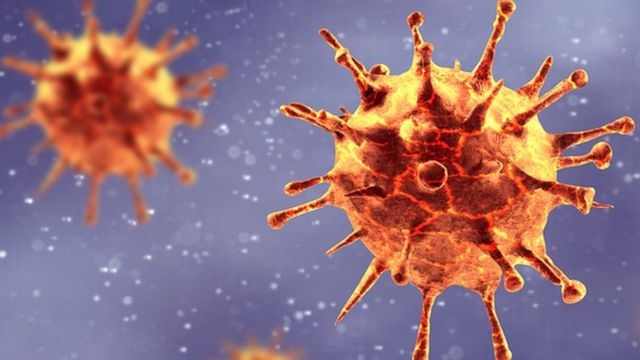
SARS-CoV-2 variants causing the Covid 19 pandemic are becoming more and more dangerous
1. What is the corona virus
Corona virus is a large family of viruses found in both mammals and humans. Some corona viruses can cause disease in humans from the common cold to more serious illnesses such as: pneumonia, severe respiratory failure including Middle East Respiratory Syndrome (MERS) and Severe Acute Respiratory Syndrome (SARS). Severe cases can cause the death of the patient.
Sars-Cov-2 is a strain of the Corona virus that had never been detected in humans before. This virus was, for the first time, detected in Wuhan, Hubei, China at the end of 2019. Previously, two other corona viruses had also caused dangerous pandemics, namely SARS-CoV in 2002 and MERS – CoV in 2012.
2. The concept of variant - strain
Changes in the genome (mutations) are called “variants”.
After mutation, when there are specific, clear manifestations, it is called a “strain”. In other words, when a microorganism has changes in its genome and has become a new strain different from the original strain - at that point it is called a strain. At the stage of changes in the genome it is called a variant, it is not yet called a strain, because these variants may still undergo further changes before stabilising into a new strain to be given a new name.
3. How many SARS CoV 2 variants are there
See also the process for tracking and recording new strains: https://pacificlab.vn/vi/news/blog-kien-thuc/theo-doi-cac-bien-the-sars-cov-2-36.html
3.1 SARS CoV 2 Alpha strain (UK strain)
It was named B.1.1.7, and was first detected in September 2020. According to the CDC, Alpha strain spreads more easily and quickly than other variants (viral load 4 times that of the old strain). At the same time Alpha strain has a 30% higher risk of death than the original version. This strain was first detected in the United States at the end of December 2020. The first person infected with the Alpha strain was recorded on 20/9/2020. By mid-November, the ALpha strain had infected more than 20-30% of cases in London. About three weeks later, around 60% of new patients were identified as infected with this Alpha strain.
How is the UK B.1.1.7 strain different?
Variant B.1.1.7 has a mutation in the receptor binding domain (RBD) of the spike protein at position 501, where the amino acid asparagine (N) has been replaced by tyrosine (Y), so it is abbreviated as N501Y. This variant also has some other mutations, including:
- Deletion 69/70: this double deletion occurs spontaneously many times and can lead to a change in the shape of the spike protein.
- P681H: near the furin S1/S2 cleavage site, a site with high variation in the Corona virus. This mutation has also appeared spontaneously many times.
- ORF8 stop codon (Q27stop): a mutation at the ORF8 position.
3.2 SARS CoV 2 Beta strain (strain first found in South Africa)
It was named B.1.351, and is one of the SARS-CoV-2 strains that appeared independently of B.1.1.7 (Alpha strain in the UK). It was first detected in South Africa in early October 2020, the Beta strainshares some of the same mutations as the Alpha strain. On 31/01/2021, Vietnam recorded its first case of infection with the South African Belta (B.1.351) variant, from a South African expert entering the country. Cases in the US were first reported at the end of January 2021. At that point, this was the variant that most experts worried about, because it appeared to respond less to the existing vaccines and antibody therapies.
How is the South African B.1.351 strain different?
Belta strain (501.V2 or B.1.351) carries 3 mutations (E484K, K417N and N501Y) in important gene regions, and including N501Y, this variant has no 69/70 deletion. This is where the spike protein that the virus uses to attach to human cells is produced. Among them, E484K can reduce the ability of human antibodies to recognise the virus. As a result, nCoV gets past the immune barrier produced by the COVID-19 vaccine more easily.
3.3 SARS CoV 2 Gamma strain (strain first found in Brazil)
Brazil strain is called P.1 and was first identified in people travelling from Brazil during routine testing in Japan, in early January. According to the DDC, it appears to have an additional set of mutations that affects the ability to be recognised by antibodies. It was first observed in the United States at the end of January 2021.
How is the Brazil P.1 strain different?
The P.1 strain has 4 mutations, of which the three most worrying are K417T, E484K and N501Y. In particular, E484K attracts the most attention and it has also been found in the B.1.351 strain in South Africa. Scientists suspect that the E484K mutation makes P.1 capable of reinfecting even those who have recovered from the disease. To explain this finding, E484K appears on the spike protein of the virus, causing the P.1 variant to change shape. This allows it to avoid being detected by the antibodies produced after vaccination against COVID-19, or after a first infection with COVID-19 caused by other strains of the virus.
The N501Y and K417T mutations are also the reason why the P.1 strain spreads more strongly than other strains of the virus. According to the New York Times, research results in the city of Manaus show that P.1 is 40-120% more capable of spreading than older strains of the virus.
3.4 SARS CoV 2 Iota strain (variant first found in New York)
It has been named B.1.526. This strain first appeared in the city of New York and then sporadically in the north-east. One of the mutations, similar to those of the South African variant, seems to help it avoid the antibodies of the body as well as the effect of the vaccine.
Data on this strain is quite limited, as of 25 February 2021 it has not been evaluated on a par with some other strong strains.
3.5 Variant B.1.427 / B.1.429 (California)
This variant is called B.1.427 / B.1.429 and seems to be different from the UK variant. The L452R mutation, which affects the spike protein of the virus, allows it to attack cells more effectively, making it easier to infect. This variant also seems to be related to the severity of the disease. In particular, this type of virus is quite common in the San Francisco area.
3.6 SARS CoV 2 Delta strain (variant first found in India)
The Delta strain is a "double mutant" variant, B.1.617, with the two main mutations that have been observed in other coronavirus variants. This variant was first sequenced in the global database of COVID-19 variants in October 2020,. But it was hardly noticed. The B.1.617 lineage carries features from two lineages, the variants in California (B.1.427 and B.1.429) and the lineages in South Africa (B.1.351) and Brazil (P.1). Two prominent mutations of the Delta variant include position 452 of the spike protein and a second mutation at position 484.
The US CDC says: the Delta variant is more aggressive and more transmissible than previous strains of the virus. It is also one of the most transmissible corona viruses that Ms Rochelle Walensky (CDC Director) has known and witnessed in her 20-year career
The hospitalisation rate for patients infected with the Delta variant is also more than 85% higher than for the Alpha variant. Although at present there is not yet solid enough scientific evidence to show that people infected with the Delta variant become more seriously ill or die more easily than those infected with other variants. However, studies from Scotland published in the Lancet journal indicate that the Delta variant may increase the likelihood of hospitalisation compared with previous variants, especially for patients with underlying conditions such as diabetes, obesity, cardiovascular disease,...
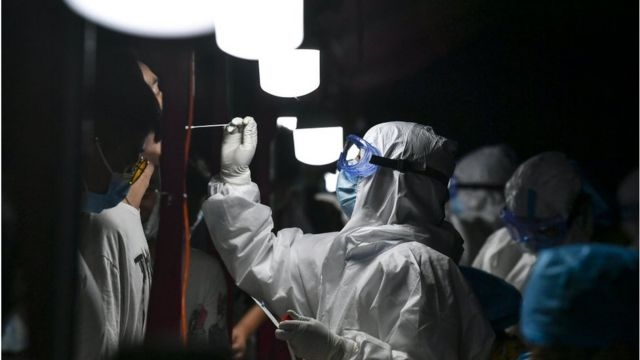
The Delta variant causes a ferocious wave of disease transmission worldwide
3.6 Lamda variant of interest (variant first found in Peru)
The Lambda variant is classified by the WHO as a variant of interest (VOI). Lambda carries two mutations T76I and L452Q that increase its transmissibility compared with the original strains of the virus. It drew the attention of scientists as it appeared more and more, posing a new challenge for global healthcare, especially its ability to resist the neutralising antibodies of this variant. According to the World Health Organization (WHO), Lambda variant first appeared in August 2020 in the capital Lima (Peru), then spread rapidly within this country. By mid-August 2021, about 40 countries had recorded the emergence of this new variant. According to the initial gene analysis results, Lambda variant has 5 new gene mutations, of which 3 mutations - RSYLTPGD246-253N, 260L452Q, F490S - have the ability to resist or neutralise the antibodies in the vaccine, and 2 mutations - T76I, L452Q - have the ability to escape immunity more strongly than the Delta variant.
4. Some vaccines against Covid 19
Fighting the pandemic, Covid-19 over the past 2 years. Vaccines further confirm their important role in the healthcare of countries. The sharp drop in the death rate among people who have been vaccinated against Covid 19 is an encouraging sign. However, the vaccine "industry" is facing ongoing challenges as new strains of the Sars-cov 2 virus appear.
There are currently several popular vaccines in the world:
Pfizer | Moderna | AstraZeneca | Johnson & Johson | Sputnik | |
Origin | USA | USA | UK | USA | Russia |
Authorisation | 11.12.2020 | 18.12.2020 | 12.1.2021 | 23.4.2021 | 08.2020 in Russia |
Efficacy | 95% | 94,5 % | 70% | 66%-72% | 91,4% |
Manufacturer | Pfizer Group and BioNTech company | Moderna pharmaceutical company | Astrazeneca pharmaceutical company, manufactured using Oxford University technology | Johnson & Johnson Janssen pharmaceutical companies | National Research Center for Epidemiology and Microbiology |
Type | mRNA | mRNA | Adenovirus | Adenovirus | Adenovirus |
Vaccine for the same disease | Ebola | Ebola | Ebola | ||
Price | $19,5/dose | $25-$37/dose | $2,15 in Europe | $ 10/dose | $ 10/dose |
Dosage | 2 doses | 2 doses | 2 doses | 1 dose | 2 doses*0.5ml |
Interval between doses | 3 weeks | 4 weeks | 4 weeks | - | 3 weeks |
Time to reach efficacy after vaccination | 2 weeks | 2 weeks | 15 days | 2 weeks | 2 weeks |
Variants | Quite effective against the UK, South Africa and Latin America variants | Quite effective against the UK, South Africa and Latin America variants | Effective against the UK and Brazil variants, | Effective against the variants | No efficacy study for variants |
Storage | -94O F | 2-8OC for 1 month. | 36-46O F | 2-8OC | 2-8OC |
Age | From 12 years old | From 12 years old | From 18 years old | 18-59 years old | 18-60 years old |
Serious side effects | Guillain-Barré syndrome for men > 50 years old | People with underlying conditions, those with respiratory problems, pregnant women are not vaccinated |
Sputnik | Sinovac | Novavax | CanSino Biologics | COVAXIN | Abdala and Soberana 2 | |
Origin | Russia | China | USA | China | India | Cuba |
Authorisation | 08.2020 in Russia | Proposed in May 2021 | Chinese company CanSino Biologics | Authorisation proposed on 25.5.2021 | Self-declared on 22.6.2021 | |
Efficacy | 91,4% | 50,38-91,25% | 90,4% | 65,7% | 100% against severe infection; 78% against mild, moderate and severe cases; 70% against asymptomatic cases | 92% |
Manufacturer | National Research Center for Epidemiology and Microbiology | China National Pharmaceutical Group. | Novavax biotechnology company | Developed with the Chinese army | Bharat Biotech company | Cuban Centre for Genetic Engineering and Biotechnology & the state-owned BioCubaFarma production company |
Type | Adenovirus | Inactivated SARS-CoV-2 virus | Protein-based | Viral vector | Technology platform based on Inactivated Whole Virion Vero Cells. | |
Price | $ 10/dose | $30-$60 per dose (China) | $ 16/dose in the USA | $ 2 in India | ||
Dosage | 2 doses*0.5ml | 2 doses*0.5mL | 2 doses*0.5ml | 1dose | 2 doses | 3 doses |
Interval between doses | 3 weeks | 2-4 weeks | 3 weeks | A booster is recommended after 6 months | 4 weeks | 14 days |
Time to reach efficacy after vaccination | 2 weeks | 2 weeks | 2 weeks | 2 weeks | 2 weeks | |
Variants | No efficacy study for variants | Unclear | Effective against the UK and South Africa variants | Unclear | Wild type, may inactivate the UK variant | Possibly effective against the African and Brazil variants |
Storage | 2-8OC | 2-8OC | 2-8OC | 2-8OC | 2-8OC | 2-8OC |
Age | 18-60 years old | >18 years old | 18-84 years old | >18 years old | >18 years old | 19-80 years old |
Serious side effects | People with underlying conditions, those with respiratory problems, pregnant women are not vaccinated |
See also the vaccine production process: https://pacificlab.vn/vi/news/blog-kien-thuc/quy-trinh-san-xuat-vaccine-chong-covid-19-phan-1-33.html
Part 2: https://pacificlab.vn/vi/news/blog-kien-thuc/quy-trinh-san-xuat-vaccine-chong-covid-19-phan-2-34.html