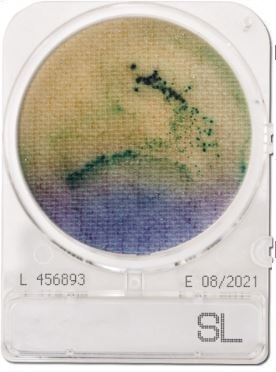
1. Learning about Salmonella bacteria
– Salmonella belongs to the Enterobacteriaceae family (enteric bacteria). It is a rod-shaped, Gram-negative, facultatively anaerobic, non-spore-forming bacterial genus that moves by means of flagella; lives in the intestines; is about 0.7 µm to 1.5 µm in diameter; is 2 µm to 5 µm long, and has a crown of whip-like flagella.
– Most Salmonella species in food can produce hydrogen sulfide. Salmonella does not ferment lactose (except Salmonella arizona) or sucrose, but does ferment dulcitol, mannitol, and glucose. It has poor heat tolerance but tolerates several chemicals: brilliant green, sodium lauryl sulfate, selenite, etc.
– There are two Salmonella bacterial species: Salmonella bongori and Salmonella enterica. Salmonella enterica is divided into six subspecies and more than 2500 serovars.
– Salmonella is found worldwide in both cold-blooded and warm-blooded animals, and in the environment. Salmonella strains cause diseases such as typhoid fever (caused by Salmonella typhi), paratyphoid fever, septicemia (caused by Salmonella choleraesuis), and food poisoning (salmonellosis).
2. Salmonella bacteria in food
– Salmonella is a bacterium that lives in the viscera of poultry and livestock and spreads into the meat when these animals are slaughtered. It is also present in feces and easily "infiltrates" poultry eggs through the tiny pores in the shell.
– Salmonella is one of the main culprits behind food poisoning in summer. Salmonella poisoning can range from mild to very severe and can even be fatal.
– Any fresh food source of animal origin such as livestock and poultry meat, dairy products, eggs, and seafood, as well as some fruits and vegetables, can be contaminated with Salmonella. Therefore, people should avoid eating livestock or poultry meat; raw or undercooked eggs; or unpasteurized dairy products. The list of foods potentially contaminated with Salmonella also includes those prepared at home, such as mayonnaise, cookies, and ice cream.
– Salmonella bacteria have strong viability and resistance. The bacterium tolerates cold: it survives 2–3 months in ice water, more than 1 month in ordinary water, 5–10 days on vegetables, and 1 to several months in feces. Salmonella is destroyed at 55 °C for 30 minutes, by 90% alcohol in a few minutes, and by common disinfectants easily (3% chloramine, 5% phenol).
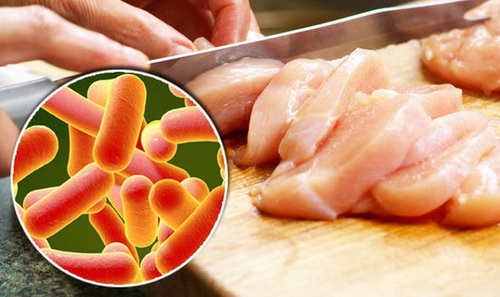
3. Symptoms of Salmonella infection and how to prevent it
– Symptoms of Salmonella infection include abdominal pain, diarrhea, and fever, usually starting 12–72 hours after eating. Most patients only need rehydration and recover on their own within 4–7 days without requiring medical intervention. Those with severe diarrhea will need intravenous fluids. You usually start to feel better within about a week, although it may take a few months for your bowel movements to return to normal. Sometimes the infection spreads to your blood, bones, joints, brain, or nervous system and causes lasting symptoms affecting those organs.
– The use of antibiotics in otherwise healthy people is not always necessary unless the bacteria spread from the intestines to other organs. The most severe cases of poisoning are usually seen in young children; the elderly; and people with weakened immune systems.
* The US Food and Drug Administration (FDA) recommends that everyone follow these practices to prevent food poisoning:
– Wash hands with soap and warm water after using the toilet, after changing a child's diaper, after touching animals, and before eating or preparing food.
– Cook all foods thoroughly (beef, pork, chicken, duck...)
– Do not eat raw or undercooked eggs. Drink only pasteurized milk.
– Wash cutting boards and kitchen counters used to prepare meat or poultry immediately after use to avoid cross-contamination with other foods.
- Health authorities need to have plans for periodic health checks and food safety inspections of hotels, restaurants, and food processing and distribution establishments (markets, supermarkets...).
4. Methods for detecting Salmonella bacteria
Currently, there are many methods on the market for testing Salmonella bacteria. The Salmonella test methods include:
– Salmonella testing by the Real Time PCR method
– Salmonella testing using pre-poured, freeze-dried agar plates from Shimadzu.
Thai Binh Duong Company provides a convenient solution for detecting Salmonella bacteria using pre-poured, freeze-dried agar plates from Shimadzu Diagnostics — a convenient method that helps microbiological testing laboratories reduce the time of traditional plate-pouring testing.