
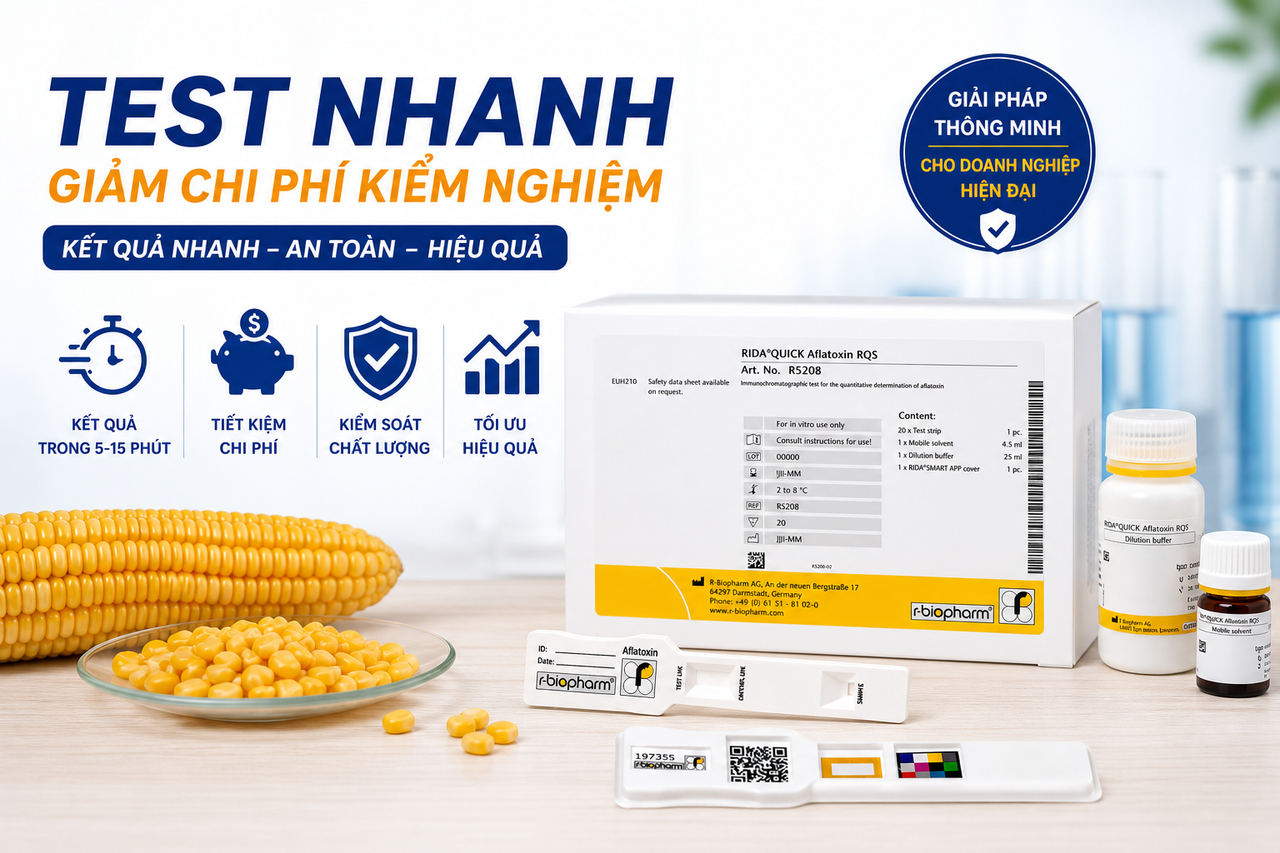
- Rapid testing is becoming an effective solution that lets businesses cut testing costs while still safeguarding product safety.
- So how does rapid testing actually reduce testing costs? Let's take a detailed look in the article below.
1. What is a rapid test
Rapid tests are quick methods for checking targets such as:
- Mold toxins (mycotoxins): Aflatoxin, Ochratoxin, DON, Zearalenone, Fumonisin, HT-2/T-2 Toxin
- Microorganisms: E. coli, Salmonella, Coliform…
- Antibiotic and pesticide residues
- Food allergens
Rapid mycotoxin, microbiology or food test kits usually give results in just 5–15 minutes, no need
2. Why traditional testing is so expensive
Traditional methods such as HPLC, LC-MS/MS and microbial culture are expensive because:
- Samples must be sent to an external laboratory
- The per-sample analysis cost is high
- Result turnaround is slow (1–5 days)
- Heavy staffing and operating costs
- Retesting expenses when a sample fails
👉 This makes businesses spend significantly when testing many lots.
3. How does rapid testing reduce testing costs?
3.1. Fewer samples sent to the lab
Rapid tests act as an initial screen; only suspect samples need in-depth analysis.
- Cuts 50–80% of the samples sent to the lab
- Substantial savings on testing costs
3.2. Early detection – avoiding large losses
With fast results, businesses can:
- Catch contaminated lots right at intake
- Stop mass production from defective material
- Avoid returns and product recalls
👉 Less loss-related cost and financial risk
3.3. No expensive equipment investment
Unlike in-depth analytical methods:
- Rapid tests need no HPLC or LC-MS/MS machines
- No high-standard laboratory needed
- No specialized analysts required
👉 Reduces upfront investment by hundreds of millions to billions of dong
3.4. Saving staffing and operating costs
- Simple test procedure
- Easy to handle
- Short training time
👉 Businesses do not need a specialist analyst team
3.5. Shorter turnaround – better business performance
Time is money:
- Rapid test: 5–15 minutes
- Traditional method: 1–5 days
👉 This lets businesses:
- Speed up production schedules
- Ship goods faster
- Optimize cash flow
4. Rapid testing across industries
* Food industry
- Testing mycotoxins in cereals, nuts and spices
- Testing microbiology in processed products
* Animal feed industry
- Testing for mold toxins in raw materials
- Safeguarding livestock health
* Coffee – cocoa industry
- Controlling Ochratoxin A
- Meeting EU export standards
* Dairy industry
- Fast Aflatoxin M1 testing
5. Which businesses should adopt rapid tests?
Rapid tests are especially suitable for:
- Food manufacturers
- Feed mills
- Agricultural exporters
- Internal QC/QA departments
- Raw-material warehouses and buying stations
6. Conclusion
Applying rapid tests in quality testing doesn't just help businesses:
- Cut testing costs
- Speed up quality control
- Reduce production risk
- Strengthen competitiveness
👉 This is the optimal solution in an era of ever-stricter food safety requirements.