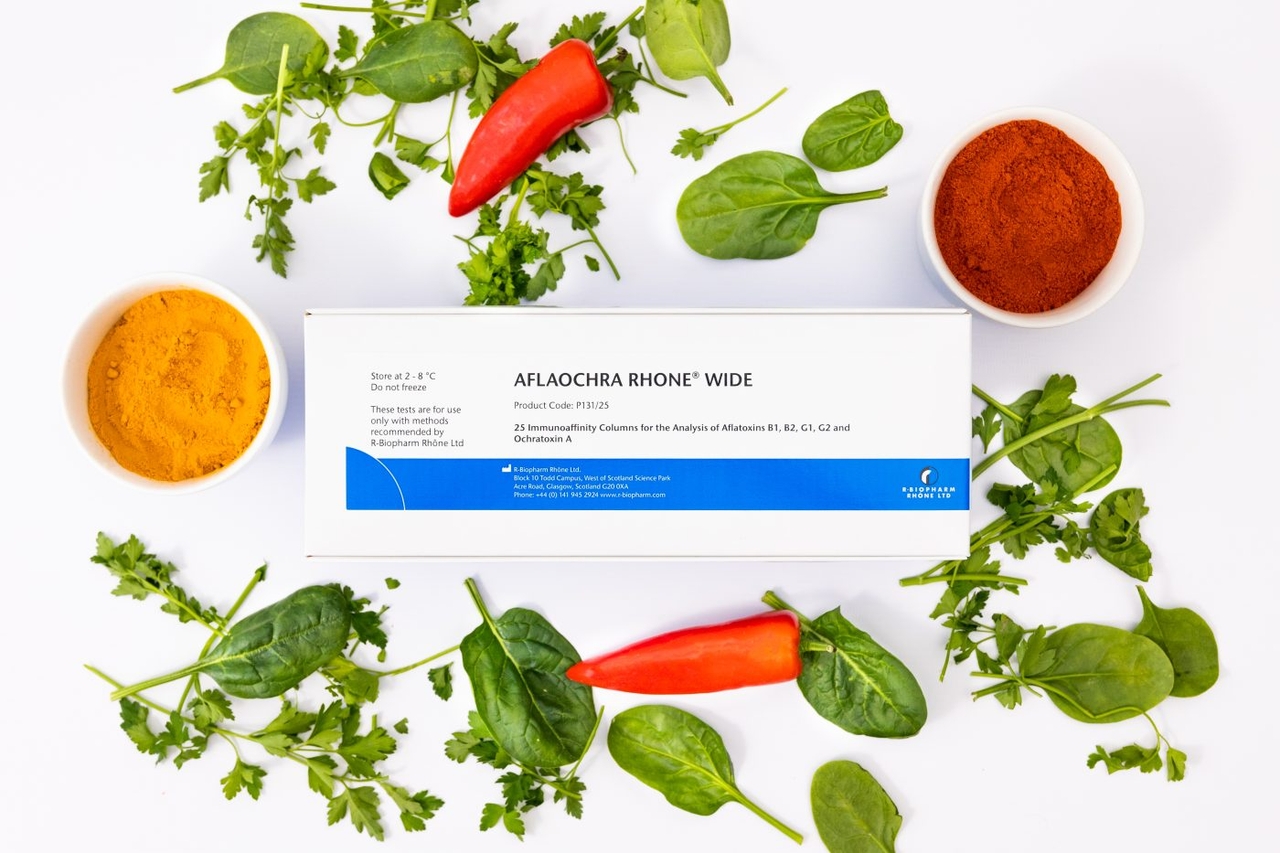
- With highly selective monoclonal antibody technology, the immunoaffinity column ranges of R-Biopharm remove significant amounts of interfering matrix components, helping to improve the reliability of analytical results.
- In particular, R-Biopharm has developed many IAC ranges for the simultaneous analysis of several mycotoxin groups, meeting the growing need for testing cereals, animal feed, seeds, spices and many other food products.
1. Why is sample clean-up needed before multi-mycotoxin analysis?
- In routine testing, food and animal feed samples often have very complex matrices. Proteins, fats, pigments, carbohydrates and many other compounds can affect the analysis process by HPLC or LC-MS/MS.
- If not handled appropriately, the matrix can cause:
- Chromatographic interference.
- Interference with the analyte signal.
- Reduced sensitivity of the method.
- The matrix effect phenomenon in LC-MS/MS.
- Affects the accuracy and repeatability of the results.
- Therefore, sample clean-up is an important step in the mycotoxin analysis workflow. R-Biopharm reports that IAC columns use monoclonal antibodies to selectively retain the target toxins while removing interfering components from the sample extract.
2. What is an immunoaffinity column for the simultaneous analysis of multiple toxins?
- Immunoaffinity column – Immunoaffinity Column (IAC) is a type of sample clean-up column based on the principle of specific interaction between antibodies and mycotoxins.
- The column contains a gel coupled to monoclonal antibodies specific to one or more mycotoxin groups.
- The basic process can be understood as follows:
Sample extraction → Filter/dilute the extract → Load onto the IAC column → Toxins are retained → Wash the column → Elute the toxins → HPLC/LC-MS/MS analysis
- When the extract passes through the column, the target mycotoxins are retained in the column by the antibodies. Undesired matrix components are removed through the washing step. The toxins are then eluted with a solvent and the eluate is collected for introduction into the analytical system.
- R-Biopharm describes IAC as one of the standard options for the mycotoxin sample preparation step before HPLC, GC or LC-MS/MS, particularly useful for complex food and animal feed matrices.
3. Advantages of R-Biopharm multi-toxin analysis IAC immunoaffinity columns
High selectivity
- IAC technology based on monoclonal antibodies gives the columns selectivity for the target toxins.
- As a result, the clean-up process can focus on the mycotoxins to be analysed instead of non-selectively retaining many other matrix components.
Effective matrix clean-up
- One of the key advantages of IAC is its ability to remove interferents before the sample enters the HPLC or LC-MS/MS system.
- According to R-Biopharm, cleaning up and concentrating toxins from complex matrices can help reduce chromatographic interference and support achieving lower detection limits.
Multi-toxin analysis in the same workflow
- Instead of running separate sample preparation workflows for each mycotoxin group, multi-toxin columns allow several analytes to be processed in a single workflow.
- This is particularly relevant for laboratories with large sample numbers that need to analyse several mycotoxin groups.
Compatible with LC-MS/MS
- Some R-Biopharm multi-toxin IAC ranges are specially designed for LC-MS/MS, combining the sample clean-up step with a highly sensitive multi-residue analytical method.
4. Representative IAC multi-toxin analysis column types from R-Biopharm
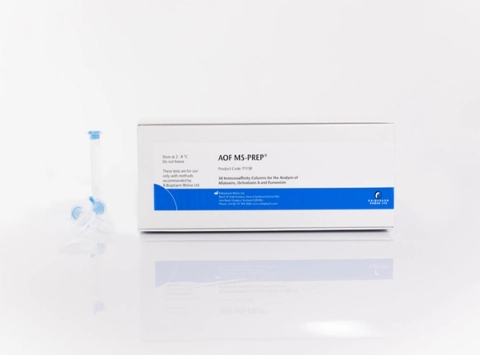
4.1. 11⁺Myco MS-PREP® – analysis of 11 mycotoxin groups/substances
- This is one of the outstanding products for multi-toxin analysis by LC-MS/MS.
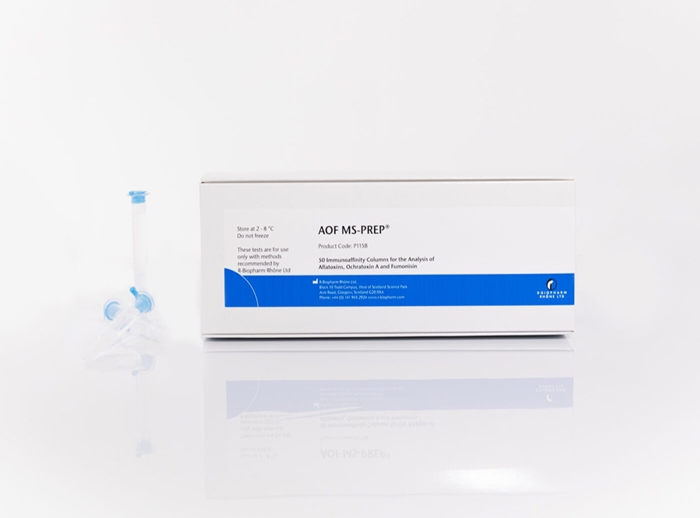
- 11⁺Myco MS-PREP® is designed by R-Biopharm for sample clean-up before the simultaneous analysis of:
- Aflatoxins B1, B2, G1, G2
- Ochratoxin A
- Fumonisins B1, B2
- Deoxynivalenol (DON)
- Zearalenone (ZEN)
- T-2 toxin
- HT-2 toxin
- The product codes are RBRP128 and RBRP128B, corresponding to packs of 10 and 50 columns of 3 mL. R-Biopharm's 2026 catalogue also lists the 11⁺Myco MS-PREP® product with AOAC Performance Tested Method 112401.
- This is a noteworthy option when a laboratory needs a single sample preparation workflow to check several common mycotoxin groups in one LC-MS/MS run.
- See details of this product supplied by us here.
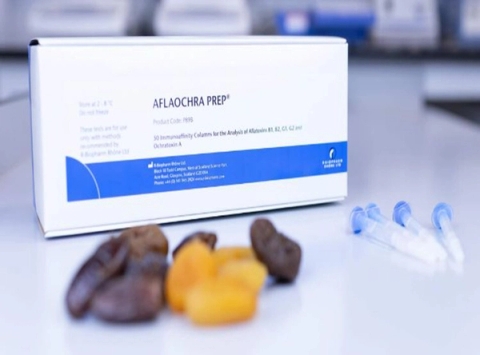
4.2. AFLAOCHRA PREP® – Aflatoxin + Ochratoxin A
- AFLAOCHRA PREP® is a multi-toxin IAC column used for the simultaneous analysis of:
- Aflatoxin B1
- Aflatoxin B2
- Aflatoxin G1
- Aflatoxin G2
- Ochratoxin A
- The column is used in combination with HPLC or LC-MS/MS across many matrix types. R-Biopharm reports that the product is based on monoclonal antibody technology and is designed to improve the clean-up and concentration of toxins from complex matrices.
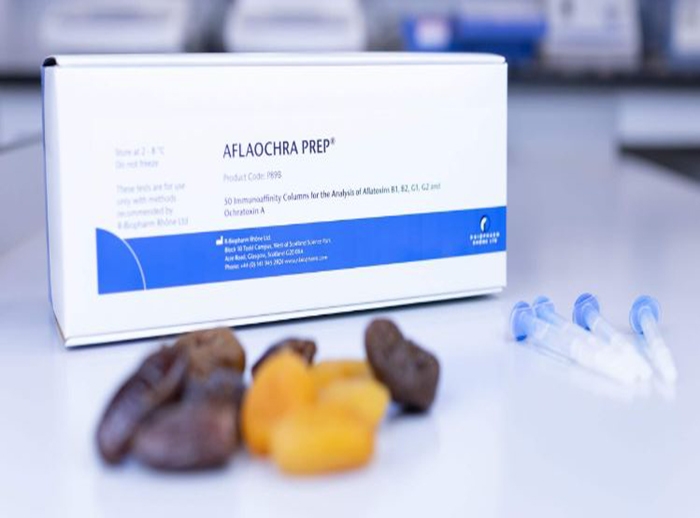
- Product code: RBRP89 / RBRP89B
- Pack size: RBRP89: 10 columns/box (1 ml format), RBRP89B: 50 columns/box (1 ml format)
- See details of this product supplied by us here.
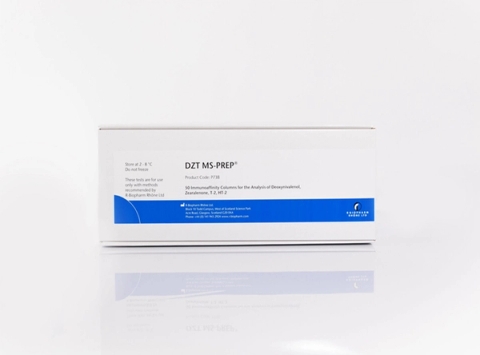
4.3. DZT MS-PREP® – DON, Zearalenone, T-2 and HT-2
- For laboratories interested in the trichothecenes and zearalenone group, DZT MS-PREP® is a noteworthy option.
- The column contains monoclonal antibodies specific to:
- Deoxynivalenol (DON)
- Zearalenone (ZEN)
- T-2 toxin
- HT-2 toxin
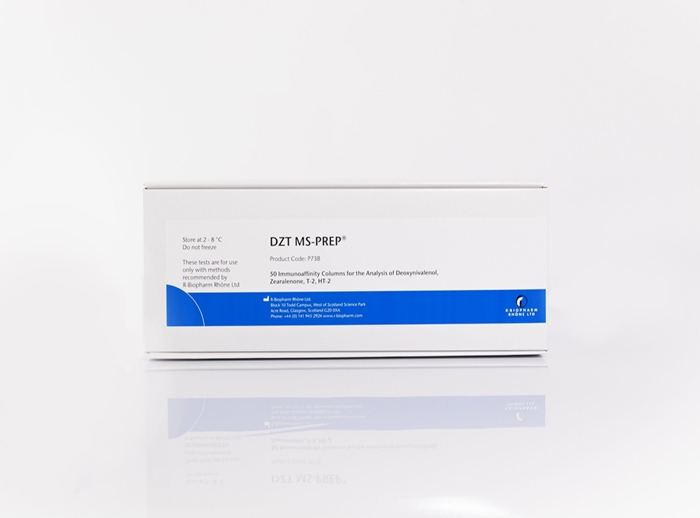
- Product code: RBRP73
- Pack size: RBRP73: 10 columns/box (1 ml/column format), RBRP73B: 50 columns/box (1 ml/column format)
- R-Biopharm reports that the column not only performs the sample clean-up but also helps to selectively purify the mycotoxins before analysis.
- See details of this product supplied by us here.
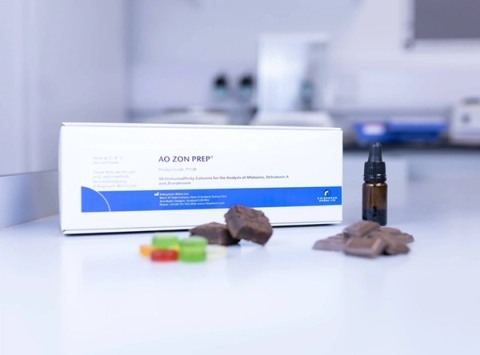
4.4. AO ZON PREP® – Aflatoxin + Ochratoxin A + Zearalenone
- AO ZON PREP® is used for sample clean-up before HPLC or LC-MS/MS for:
- Total aflatoxins
- Ochratoxin A
- Zearalenone
- Product code: RBRP112
- Pack size: RBRP112: 10 columns/box (3 ml/column format), RBRP112B: 50 columns/box (3 ml/column format)
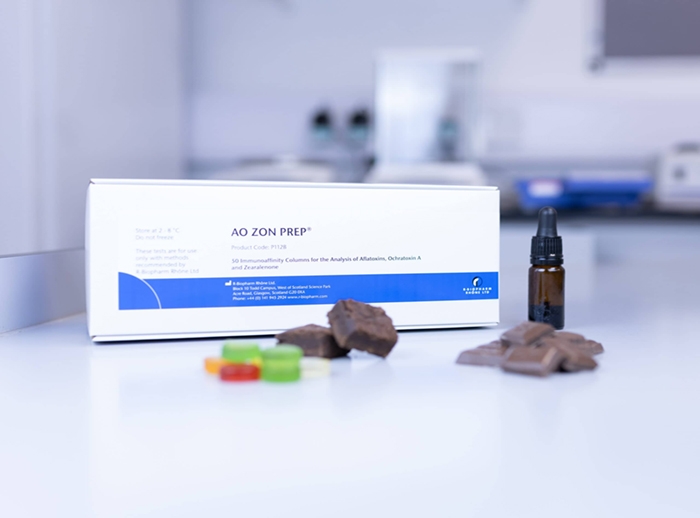
- This is a suitable option when a laboratory needs to control the aflatoxin group, OTA and ZEN simultaneously instead of focusing on a single toxin.
- See details of this product supplied by us here.
5. Quick comparison of the multi-toxin analysis column ranges from R-Biopharm
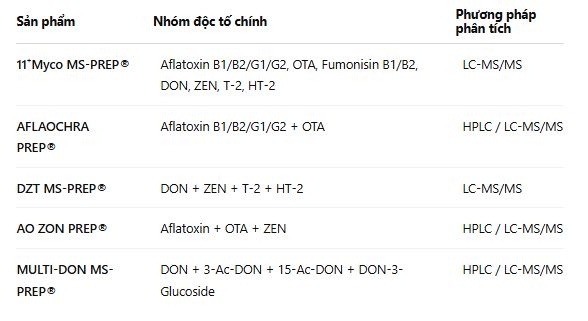
- Product information is compiled from R-Biopharm's current mycotoxin and purification columns catalogue.
6. Workflow for using immunoaffinity columns for multi-toxin analysis
- Depending on the product, matrix and analytical method, the actual workflow may be optimised differently. In principle, the IAC workflow usually includes:
* Step 1: Sample preparation and extraction
The food or animal feed sample is homogenised and extracted with a solvent suitable for the method.
* Step 2: Filtering and treating the extract
The extract is filtered and may be diluted as required by the method before being loaded onto the column.
* Step 3: Loading the sample onto the IAC
The extract is passed through the column at a suitable rate. The target mycotoxins are retained by the antibodies in the column.
* Step 4: Washing the column
The column is washed to remove unbound components and remaining interferents.
* Step 5: Elution
A suitable solvent is used to elute the mycotoxins from the column.
* Step 6: Analysis
- The processed eluate is introduced into the HPLC or LC-MS/MS system for the quantification of mycotoxins.
- R-Biopharm describes the same principle for its IAC ranges: the toxins are retained by the antibodies, the column is then washed and the toxins eluted with solvent before collection for analysis.
7. Which sample types are multi-toxin IAC columns suitable for?
- R-Biopharm's multi-mycotoxin column ranges are applied across many food and animal feed matrices.
- Sample groups commonly of interest for mycotoxin analysis include:
- Cereals and cereal products
- Maize/corn
- Wheat
- Animal feed
- Seeds and seed products
- Oilseeds
- Spices
- Coffee and cocoa
- Processed foods
- Food ingredients
- However, a column should not be assumed to be applicable to every matrix. Product selection should be based on the matrix list confirmed by the manufacturer, the toxin group to be analysed and the LC-MS/MS or HPLC method in use.
8. How do multi-toxin IAC and multi-toxin SPE differ?
- When establishing a mycotoxin analysis workflow, laboratories often have to choose between IAC and SPE.
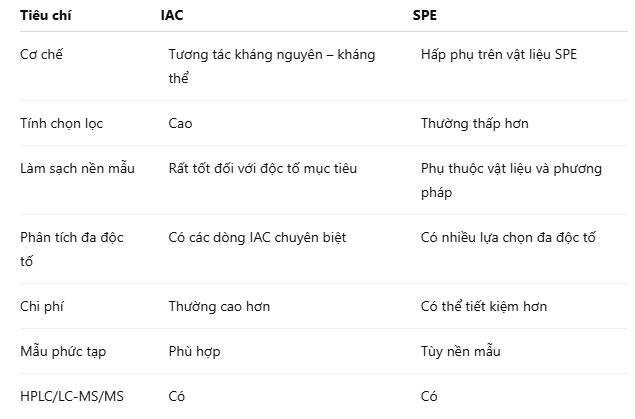
- R-Biopharm also distinguishes between these two groups: IAC uses monoclonal antibodies to selectively purify mycotoxins, whereas SPE uses sorbents to remove interfering components by a non-specific mechanism.
9. Why should you choose R-Biopharm multi-toxin IAC?
- For laboratories that need to analyse many mycotoxins, using multi-toxin IAC columns can bring several benefits to the sample preparation workflow:
- One workflow – multiple toxins: reduces the need for several separate sample preparation workflows when the method is designed for simultaneous analysis.
- Effective sample clean-up: monoclonal antibodies increase selectivity for the target toxins and help reduce interfering components.
- Supports LC-MS/MS: particularly suitable for laboratories using LC-MS/MS for multi-residue mycotoxin analysis.
- Laboratory workflow optimisation: reducing the number of sample preparation steps can help laboratories optimise time and resources when processing large sample numbers.
- Varied choice: R-Biopharm offers everything from single-toxin columns to multi-toxin columns, allowing selection according to the exact mycotoxin group to be controlled.
10. Which immunoaffinity IAC column should a laboratory choose?
Choosing a column should not be based on the number of toxins alone; the following should also be considered:
- The mycotoxin group to be analysed
- The matrix type
- The analytical method, HPLC or LC-MS/MS
- The required detection/quantification limits
- The current sample extraction workflow
- The number of samples to be processed
- Requirements for recognised standards or methods
* Example:
- If you need to test aflatoxin + OTA → you can consider AFLAOCHRA PREP®.
- If you need to test aflatoxin + OTA + ZEN → you can consider AO ZON PREP®.
- If you need to test DON + ZEN + T-2 + HT-2 → you can consider DZT MS-PREP®.
- If you need to analyse several common mycotoxin groups by LC-MS/MS → 11⁺Myco MS-PREP® is a noteworthy option.
11. Conclusion
- R-Biopharm multi-mycotoxin immunoaffinity columns are a sample preparation solution designed to improve mycotoxin clean-up and concentration before analysis by HPLC or LC-MS/MS.
- With ranges such as 11⁺Myco MS-PREP®, AFLAOCHRA PREP®, DZT MS-PREP® and AO ZON PREP®, R-Biopharm provides many options for analytical needs ranging from a few toxin groups to many mycotoxins simultaneously.
- In particular, for food, animal feed and ingredient laboratories that need to carry out multi-mycotoxin analysis by LC-MS/MS, choosing the right IAC column can play an important role in matrix control, reducing interference and improving the reliability of analytical results.
- PacificLAB supplies R-Biopharm immunoaffinity column solutions for mycotoxin analysis. To select the right column code, pack size and handling method for the laboratory matrix, customers should provide sample type + toxin group to be analysed + the HPLC/LC-MS/MS system in use to receive product advice.
See the multi-toxin immunoaffinity column products we supply here.