
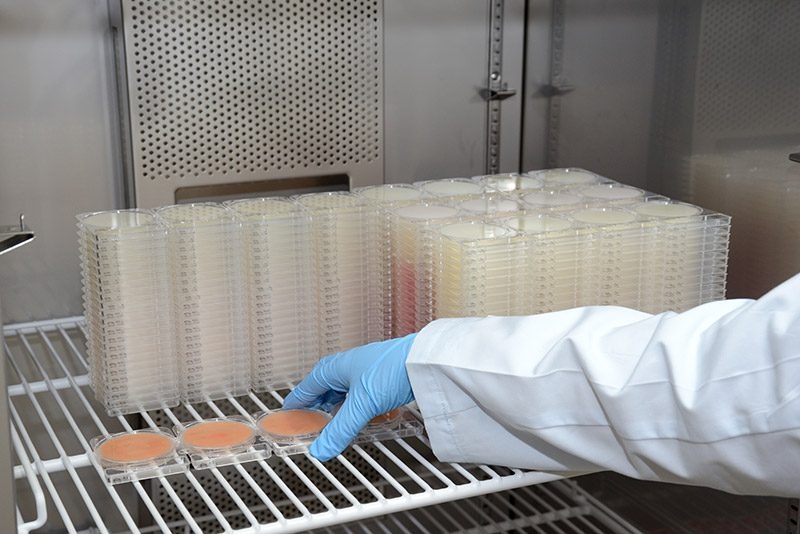
1. Introduction to Compact Dry and the importance of QA/QC
- In food, beverage, cosmetics, and pharmaceutical testing laboratories, Shimadzu's pre-poured Compact Dry medium plates are an effective tool for detecting microorganisms such as E. coli, Salmonella, coliforms, and total aerobic microorganisms.
- To ensure testing results are accurate, applying the QA/QC (Quality Assurance/Quality Control) procedure is mandatory. QA/QC helps the testing laboratory:
- Minimize errors and cross-contamination.
- Assure compliance with ISO 11133 and ISO 16140 standards.
- Increase the reliability of testing results.
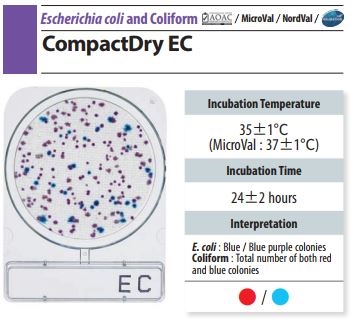
2. The QA (Quality Assurance) procedure when using Compact Dry plates
Quality Assurance focuses on prevention and normalizing the process before testing is conducted.
2.1 Preparing staff and the laboratory
- Staff must be trained in microbiology and the use of Compact Dry.
- The laboratory must be cleaned, with clean and dirty areas clearly zoned.
- Check supporting equipment such as laminar flow cabinets, incubators, and pipettes.
2.2 Checking materials and consumables
- Check Compact Dry plates before use: shelf life, seals, storage at 2–8°C.
- Prepare samples to standard: avoid cross-contamination and keep the sample intact.
2.3 Standardizing the operating procedure
- Use a precise pipette to inoculate the sample onto the plate.
- Avoid direct contact between hands and the plate surface.
- Label completely: batch number, inoculation date, sample information.
3. The QC (Quality Control) procedure when using Compact Dry
Quality Control focuses on checking and evaluating the quality of results.
3.1 Controlling the environment and equipment
- Make sure incubators, laminar flow cabinets, and other equipment run at the correct temperature and humidity.
- Perform scheduled calibration checks for pipettes, laminar flow cabinets, and incubators.
3.2 Evaluating results and handling deviations
- Check the colony counts, colors, and shapes per Shimadzu's instructions.
- Record the results and compare them against the standards.
- If a deviation is found, analyze the cause: the sample, the handling, or the Compact Dry plate.
4. The benefits of standard QA/QC in the testing laboratory
- Microbiological results are accurate and reliable.
- Lower risk of cross-contamination and errors in testing.
- Greater customer trust and compliance with international standards.
- Optimized testing cost and time by reducing sample repetition.
5. Conclusion
Applying a QA/QC procedure when using Compact Dry not only brings the testing laboratory up to ISO standards but also raises its credibility and the effectiveness of product quality control. Careful preparation — from staff, equipment through Compact Dry plates — will ensure testing results are fast, accurate, and reliable.
👉 See https://pacificlab.vn/vi/shops/group/dia-moi-truong-chuan-bi-san/page-2/