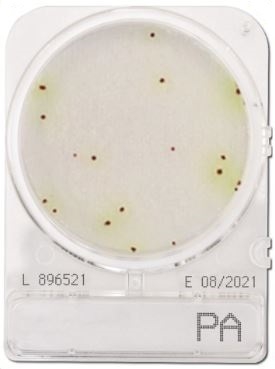
Pseudomonas aeruginosa is a bacterium capable of causing severe infections in humans, especially people with weakened immune systems. To ensure food safety and safety in medical environments, detecting and controlling Pseudomonas aeruginosa is vitally important. Below are the common testing methods used to determine the presence of this bacterium.
1. The bacterial culture method
- The traditional culture method is the most common way to detect Pseudomonas aeruginosa. The procedure involves these steps:
Step 1: Collect the samples
- Test samples can be food, water, air, or samples from a medical environment (such as from medical instruments or hospital surfaces).
- Samples need to be collected aseptically and stored under suitable conditions before testing.
Step 2: Dilute the sample
The sample may need diluting to keep the microbial concentration within a testable range.
Step 3: Culture on a characteristic medium
- Selective culture medium: use Cetrimide agar, a selective medium dedicated to Pseudomonas aeruginosa. Cetrimide is a chemical that suppresses the growth of most other bacteria, giving Pseudomonas aeruginosa preferential growth.
- The diluted sample is plated onto the surface of the agar and incubated at 35–37°C for 24–48 hours.
Step 4: Observe the colonies
- Pseudomonas aeruginosa grows into green or blue colonies on Cetrimide medium. This is due to its production of characteristic pigments such as pyocyanin (blue) and pyoverdine (fluorescent green).
- Based on the colony morphology and color characteristics, Pseudomonas aeruginosa can be distinguished from other bacterial species.
Step 5: Biochemical confirmation
After identifying the suspect colonies, additional biochemical tests are needed, such as:
- Ability to oxidize and ferment glucose: Pseudomonas aeruginosa can oxidize but not ferment glucose.
- Oxidase test: Pseudomonas aeruginosa is positive for the oxidase reaction, which can be checked with an oxidase reagent.
2. The PCR method (Polymerase Chain Reaction)
The PCR method is a modern technique for the rapid detection of Pseudomonas aeruginosa based on amplifying the bacterium's specific DNA. See the product here.
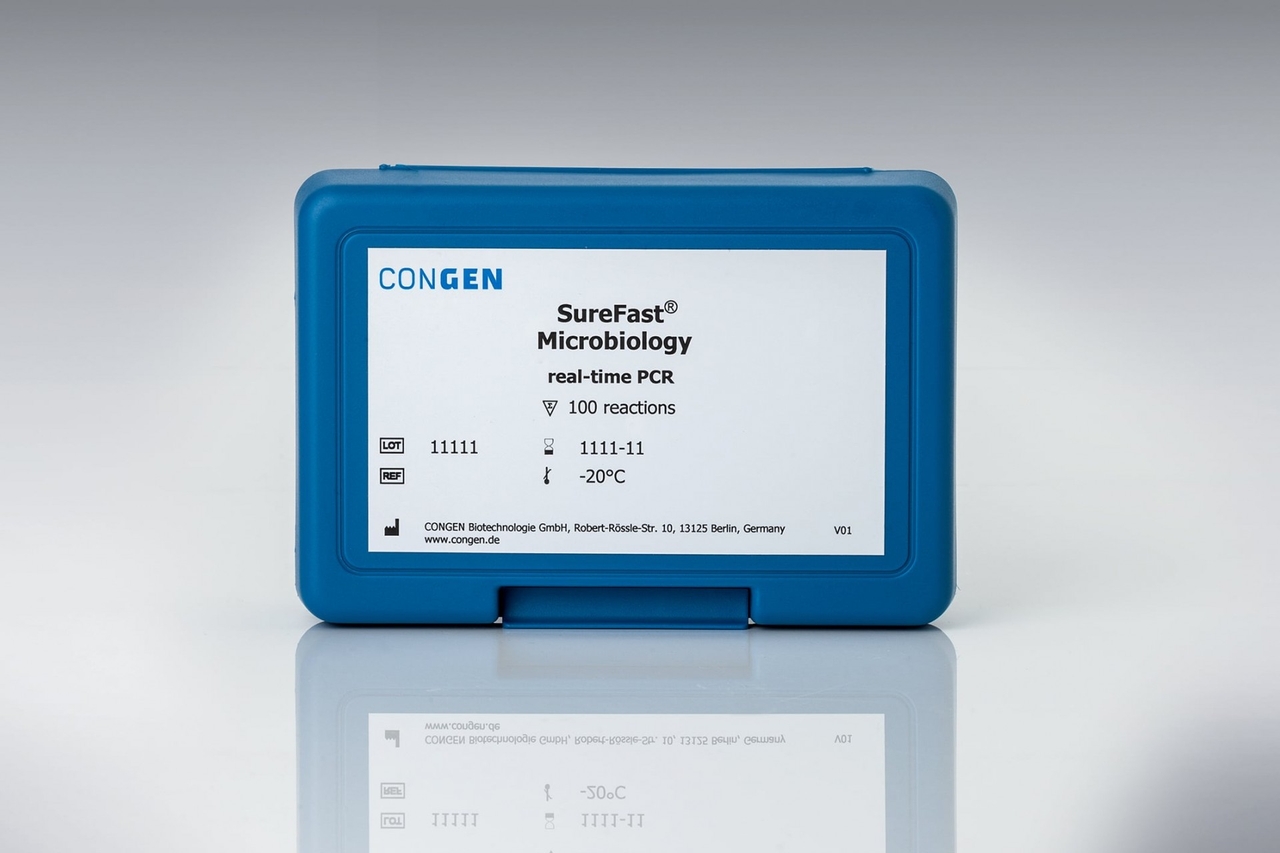
* Procedure
- Extract the DNA: bacterial DNA is extracted from the test sample, then prepared for PCR.
- Amplify specific DNA: the characteristic DNA fragments of Pseudomonas aeruginosa are amplified during PCR.
- Detect the PCR product: after amplification, the PCR product is checked by agarose gel electrophoresis to determine whether Pseudomonas aeruginosa DNA is present.
* Advantages
- PCR gives fast results within just a few hours, shortening testing turnaround.
- High sensitivity and specificity; Pseudomonas aeruginosa can be detected in samples with very low bacterial counts.
* Disadvantages
- This method requires modern equipment and a highly specialized team.
- The cost of carrying it out is higher than the traditional culture method.
3. The Compact Dry plate — the pre-poured freeze-dried agar medium plate method
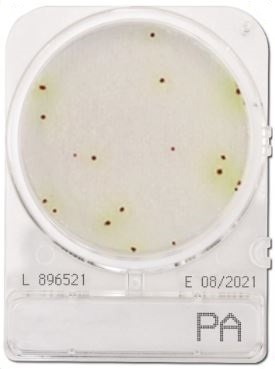
The Compact Dry plate is an easy-to-use dry medium plate designed to detect and quantify microorganisms in food. The Compact Dry plate allows rapid, convenient testing of Pseudomonas aeruginosa. An outstanding product from Shimadzu Diagnostics (Japan). See the product in detail here.
* Procedure
- Prepare the sample: the sample to be tested is diluted and prepared at the suitable ratio.
- Drop the sample onto the Compact Dry plate: a small amount (usually 1 mL) of the sample is dropped onto the Compact Dry plate. The sample will diffuse evenly over the plate surface on its own.
- Incubate the plate: the Compact Dry plate is incubated at 35–37°C for 24–48 hours.
- Read the result: the Pseudomonas aeruginosa colonies appear on the plate and can be counted directly for quantification.
* Advantages
- Easy to use, no culture medium preparation needed.
- Allows direct quantification of the bacteria present in the sample.
- Cuts the risk of cross-contamination and shortens testing time.
4. The ELISA method (Enzyme-Linked Immunosorbent Assay)
The ELISA method is based on the antibody–antigen principle, detecting Pseudomonas aeruginosa through chemical reactions between antibodies and the bacterium's specific antigens.
* Procedure
- The sample is prepared: the test sample is processed and added to the antibody-coated plate.
- Antibody–antigen reaction: if Pseudomonas aeruginosa is present, the bacterium's antigen binds to the immobilized antibody.
- Detection: the reaction is detected by an enzyme that creates a color signal, allowing the presence of the bacterium to be identified.
* Advantages
- Rapid detection with high sensitivity.
- A large number of samples can be tested in a short time.
5. Conclusion
- Testing for Pseudomonas aeruginosa is necessary to ensure food safety and prevent infection risks in medical environments. Each testing method has its own advantages and disadvantages, depending on the specific needs and equipment capability of each organization. The traditional culture method is still widely used for its simplicity and low cost, while modern techniques such as PCR and ELISA deliver faster results and higher accuracy.
- Choosing the right method not only detects the presence of Pseudomonas aeruginosa quickly and accurately, but also plays an important part in protecting public health and raising product quality.