
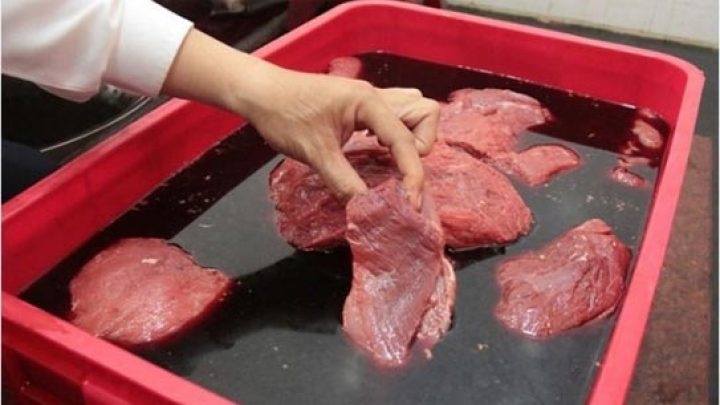
FAKE MEAT - WHERE IS PORK, WHERE IS BEEF?
HOW TO DISTINGUISH FAKE MEAT FROM FRESH MEAT
A typical example that allows fake meat (commonly known in Vietnam as fake beef) to be distinguished sensorially as follows:
Beef has a bright red color, yellow fat, small fine fibers. When sliced thinly, the meat is very sticky and sticks to the knife. When cooked, it has a strong aroma, dark color, firm, sweet and tasty texture.
- Some parts have certain characteristics, for example the rump has characteristic tendon.
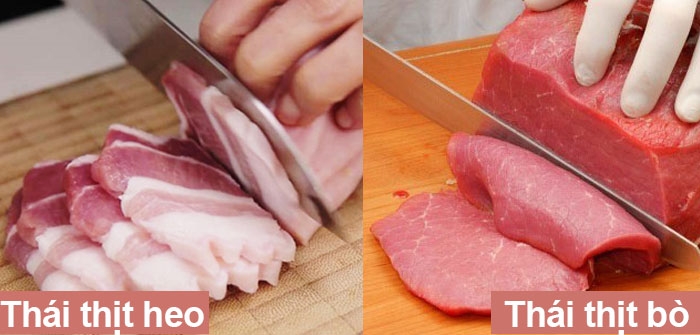
- Beef fibers are fine and long, with pale yellow fat; pork has coarse and short fibers, does not look fine, with cloudy white fat.
- Fake buffalo meat sold as beef is darker black, the buffalo fat is white, the fibers are coarse and rough.
- Pork fat is white, the fibers are coarse and short. Most importantly, when pressing pork you only feel slightly soft, whereas pressing beef (especially the rump) you find the meat is extremely soft, with a sticky feeling on your hand. If pork is disguised as beef, touching the colored surface will leave sticky residue on your hand. Sometimes the color on the outside differs from the meat inside. When washing the meat, the red color on the outside fades.
HOW TO DISTINGUISH FAKE MEAT FROM BLENDED MEAT
Fake minced meat? How to distinguish
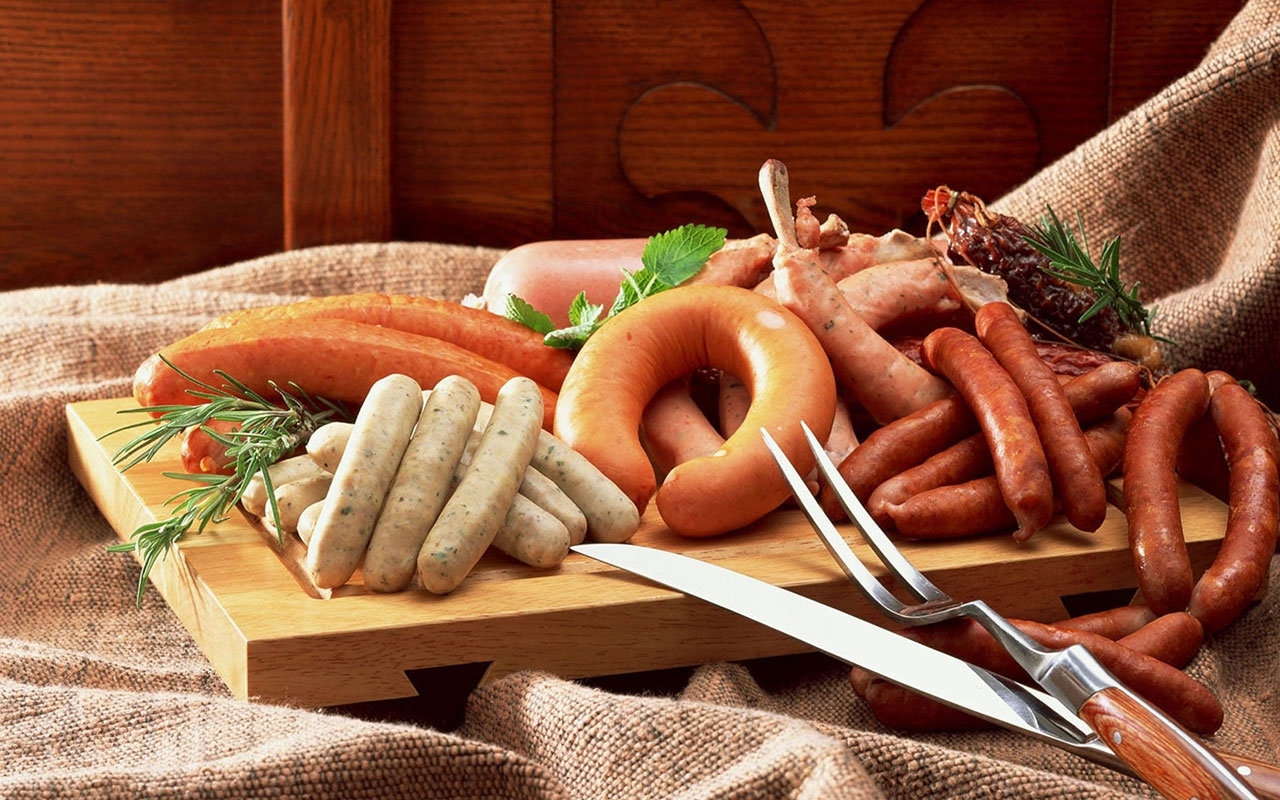
Mixing meat products with cheaper pork (pig) is a common form of meat fraud nowadays. This is a problem - especially for consumers who do not eat pork for religious reasons. You can easily find methods to distinguish fresh meat counterfeits by looking at the color, the fibers,... But for minced meat, sausages, processed foods and animal feed, it is not always stated which animal the product originates from. High-quality beef, lamb or veal can be mixed with cheaper pork to make fake meat. Proving which animal species is really present in a blended meat product is genuinely difficult and is of interest for two reasons:
- To detect contaminated meat, fake meat (intentionally or unintentionally)
- Verifying the authenticity of foods declared as “kosher” or “halal (for Jewish and Muslim consumers
So how can such blending in fake meat be accurately detected?
Observation methods or microscopic methods usually cannot answer this for you, because under the microscope, muscle fibers do not necessarily indicate the animal species, and in the case of processed foods such as gelatin or fat or that have been minced, you can no longer observe them either. Therefore, species identification (origin analysis) requires more advanced techniques, applying machines and analytical equipment. Popular is molecular biological analysis such as PCR, testing DNA traces in food. Or a simpler method that requires less equipment., enabling rapid testing to detect animal species: the ELISA method. Just like PCR tests, the new qualitative tests of ELISA technology are highly sensitive and can detect even the smallest amounts of pork in food. Even 1% pork content in cooked or processed products and even 0,1% in raw, unprocessed meat can be reliably detected. Moreover, the test is very easy to use and gives results quickly. This makes them the ideal tool for screening tests to confirm the authenticity of food in general and fake meat in particular in the food industry. *Kosher certification is assurance that goods meet the requirements of Jewish dietary law, and the certification is globally recognized. *Halal certification is a certification that the product is permitted for Muslim consumers (the product is produced according to Islamic law)
To learn more about how to determine the origin of meat, real meat and fake meat, especially canned products that have been thoroughly processed. You can contact PacificLAB for advice on the rapid and sensitive methods currently available on the market.