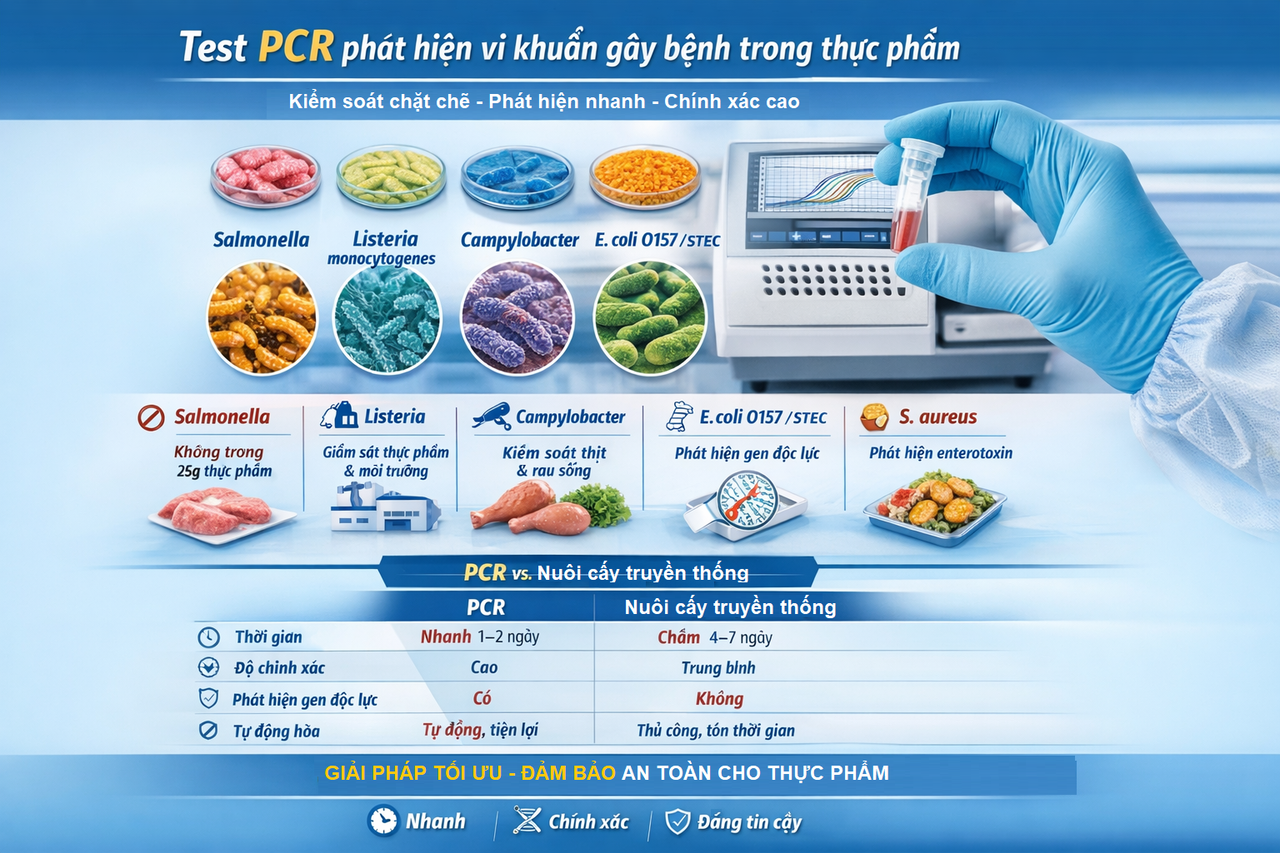
1. Salmonella spp.
🔍 Control requirement
- Legal requirement: not to be detected in 25 g of food (per Codex, EU, Vietnam).
* High-risk foods
- Poultry meat, fresh meat
- Eggs and egg products
- Milk and dairy products
- Instant food
* Challenges
- Low contamination levels
- Traditional culturing takes 4–5 days
✅ Advantages of using PCR
- Fast detection within 24 hours (including enrichment)
- High sensitivity, detecting bacteria even at very low levels
- High specificity, avoiding confusion with other enteric bacteria
- Suitable for screening large numbers of samples
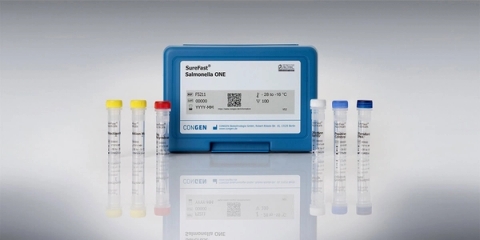
👉 See the product Salmonella Real-Time PCR Kit | SureFast® Salmonella ONE (including preparation kit)
2. Listeria spp. / Listeria monocytogenes
🔍 Control requirement
- Listeria monocytogenes: not detected in 25 g of ready-to-eat food
- Listeria spp.: an environmental hygiene monitoring parameter for the factory
* Dangerous characteristics
- Can grow at cold temperatures (2–4°C)
- High risk for pregnant women and the elderly
✅ Advantages of using PCR
- Distinguishes Listeria spp. from L. monocytogenes
- Early detection, preventing cross-contamination in the factory
- Lowers the risk of shipping unsafe goods
- Suitable for production environment monitoring
👉 See the products
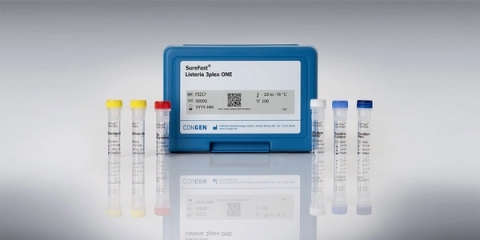
- Listeria Real-Time PCR Kit | SureFast® Listeria 3plex ONE
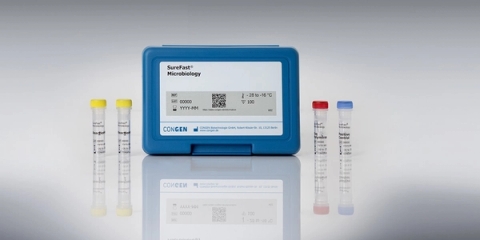
- Listeria monocytogenes Real-Time PCR Kit | SureFast® Listeria monocytogenes PLUS
3. Campylobacter spp.
🔍 Control requirement
- Usually controlled in:
+ Poultry meat
+ Fresh meat
- The bacterium:
+ Is hard to culture
+ Is sensitive to oxygen and temperature
- Traditional methods give unstable results
✅ Advantages of using PCR
- Does not depend on the bacteria's viability
- Accurately detects Campylobacter jejuni / coli
- Short analysis time, suitable for incoming raw material control
- Higher repeatability and reliability than culturing
👉 See the product Campylobacter Real-Time PCR Kit | SureFast® Campylobacter 4plex
4. E. coli O157 & STEC
🔍 Control requirement
- STEC (Shiga toxin-producing E. coli): can cause hemolytic-uremic syndrome (HUS)
- Requirement: detect the stx1, stx2, eae genes
- Risk foods: beef, raw milk, raw-eaten vegetables
✅ Advantages of using PCR
- Detects virulence (toxin genes) – not just the bacterial identity
- Distinguishes ordinary E. coli from pathogenic E. coli
- High accuracy, reducing the risk of false negatives
- Suitable for controlling serious health risks
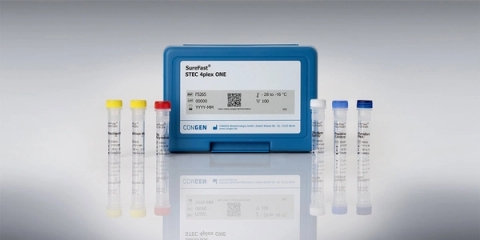
👉 See the product Escherichia coli Real-Time PCR Kit | SureFast® STEC 4plex ONE
5. Staphylococcus aureus
🔍 Control requirement
- Causes poisoning via heat-stable enterotoxin
- The bacterium can be killed but the toxin remains
- Important controls in:
+ Ready-to-eat foods
+ Products with many manual handling steps
✅ Advantages of using PCR
- Rapid detection of S. aureus and the enterotoxin gene
- Early warning of the risk of toxin formation
- Supports staff hygiene and production process control
- Reduces product recall risks
👉 See the product Staphylococcus aureus Real-Time PCR Kit | SureFast® Staphylococcus aureus PLUS
* Summary: Why is PCR the optimal solution for pathogenic bacteria?

Applying PCR test kits to detect foodborne pathogenic bacteria helps businesses:
- Shorten testing time
- Raise product safety
- Quickly meet legal and export requirements
- Minimize recall risks and economic losses