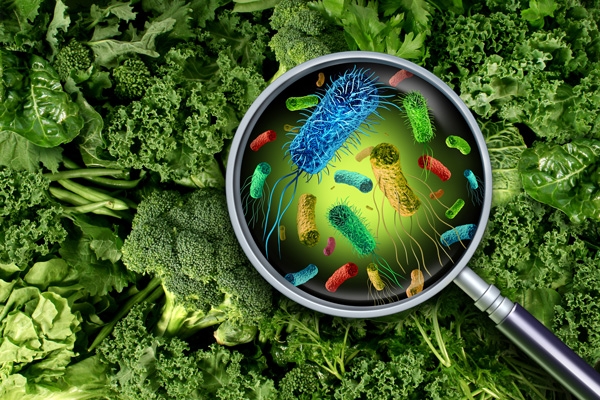
1. Pathogenic microorganisms in food
- The importance of controlling pathogenic microorganisms in food helps control pathogens across the entire production chain and is very important to ensure consumer protection.
- Pathogenic bacteria can cause serious food poisoning. Microorganisms must not be present in food or be present below the detection limit per gram of food.
- Fruit, vegetables, raw meat products, raw milk products and untreated water are common sources of bacterial contamination.
- Ensuring food hygiene and safety is a difficult challenge for all those involved, especially in ensuring quality at food production sites, food retail outlets and government agencies.
1.1. Campylobacter bacteria
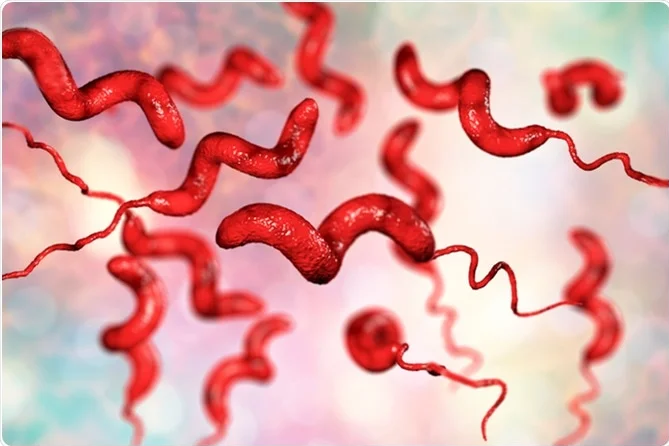
- Along with Salmonella, campylobacteriosis is one of the most significant diarrhoeal diseases worldwide. The rise in bacterial enteritis Campylobacter is due to the widespread presence of this bacterium in many wild animal species and farm animals, as well as pets. Campylobacter is one of the bacterial species that live commensally in the intestines of poultry, Campylobacter and enters the human food chain through these animal species. In addition, milk, raw meat and drinking water can act as transmission routes.
- Campylobacter are shed in large numbers by many hosts, contaminating food and reaching humans. The infective dose for Campylobacter enteritis is low, requiring fewer than 500 bacteria to cause infection. Of the approximately 15 species Campylobacter known, Campylobacter jejuni and Campylobacter coli are the main cause of gastroenteritis in humans.
1.2. Clostridium bacteria
- Bacterial species Clostridium are gram-positive, spore-forming bacteria present almost everywhere in the environment. The Clostridium species of pathogenic importance include Clostridium botulinum, Clostridium perfringens and Clostridium estertheticum.
- If food is not adequately refrigerated, it can become contaminated, leading to serious illness. These bacteria are heat resistant and can survive in food products that are fully cooked.
1.3. Legionella bacteria
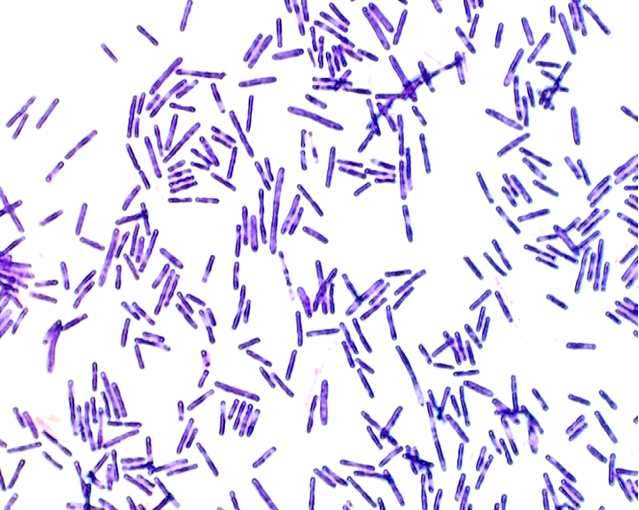
- The Legionella is a rod-shaped, gram-negative bacterium living in water and considered a potential pathogen in humans.
- The Legionella pneumophila is the species that causes the most disease in humans, causing Legionnaire's disease (legionellosis). The disease is usually transmitted through contaminated drinking water.
1.4. Listeria bacteria
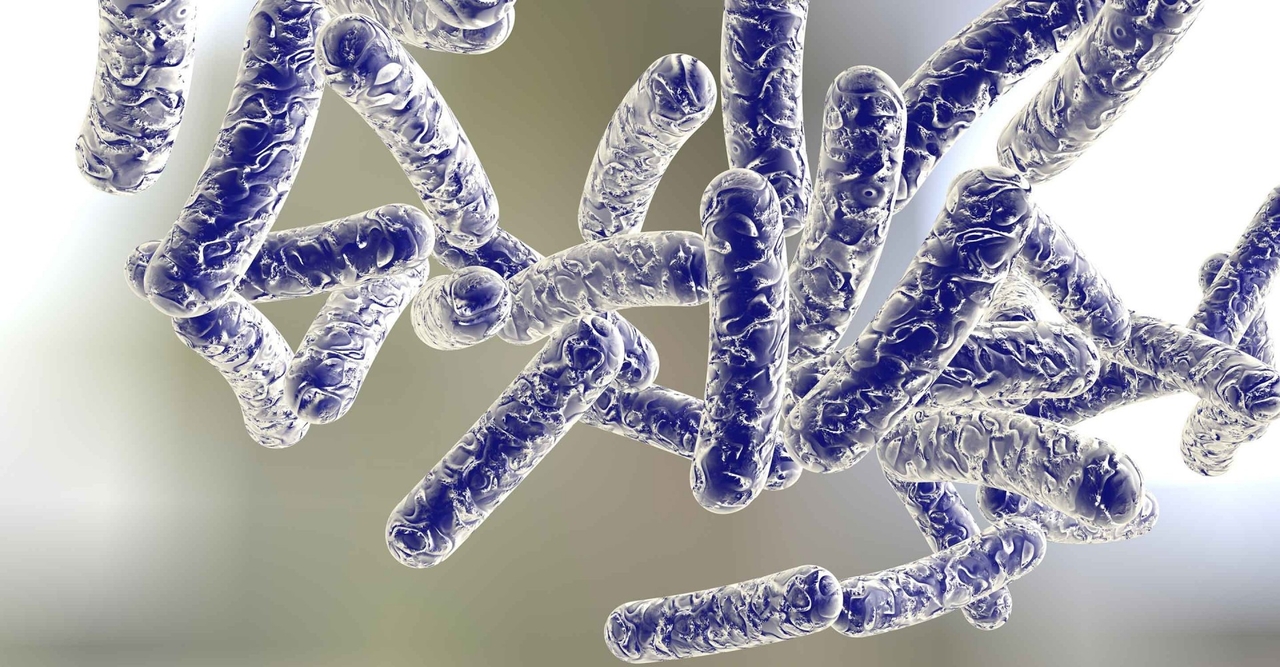
- Bacterium Listeria is present everywhere in the environment. Quantitative detection of Listeria can assess the contamination risk and ensure that preventive measures are implemented if necessary
- The Listeria monocytogenes is the main cause of food poisoning and can lead to sepsis, meningitis and encephalitis.
1.5. Salmonella bacteria
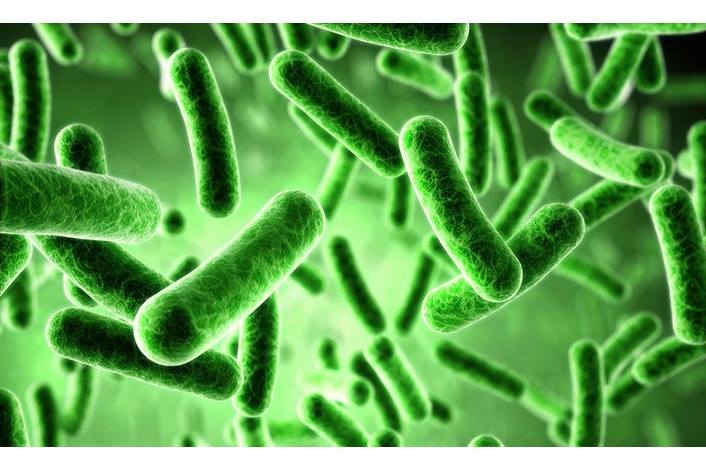
- The Salmonella is ranked among the most important causative bacteria of food poisoning cases. The World Health Organization WHO estimates more than 16 million cases of infection worldwide each year and more than half a million deaths.
- The Salmonella is found in food raw materials such as eggs, meat and milk. The potential for danger is high, especially in foods that should only be heated lightly or not heated at all (for example raw milk, cheese, raw sausage, chocolate, ice cream). In today's large-scale livestock farming, contamination Salmonella .
- Therefore, effective quality control using reliable testing methods is very important. For this purpose, we offer a range of different testing solutions, for surface hygiene control as well as for food Salmonella analysis.
1.6. Staphylococcus aureus bacteria
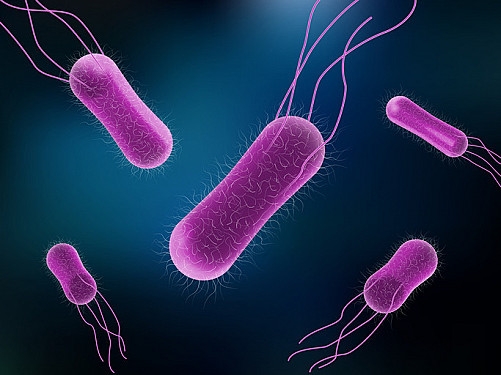
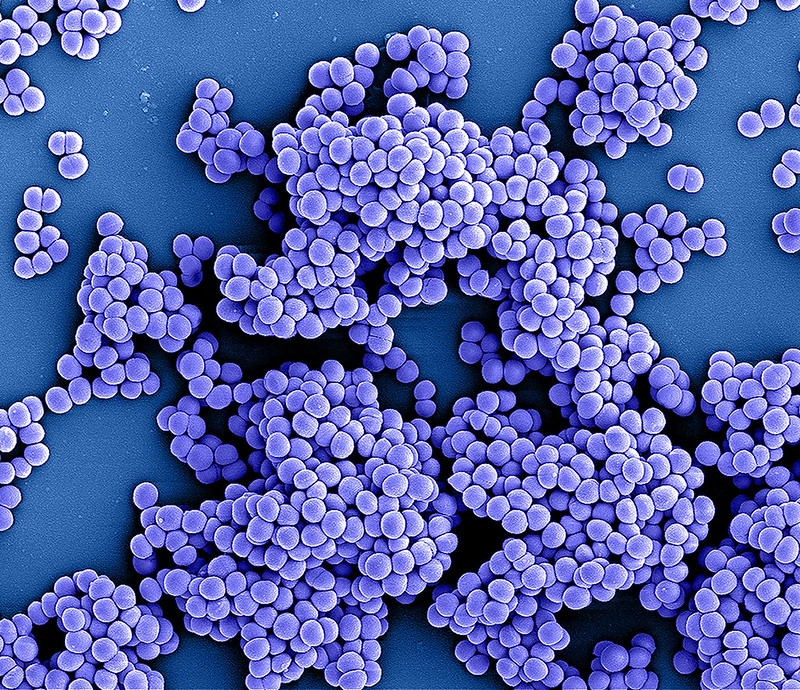
- The Staphylococcus aureus is also a pathogenic microorganism in food, a coccoid bacterium that can be observed under the microscope as a cluster resembling a bunch of grapes. The cells measure 0,8 to 1,2 µm, are Gram positive and non-motile. Staphylococcus aureus is a natural commensal of humans living on the skin and in the upper respiratory tract and is generally non-pathogenic. In cases of infection with pathogenic strains or in immunocompromised people, S. aureus can cause skin infections and abscesses but can also cause life-threatening diseases such as pneumonia, meningitis, endocarditis or toxic shock syndrome (TSS).
- One reason for the opportunistic pathogenicity of S. aureus is its ability to produce enterotoxins (SET), which can accumulate in contaminated food and cannot be completely inactivated by heat treatment. Food contaminated by S. aureus is almost always caused by humans (hands, sneezing, coughing). Therefore, S. aureus is considered an indicator of poor personal hygiene.
- Besides its relevance to food hygiene, Staphylococcus aureus also plays an important role in hospital hygiene. In particular, strains S. aureus that have become resistant to common antibiotics, known as "golden staph methicillin-resistant” (MRSA) can pose an incalculable danger because they are difficult to treat.
1.7. E Coli bacteria
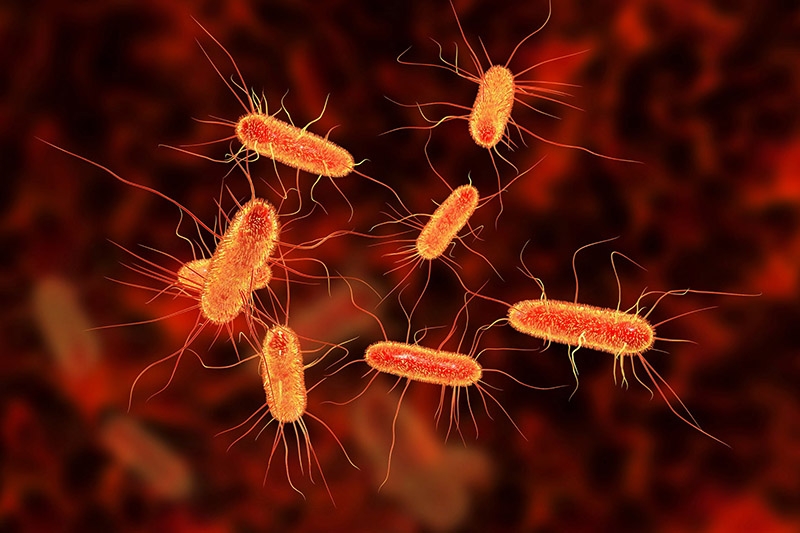
- Bacterium Escherichia coli (abbreviated as E. coli ) is a natural component of the gut flora in humans and animals and is usually harmless. However, there are pathogenic strains that can cause serious infections.
- One of these pathogenic strains is called Enterohemorrhagic Escherichia E. coli (“EHEC”). These bacteria produce harmful verotoxins or Shiga toxins and are also called verotoxin-producing E. coli (“VTEC”) or Shiga toxin-producing E. coli (“STEC”).
- Infection by STEC/VTEC is ranked among the most common food-related bacterial diseases and can even be fatal. The main sources of contamination include raw meat and unpasteurised dairy products.
1.8. Vibrio bacteria
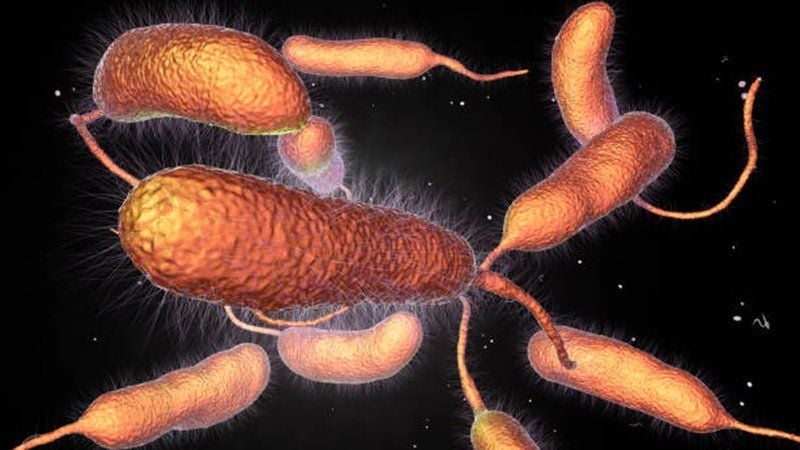
- The Vibrio spp. include pathogenic microorganisms that can cause serious infections after consuming contaminated food. In seafood-related diseases, Vibrio spp. are one of the main causes of gastroenteritis, wound infections and septicaemia. In addition, in serious infections they can cause outbreaks of diseases such as cholera, Vibrio spp. are the causative agents.
- Bacterium Vibrio parahaemolyticus usually lives in coastal waters and is at higher concentrations in summer. This bacterium is halophilic or salt-dependent. Therefore, Vibrio parahaemolyticus is found in the marine environment, seafood and the faeces of patients with acute enteritis. Gastroenteritis associated with Vibrio parahaemolyticus is an infection caused by this bacterium.
2. The benefits of using our solutions when testing pathogenic microorganisms in food
- Fast and reliable results: Rapid detection and quantification of pathogenic bacteria to ensure food safety.
- Comprehensive coverage: Testing of raw materials, finished products, production lines, personnel and hygiene effectiveness.
- Easy to use: Simple design, making it easy to integrate into existing HACCP systems.
- Sensitive and specific: Detection of low levels of contamination to prevent the spread of harmful microorganisms.
Controlling pathogenic microorganisms in food is necessary to maintain food safety and protect consumer health. Our test kit solutions provide reliable and effective solutions for the detection and quantification of harmful bacteria, helping you ensure product safety and comply with regulatory standards. Implementing these solutions as part of a comprehensive HACCP plan helps prevent contamination and protect consumers from latent health risks.
3. Catalogue of test kit products for testing pathogenic microorganisms in food
3.1. ELISA method
- RIDASCREEN® SET Total (96 wells/box), R4105 is a sandwich enzyme immunoassay ELISA test for the combined detection of staphylococcal enterotoxins A, B, C, D and E in liquid and solid foods as well as in bacterial cultures.
- RIDASCREEN® SET A,B,C,D,E (96 wells/box) R4101 is a sandwich enzyme immunoassay ELISA test for the determination of staphylococcal toxins A, B, C, D and E in liquid and solid foods as well as in bacterial cultures. On the basis of its sensitivity, the RIDASCREEN® SET A,B,C,D,E test is therefore clearer than the immunodiffusion procedure with a detection limit of 0,1 mg / ml.
3.2. Pre-poured freeze-dried medium plates
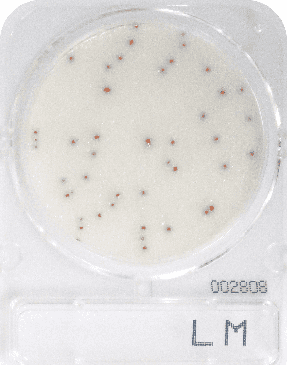
- Compact Dry LM Listeria monocytogenes plate 06532
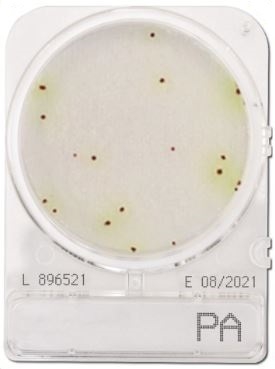
- Compact Dry Pseudomonas Aeruginosa plate 54062
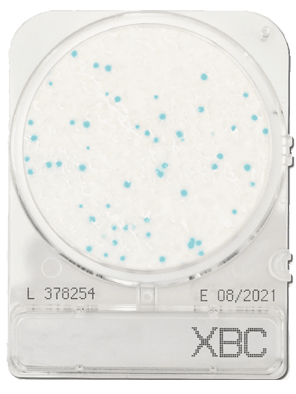
- Compact Dry Bacillus Cereus plate 54068
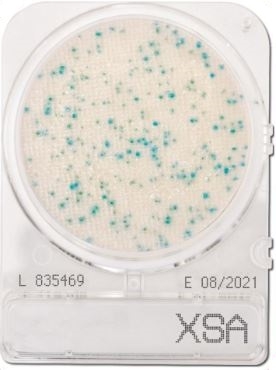
- Compact Dry Staphylococcus Aureus plate 54057
- Compact Dry Vibrio Parahaemolyticus plate 06749
- Compact Dry Salmonella plate 54058
- Compact Dry Listeria plate 54060
- Compact Dry Ecoli Coliform plate 54052
- Compact Dry Coliform plate 54053
3.3. Real Time PCR method
- SureFast® Enterobacteriaceae 4plex F5180 is a multiplex PCR test for direct detection, identification and differentiation of the specific DNA sequences of Enterobacteriaceae, Cronobacter spp. and Salmonella spp...
- SureFast® Fecal Screen 4plex F5504 is a multiplex PCR test for direct detection, identification and differentiation of the specific DNA sequences of Enterobacteriaceae, Enterococci, Escherichia coli in water.
- SureFast® Listeria 3plex ONE F5217 can be applied for the rapid and simple isolation and differentiation of Listeria spp. and Listeria monocytogenes in various types of food. The method consists of three steps:
1) Enrichment of the culture
2) DNA preparation (lysis in 10 minutes)
3) Specific Real Time PCR detection
- SureFast® Campylobacter 4plex F5170 is a multiplex PCR test for direct detection, identification and differentiation of the specific DNA sequences of Campylobacter jejuni, Campylobacter lari and Campylobacter coli.
- SureFast® STEC 4plex ONE F5265 can be applied for the rapid and simple isolation, detection and differentiation of the specific DNA sequences of the virulence factors Escherichia coli stx1 (subgroup ad), stx2 (subgroup ag), eae and the O157 group serum of Escherichia coli in various types of food. Two in one – the STEC 4plex test kit comes with a DNA preparation set.
- SureFast® MRSA 4plex F7117 is a test PCR for direct detection, identification and differentiation Staphylococcus aureus methicillin-resistant (MRSA). The test detects the SCCmec/orfX junction, the mecA/mecC genes and the specific DNA sequence of Staphylococcus aureus.
- SureFast® Yersinia 3plex F5132 is a PCR test for direct detection, identification and differentiation of the specific gene DNA sequences of Yersinia pseudotuberculosis and Yersinia enterocolitica.
- SureFast® Escherichia coli Serotype II 4plex F5168 is a multiplex PCR test for direct detection, identification and differentiation of the gene DNA sequences wzx specific to Escherichia coli O45, the gene DNA sequence wbdl of Escherichia coli O111 and the gene DNA sequence ihp1 of O145.
- SureFast® Escherichia coli Serotype I 4plex F5167 is a multifunctional PCR kit for direct detection, identification and differentiation of gene DNA sequences wzx specific to Escherichia coli O121, O26 and O103.
- SureFast® Foodborne Pathogens 4plex F5175 is a multi-component PCR test for direct detection, identification and differentiation of the bacterial virulence factors Escherichia coli (stx1 [subgroup ad], stx2 [subgroup ag]), Listeria monocytogenes and Salmonella spp..
- SureFast® Salmonella Species/Enteritidis/Typhimurium 4plex F5166 is a multifunctional PCR test for direct detection, identification and differentiation Salmonella spp., Salmonella Enteritidis and Salmonella Typhimurium. Each reaction contains an internal amplification control (IAC).
- SureFast®STEC Screening PLUS F5105 is a PCR test for direct detection and identification of the DNA sequences of the virulence factors stx1 (subgroup ad) and stx2 (subgroup ag) of the Escherichia coli bacterium (STEC). Each reaction contains an internal amplification control (IAC).
- SureFast® Parasitic Water Panel 4plex F5506 is a multiplex PCR test for direct detection, identification and differentiation Giardia intestinalis , Entamoeba histolytica and Cryptosporidium spp. Each reaction contains an internal amplification control (IAC).
- SureFast® Legionella 3plex F5505 is a PCR test for direct detection and identification of the bacterium Legionella spp. and Legionella pneumophila. Each reaction contains an internal amplification control (IAC).
- SureFast® Vibrio 4plex F5161is a real-time PCR test for direct detection, identification and differentiation of DNA from Vibrio cholerae , Vibrio parahaemolyticus and Vibrio vulnificus. Each reaction contains an internal amplification control (IAC).
- SureFast® Pseudomonas aeruginosa PLUS F5503 is a PCR test for direct detection and identification of the specific DNA sequence of Pseudomonas aeruginosa. Each reaction contains an internal amplification control (IAC).
- SureFast® Escherichia coli PLUS F5157 is a DNA detection test Escherichia coli. Each reaction contains an internal amplification control (IAC).
- SureFast® Cronobacter sakazakii PLUS F5115 is a real-time PCR test for direct detection and identification of DNA from Cronobacter sakazakii. Each reaction contains an internal amplification control (IAC).
- SureFast® Cronobacter PLUS F5114 is a DNA detection test of Cronobacter spp. Each reaction contains an internal amplification control (IAC).
- SureFast® Emetic Bacillus cereus PLUS F5127 is a PCR test for direct detection and identification of the specific cereulide synthetase DNA sequence of Bacillus cereus emetic. Each reaction contains an internal amplification control (IAC).
- SureFast® Clostridium perfringens PLUS F5123 is a PCR test for direct detection and identification of the specific alpha toxin DNA sequence of Clostridium perfringens. Each reaction contains an internal amplification control (IAC).
- SureFast® Clostridium botulinum Screening PLUS F5110 is a PCR test for direct detection and identification of the specific Botulinum neurotoxins (BoNT) A, B, E and F of the DNA sequence Clostridium botulinum, Clostridium baratii and Clostridium butyricum.
- SureFast® Clostridium estertheticum PLUS F5160 is a DNA detection test Clostridium estertheticum. Each reaction contains an internal amplification control (IAC).
- SureFast® Salmonella ONE F5211 This test kit is designed for the isolation and detection of DNA Salmonella quickly and simply from enriched cultures. Each reaction contains an internal amplification control (IAC).
- SureFast® Salmonella PLUS F5111 is a PCR test for direct detection and identification of the specific DNA sequence of Salmonella spp.. The SureFast® Salmonella PLUS real-time PCR test kit has been confirmed and certified by AOAC in combination with the SureFast® PREP Salmonella test kit (licence number: 041103). Each reaction contains an internal amplification control (IAC).
- SureFast® EHEC/EPEC 4plex F5128 is a multiplex PCR reaction for direct detection, identification and differentiation of the DNA sequences of the virulence factors stx1 (subgroup ad), stx2 (subgroup ag), eae and the virulence factor e. coli and Shigella spp. ipaH. This test contains internal control DNA (ICD) as an internal control of the sample preparation process and to determine the PCR inhibition capacity.
- SureFast® Legionella Screen PLUS F5502 is a DNA detection test for Legionella spp. Each reaction contains an internal amplification control (IAC).
- SureFast® Bacillus cereus group PLUS F5126 is real-time PCR for direct detection and identification of the specific DNA sequences of the group Bacillus cereus ( Bacillus anthracis, Bacillus cereus, Bacillus cytotoxis, Bacillus mycoides, Bacillus pseudomycoides, Bacillus thuringiensis and Bacillus weihenstephanensis). Each reaction contains an internal amplification control (IAC).
- SureFast® Staphylococcus aureus PLUS F5116 is PCR for direct detection and identification of the DNA sequences Staphylococcus aureus specific. Each reaction contains an internal amplification control (IAC).
- SureFast® Listeria monocytogenes PLUS F5113 is a PCR test for direct detection and identification of the DNA sequence of the virulence-related gene Listeria monocytogenes prfA. Each reaction contains an internal amplification control (IAC).
- SureFast® Listeria Screening PLUS F5117 is a PCR test for direct detection and identification of the specific DNA sequence of Listeria spp. Each reaction contains an internal amplification control (IAC).
- SureFast® Legionella pneumophila PLUS F5501 is a DNA detection test for Legionella pneumophila . Each reaction contains an internal amplification control (IAC).