

Hidden dangers from makeup tools and contaminated cosmetics
In a finding that could make millions of people around the world, especially women, rethink their makeup routine. A group of researchers from Aston University found many types of bacteria harmful hidden in about 90% of the cosmetics they examined. Makeup tools and contaminated cosmetics include dangerous bacteria such as E. coli and Staphylococci. With the highest amounts found on mascara, lip gloss and the tools used to apply makeup (brushes, sponges...)
Although some bacteria can occur naturally on the skin. But many strains, found on ordinary cosmetics products, can lead to serious illness. Especially when they enter the body through the eyes, mouth or wounds on the surface. Skin infection, blood poisoning and diarrhoea are some of the side effects recorded by the study published in the Journal of Applied Microbiology. For people with weaker immune systems, the risk is even more serious.
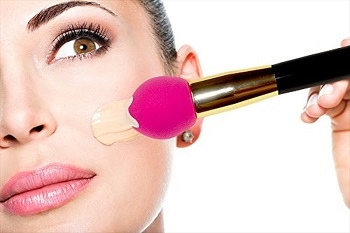
Your foundation brush may contain harmful bacteria without you ever knowing
1. How bacteria enter cosmetics
Cosmetics contaminated with bacteria or fungi come from a number of routes:
- Contaminated raw materials: Water or the chemical ingredients, colourants, humectants,...
- Poor hygiene conditions during production
- Cosmetic components favourable to the growth of microorganisms, with no effective preservation system
- Packaging that does not protect the product safely.
- Poor transport or storage conditions
- How the consumer uses the product, for example dipping fingers, unclean cosmetic scoops,... into the product
2. Makeup is one of the most common culprits
In a study by Bashir and Lambert published in the Journal of Applied Microbiology. About 70% -90% of the makeup products tested. Including lipstick, lip gloss, micellar water (alcohol-free), eyeliner and mascara - were found to be contaminated. Staphylococcus aureus, Pseudomonas aeruginosa and Escherichia coli are the most common culprits. The products with the highest rate of bacterial contamination are powder/foundation tools (small foam sponges or makeup brushes). (Basher A, Lambert P. J Appl Microbiol. 2019)
2.1 E. coli bacteria were found in up to 90% of makeup and cosmetics
The research group analysed the microbiology of more than 450 cosmetics in common use. Including eyeliner, mascara, lipstick, foundation and makeup tools. After inoculating the samples onto culture medium, the research group recorded the level of contamination of E. coli, Staphylococci and C. freundii from 79% to 90%. More than a quarter of the cosmetic products also contained Enterobacteriaceae, as well as other types of fungi.
2.2 Beauty tools are a breeding ground for bacteria
Foam makeup tools, sponges or brushes contain the highest amount of bacteria. The reason is that they are often left damp after use and rarely cleaned. This makes them the top breeding ground for bacteria. How often do you wash your makeup brush (brush), foundation sponge,...?
Experts from Elle magazine say you should buy a new brush every three months if they start shedding, smell or discolour. For sponges, they need to be replaced every 2 months, or at least every three months, if you have a habit of cleaning them properly.
2.3 Which makeup products are most likely to get "dirty"?
Dr Susan Whittier, director of Clinical Microbiology Services at NewYork-Presbyterian Hospital, Columbia University Medical School, believes that using a makeup sponge together with facial moisturiser and liquid foundation creates the conditions for the strongest bacterial growth.
Over time, all makeup products can go bad - and become easy for bacteria and fungi to grow. You should follow the shelf life after opening given by the manufacturer instead of only paying attention to the expiry date of the product. Applying makeup in the bathroom is also not recommended because the bathroom is a damp place.
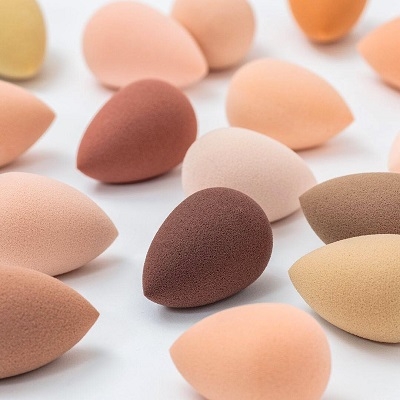
Makeup sponges, beauty tools are the most easily contaminated
2.4 Expiry dates on cosmetic products
They are used to indicate the period during which the preservative in the product can control the growth of bacteria. They are printed on the packaging as an open jar symbol accompanied by the characters 3M, 6M, 9M and 12M - for the number of months the product can be opened and used. Mascara is the item most frequently exceeding its period after opening. You can usually find the expiry date but you do not remember the day you opened it. Therefore, most of the risks of contamination causing skin diseases arise from this oversight.
3. Bacterial limits in cosmetics
| STT | Parameter | Limits | |
| Products for children under 03 years of age, products in contact with the eye area or mucous membranes | Other products | ||
| 1 | Total count of microorganisms | =<500 cfu/g | =<1000 cfu/g |
| 2 | P. aeruginosa (blue-green pus-forming bacillus, can weaken the immune system and can be fatal) | Not permitted in 0,1g or 0,1 ml of the test sample | Not permitted in 0,1g or 0,1ml of the test sample |
| 3 | S. aureus (golden staphylococcus, usually resident on the skin and nose. In severe cases it causes infection, | Not permitted in 0,1g or 0,1 ml of the test sample | Not permitted in 0,1g or 0,1ml of the test sample |
| 4 | C. albicans (causing dermatophytosis, oral thrush or vaginitis) | Not permitted in 0,1g or 0,1 ml of the test sample | Not permitted in 0,1g or 0,1ml of the test sample |
4. Testing beauty tools and contaminated cosmetics
Microbiological control in cosmetics is an essential requirement to protect consumer health. Not only the finished product, but the production line itself also needs to control pathogenic microorganisms. Through testing raw materials, surface sanitation and surface hygiene checks. Businesses and cosmetic manufacturing companies control the quality of their output. To test for microorganisms in raw materials and finished products. There are many methods such as culture and traditional colony counting, culture using compact dry plates and colony counting with a mobile phone app which is simple, PCR testing to detect microbial traces,
Consumers can also protect themselves from tools and contaminated cosmetics by choosing products that have been tested for microbiological limits. Using within the correct period after opening, cleaning sponges/cotton pads regularly,... are also effective ways.

Clean makeup sponges regularly to avoid contamination of cosmetics and facial skin