1. Overview of ochratoxin
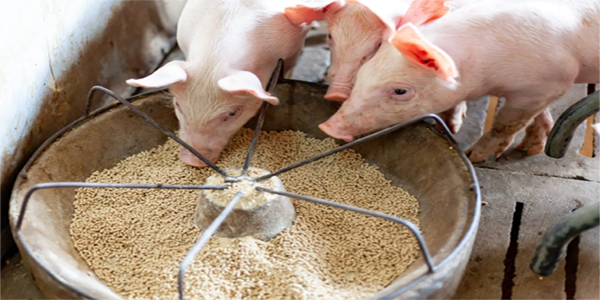
- In animal husbandry, the quality and safety of feed is always the key factor determining livestock productivity and health. One of the biggest threats to livestock feed safety is the presence of mould toxins, especially ochratoxin. This toxin not only affects livestock directly but can also accumulate in the food chain, affecting human health.
- These fungi thrive in high temperature and humidity, making feed ingredients prone to toxin contamination. Ochratoxin is commonly found in:
- Cereals such as wheat, maize and barley.
- Coffee beans, raisins and oilseeds.
- Compound feed used in livestock farming.
2. Effects of ochratoxin on livestock
Ochratoxin, especially Ochratoxin A, has serious effects on livestock health, including:
- Reduced kidney function: ochratoxin is nephrotoxic, reducing blood filtration and damaging kidney tissue.
- Weakened immune system: making livestock more susceptible to other infections.
- Slower growth and lower productivity: this toxin causes malnutrition, reduces feed conversion and leads to poor growth.
- Reproductive risk: in poultry and cattle, ochratoxin can affect reproductive function, reducing fertility rates and breeding stock quality.
- Accumulation in the body: ochratoxin accumulates in meat, milk and eggs, becoming a source of toxin exposure for people who consume them.
3. Effects on people
Ochratoxin from contaminated feed can accumulate in animal products and affect human health when consumed. Some effects include:
- Cancer risk: Ochratoxin A is classified by the World Health Organization (WHO) as a possible carcinogen.
- Reduced kidney and liver function: long-term accumulation leads to kidney and liver damage
- Effects on the immune system: weakening natural resistance.
4. Methods for testing ochratoxin in animal feed
Detecting the ochratoxin toxin in animal feed is an important step to ensure safety for livestock and people. Testing methods are increasingly developed and refined, from simple techniques to modern technology, with high accuracy and efficiency. Below are common methods for testing ochratoxin in animal feed.
4.1. Qualitative rapid test strip method (Rapid Test)
- Principle: uses test strips or rapid test kits based on the immune reaction between the antigen (ochratoxin) and a specific antibody.
* Advantages:
- Fast, taking only 5–15 minutes.
- Easy to use, requiring no complex equipment.
- Suitable for on-site screening.
* Disadvantages:
- Lower accuracy than quantitative analytical methods.
- Only indicates whether a sample exceeds the threshold; it does not give a specific concentration.
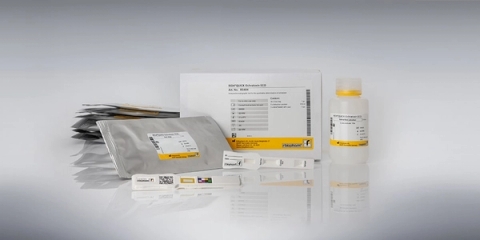
* Applications: Commonly used on farms or at feed production facilities for initial testing. See the rapid Ochratoxin test kit here.

4.2. High-Performance Liquid Chromatography (HPLC)
- Principle: ochratoxin is separated and analysed based on its chemical properties in the mobile and stationary phases.
* Characteristics
- High accuracy and sensitivity.
- Can accurately quantify the amount of ochratoxin in a sample.
- Requires expensive equipment and highly qualified technicians.
* Applications: Usually used to accurately analyse samples with low ochratoxin levels.
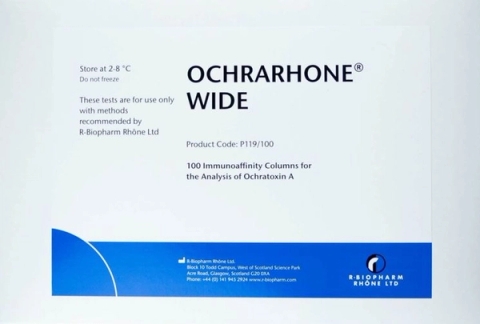
See detailed information on the immunoaffinity column for Ochratoxin analysis here.

4.3. Gas Chromatography-Mass Spectrometry (GC-MS)
- Principle: ochratoxin is vaporised and analysed based on its mass-to-charge ratio.
* Characteristics:
- Very accurate and sensitive, allowing detection of ochratoxin at extremely low concentrations.
- Complex sample preparation procedure.
- Suitable for testing samples with low contamination or requiring in-depth analysis.
4.4. LC-MS/MS (Liquid Chromatography-Tandem Mass Spectrometry)
- Principle: combines liquid chromatography with mass spectrometry to analyse and quantify substances, even at trace levels.
* Advantages:
- The highest sensitivity and accuracy of all the methods.
- Can detect several different toxins simultaneously, not only ochratoxin.
* Disadvantages:
- Requires modern equipment and complex operation.
- High analysis cost.
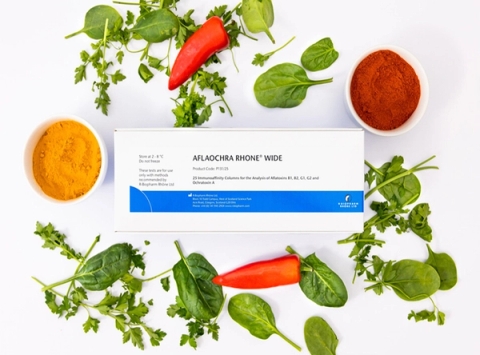
See the immunoaffinity column product for simultaneous analysis of Aflatoxin and Ochratoxin A by LC-MS/MS here.
4.5. ELISA (Enzyme-Linked Immunosorbent Assay)
- Principle: based on the reaction between the ochratoxin antigen and a specific antibody.
* Characteristics:
- Fast and simple, giving results within 1–2 hours.
- Suitable for screening large numbers of samples.
- Relatively high accuracy, but cross-reactions with other compounds can occur.
- Lower cost than HPLC and LC-MS/MS.
* Applications: Commonly used in livestock and feed production laboratories.
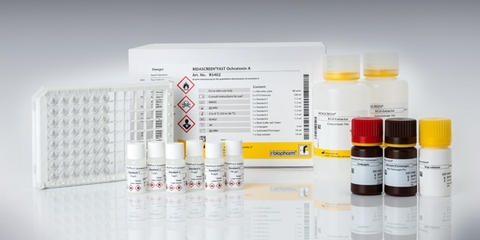
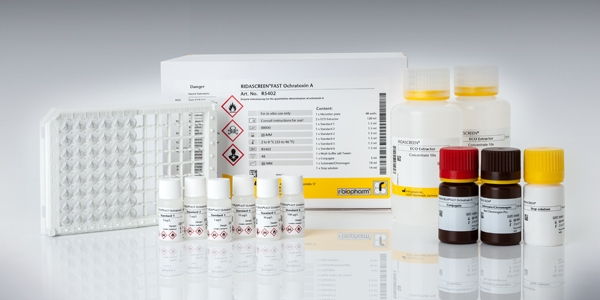
See the Ochratoxin A ELISA test kit here.
4.6. Thin Layer Chromatography (TLC)
- Principle: ochratoxin is separated on a thin silica gel layer and detected with a fluorescent agent or chemical reagent.
* Characteristics:
- A simple method requiring no complex equipment.
- Lower sensitivity and accuracy than HPLC and ELISA.
- Suitable for rapid testing of simple samples.
* Applications: Preliminary testing of feed samples.
4.7. Biological methods
* Using microorganisms
- Principle: uses microorganisms sensitive to ochratoxin to detect the presence of the toxin.
* Characteristics:
- Easy to perform and low cost.
- Lower accuracy than chemical methods.
* Applications: commonly used in research or preliminary testing.
* Gene analysis (PCR - Polymerase Chain Reaction)
- Principle: detects the DNA of ochratoxin-producing fungi in feed.
* Characteristics:
- Can detect the latent risk from mould even before the toxin has been produced.
- Requires modern technique and equipment.
* Applications: usually combined with other methods to give comprehensive results
4.8. Spectroscopic methods
* Ultraviolet-visible absorption spectroscopy (UV-Vis)
- Principle: ochratoxin absorbs light at a characteristic wavelength
* Characteristics:
- Simple and low cost.
- Sensitivity and accuracy are not high.
* Applications: suitable for preliminary testing.
* Fluorescence spectroscopy
- Principle: ochratoxin fluoresces under ultraviolet light.
* Characteristics:
- Higher sensitivity than UV-Vis.
- Requires specialised equipment.
* Applications: rapid analysis of samples with low ochratoxin levels.
5. Comparing methods for testing ochratoxin

Choosing an ochratoxin testing method depends on the intended use, available resources and accuracy requirements. In practice, ELISA and HPLC are the two most widely used methods thanks to their balance of accuracy and cost. Applying modern and traditional methods together helps ensure comprehensive, reliable test results, thereby improving feed quality and protecting public health.
6. Measures to prevent and control ochratoxin
To limit ochratoxin contamination in animal feed, the following prevention and control measures should be applied:
6.1. Raw material control
- Choose clean raw material sources free from mould contamination.
- Store raw materials in a dry, well-ventilated place to limit conditions for mould growth.
- Use preservatives and anti-mould agents such as probiotics or organic acids.
6.2. Detection and monitoring
- Use rapid testing methods such as ELISA or HPLC to detect the presence of ochratoxin in feed.
- Establish a periodic testing procedure to ensure quality.
6.3. Using toxin adsorbents
Add toxin adsorbents such as bentonite, zeolite or activated carbon to feed to reduce toxin absorption into the animal's body.
6.4. Production process management
- Clean feed production equipment periodically.
- Ensure warehouses and production areas do not become damp or mouldy.
Ochratoxin is a serious threat to the livestock industry, not only reducing productivity but also affecting the health of animals and people. Applying strict prevention and control measures, from production to feed processing, is essential to protect a safe food chain. Investing in toxin testing technology and using modern nutritional solutions will help the livestock industry minimise the risks from ochratoxin while improving economic efficiency and product quality.