1. Coffee production
- Different coffee varieties require different growing environments. In general, coffee grows from the Tropic of Capricorn to the Tropic of Cancer. Higher altitudes produce coffee beans with higher acidity and a more intense flavor.
- The coffee tree grows up to 3 m when in production or being harvested (where it is classed as a shrub), but in the wild it can grow up to 10 m. Contrary to what many people think, coffee is not a bean but a seed inside a fruit that grows on the coffee tree. The beans go through a long and complex process to become the beverage. The coffee tree takes 3 – 5 years to flower, and some varieties can take up to 7 years, so coffee production is a complex process that requires a lot of effort. Before roasting, the pulp is separated from the beans, and the beans are then sorted and classified by color, size and weight to remove impurities and ensure uniformity and good quality.
2. Ochratoxin in coffee
- The growth of organisms can occur at many steps of coffee processing, but mycotoxins can also start developing even before the harvest begins. In addition, it has been found that coffee beans can also be cross-contaminated if the facilities at the processing centers are not safe enough. Mycotoxins are secondary metabolites produced by molds under specific humidity and temperature conditions.
- Although roasting at high temperatures can significantly reduce the amount of ochratoxin A (OTA) contained in coffee beans, risk management is still needed to ensure not only consumer protection but also better quality for the final product.
- The current maximum Ochratoxin A level in coffee under EU regulation is 3 ppb for roasted coffee and 5 ppb for instant coffee. With coffee being the second most consumed beverage in the world, it is important to use suitable analytical methods to ensure compliance with the legal levels, keeping coffee safe for consumers.
3. Methods for analyzing and controlling Ochratoxin A
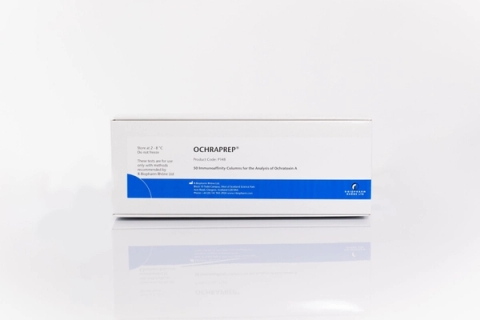
- Currently, the only reliable way to determine the content of mycotoxins and ensure compliance with regulatory controls is to follow the sampling and analysis guidelines. Sensitive methods must be used to detect mycotoxins present in coffee, because the legal limits of detection are low. A reliable and commonly used method for detecting and analyzing Ochratoxin A in coffee is HPLC – using an immunoaffinity column for analysis. The great thing about using immunoaffinity clean-up is that, regardless of the matrix, the method essentially follows the same tried-and-tested steps. The extraction of Ochratoxin A from whatever matrix needs to be demonstrated, but otherwise the flexibility of immunoaffinity clean-up practically ensures easy analysis by HPLC with fluorescence detection without fear of any matrix interference.
- Our product range gives you the flexibility to choose the product that best suits your laboratory's requirements. Choose from simple screening tests or from a range of immunoaffinity columns with both single- and multi-toxin options. To complete our product range, a range of immunoaffinity cartridges is available for automated analysis, suitable for laboratories that require high throughput and an improved workflow.
Pacific Scientific Equipment Technical Company Limited is proud to be the exclusive distributor of R-Biopharm products in Vietnam, including immunoaffinity column products for HPLC analysis. You can see details of the immunoaffinity column for Ochratoxin A analysis at the following link: