
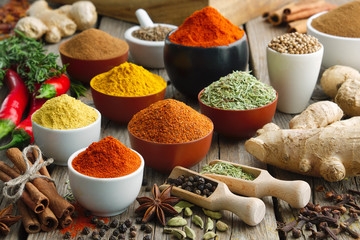
Aflatoxin and Ochratoxin are particularly common in spices. To ensure food safety, regular mycotoxin analysis is mandatory. Here is what you should consider when testing spices.
1. The level of legislation is very low
Due to their toxic effects, maximum limit values for Aflatoxin and Ochratoxin A have been established in the EU. Because the limit for spices is very low (see table), the analytical methods must be very accurate to detect even such low concentrations. The method of choice here is highly sensitive and reliable analysis by high-performance liquid chromatography (HPLC) or LC-MS/MS.
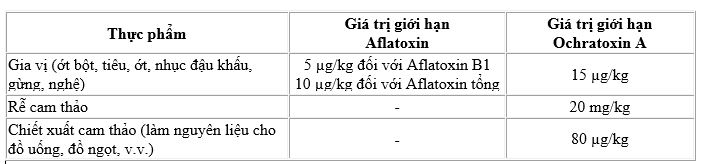
* (Limit values according to Regulation (EU) No 1881/2006 and Regulation (EU) No 2015/1137)
2. Sample clean-up is essential when analyzing spices
- Spices are a very complex matrix. To analyze spices accurately despite the interfering substances, sample clean-up by immunoaffinity column (IAC) prior to HPLC or LC-MS/MS is essential. After homogenizing the sample and extracting the mycotoxins, the sample extract is filtered, diluted and slowly passed through the immunoaffinity column. The column contains a gel suspension with monoclonal antibodies that bind to the mycotoxins in the sample. Unbound material is removed by washing. After washing, the sample is ready for analysis by HPLC or LC-MS/MS.
- Using immunoaffinity columns such as OCHRAPREP® or AFLAPREP® / EASI-EXTRACT® AFLATOXIN, the clean-up is completed in 20 minutes, delivering excellent recoveries and low limits of detection. Immunoaffinity columns for simultaneous clean-up of Aflatoxin and Ochratoxin are also available.
3. There is no official method for spices yet
- Mycotoxins are a key topic in food analysis, with several official methods already available for Aflatoxin analysis in some spices. However, the detection of Ochratoxin in spices has, so far, not received much attention. Although the presence of mycotoxins in spices has been identified in many analyses, analytical methods for this matrix have so far not been collaboratively tested for Ochratoxin. To date, there is no official method, such as an AOAC or CEN certificate, for detecting Ochratoxin in spices.
- However, this may soon change: the AOAC International journal has recently published the results of an international validation study on spices. In 25 public and private laboratories, naturally contaminated samples of black and white pepper, nutmeg, spice mixtures, cocoa powder and drinking chocolate were tested for Ochratoxin A. All participants used OCHRAPREP® immunoaffinity columns for sample extraction and clean-up prior to analysis. Analysis was by HPLC with fluorescence detection. The method showed excellent performance and is currently being considered by CEN for adoption as the official method for Ochratoxin A.
Source: www.food.r-biopharm.com/news/