
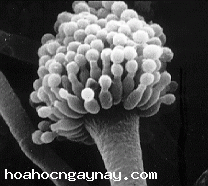
Molds and mycotoxins:
Of the 200,000 different species of molds, about 50 are harmful to humans and animals. These can be divided into two groups: the disease-causing group and the poisoning group.
The first group belongs to the field of medical science. The second group causes major problems for feed manufacturers because they cause poisoning in livestock and poultry. These toxins are collectively called mycotoxins. Mycotoxins are produced by molds as by-products of metabolism during digestion and assimilation of nutrients from grains and other feed ingredients.
Of these, the most dangerous is aflatoxin. Aflatoxin comprises 6 different types (B1, B2, G1, G2, M1 and M3). Aflatoxin B1 is extremely toxic. An amount of 0.03 ppm of aflatoxin B1 from dried peanuts causes liver tumors.
They include a family of toxins produced by the fungi Aspergillus flavus and Aspergillus parasiticus. Because the hot, humid climate is very suitable for their growth conditions, Aspergillus flavus is found abundantly everywhere in Vietnam. Foods commonly contaminated with Aspergillus flavus are peanuts, corn, wheat, and cottonseed.
Note that aflatoxin can be produced in grains even before harvest, during harvest, and after harvest if the grain is not stored properly, or it can be produced in feed before use. In general, once aflatoxin is formed, little can be done to remove it from the grain or the feed. These toxins have very stable chemical structures and are not destroyed by heat, light, acid, alkaline treatment, or extended storage.

Structure of the aflatoxin B1 molecule
Effects of aflatoxin on humans and livestock:
Under certain conditions, molds will produce aflatoxin. However, the amount of aflatoxin produced is not enough to cause severe poisoning. Prolonged symptoms include slow growth rate, feed consumption, disease resistance, and decreased shedding. In general, aflatoxin reduces the ability to absorb nutrients and therefore affects the growth rate and nutrient utilization processes of livestock. Aflatoxin affects fat metabolism, produces fat in the liver, and reduces carcass fat. Specifically, aflatoxin causes the following harms:
- Destroying liver, kidney, and other vital organs.
- Affecting the immune system.
- Eroding the intestinal and stomach walls.
- Malnutrition, stunted growth, death.
- Causing cancer in livestock and poultry. And if humans eat meat containing aflatoxin, they can develop liver cancer. For this very reason, the US Food and Drug Administration has banned all foods and feeds containing aflatoxin. In fact, the high disease rates in Asian countries are due to food contaminated with aflatoxin.
Besides aflatoxin, many other mycotoxins are also extremely dangerous, such as ochratoxin and T2 (trichothecenes).

Structure of the T2 mycotoxin molecule
High mycotoxin contamination rates in Vietnam
According to the Food and Agriculture Organization (FAO), about 25% of the world's grain supply contains a large amount of mycotoxins. In many parts of Asia, the mycotoxin contamination rate is higher due to climatic factors and limited harvesting and storage practices.
According to scientific documents scientific, there are 6 types of aflatoxin, the most toxic of which is aflatoxin B1 (AFB1). The danger of AFB1 lies in its ability to cause harm at very small doses: 1 kg of feed contaminated with just 2 milligrams (an amount just enough to sit on the head of a fingernail) is already enough to damage the liver. This poison is also heat-stable: whether boiling at 100°C in a normal pot, or at higher temperatures in a pressure cooker, or at the temperatures of an animal-feed pellet extruder, aflatoxin is still not degraded.
Another danger is that under hot and humid conditions like ours, mold is present almost everywhere: on corn kernels, peanuts, rice bran, dried oil cake… A survey by the Ho Chi Minh City Preventive Medicine Center found that the aflatoxin level in peanuts was 263 times higher than the permitted threshold. A survey by the Institute of Vegetable Oil Research also found that 5 out of 11 tested samples were contaminated with aflatoxin at levels from 20–112 mg/kg (2 to 11 times the permitted threshold). Another danger: when feed ingredients such as corn or dried soybean oil cake become moldy, users often crumble, winnow, and blow the mold away, thinking the material can then be used; but in practice only the fungal fibers are blown away, while the aflatoxin toxin secreted by the mold remains intact in the material.
A survey of 20 lotus seed samples in Hanoi found 4 samples containing aflatoxin at levels many times higher than the Ministry of Health regulations.
Aflatoxin exposure in milk and dairy products is a growing concern for agricultural producers. To limit the risks to human health when using agricultural products, scientists need to find effective analytical methods to accurately and rapidly assess aflatoxin from feed through to final products.
Currently, research directions to fabricate biosensors applying nanotechnology and conductive polymer materials with immobilized immunoreagents for quantifying aflatoxin in agricultural products are a new research direction. We hope it will attract the attention of scientists in Vietnam.
Source: Hoahocngaynay.com