

1. What is mustard allergy
- Mustard allergy is an excessive immune response of the body to the proteins in mustard. This is one of the most common food allergies, especially dangerous because even a small amount of mustard can cause severe reactions
2. Hazards of mustard allergy
Mustard allergy has many hazards; mustard allergic reactions can appear immediately or after a few hours of consuming products containing mustard. Common symptoms include:
- Skin reactions: rashes, hives, swelling of the lips, face, or eyes.
- Digestive disorders: nausea, abdominal pain, diarrhea.
- Respiratory: shortness of breath, wheezing, nasal congestion.
- Anaphylactic shock: severe cases can cause anaphylactic shock, which is life-threatening if not treated promptly.
3. The need to test for mustard allergy in food
Mustard can be found in many food products, from salad dressing, sauces, processed meat to bread. Therefore, testing mustard residues in food is extremely important to ensure consumer safety.
4. R-Biopharm test kits for mustard allergy testing
- R-Biopharm is one of the leading companies in the field of food safety testing, providing modern test kits to detect the presence of mustard in products. Below are the common methods:
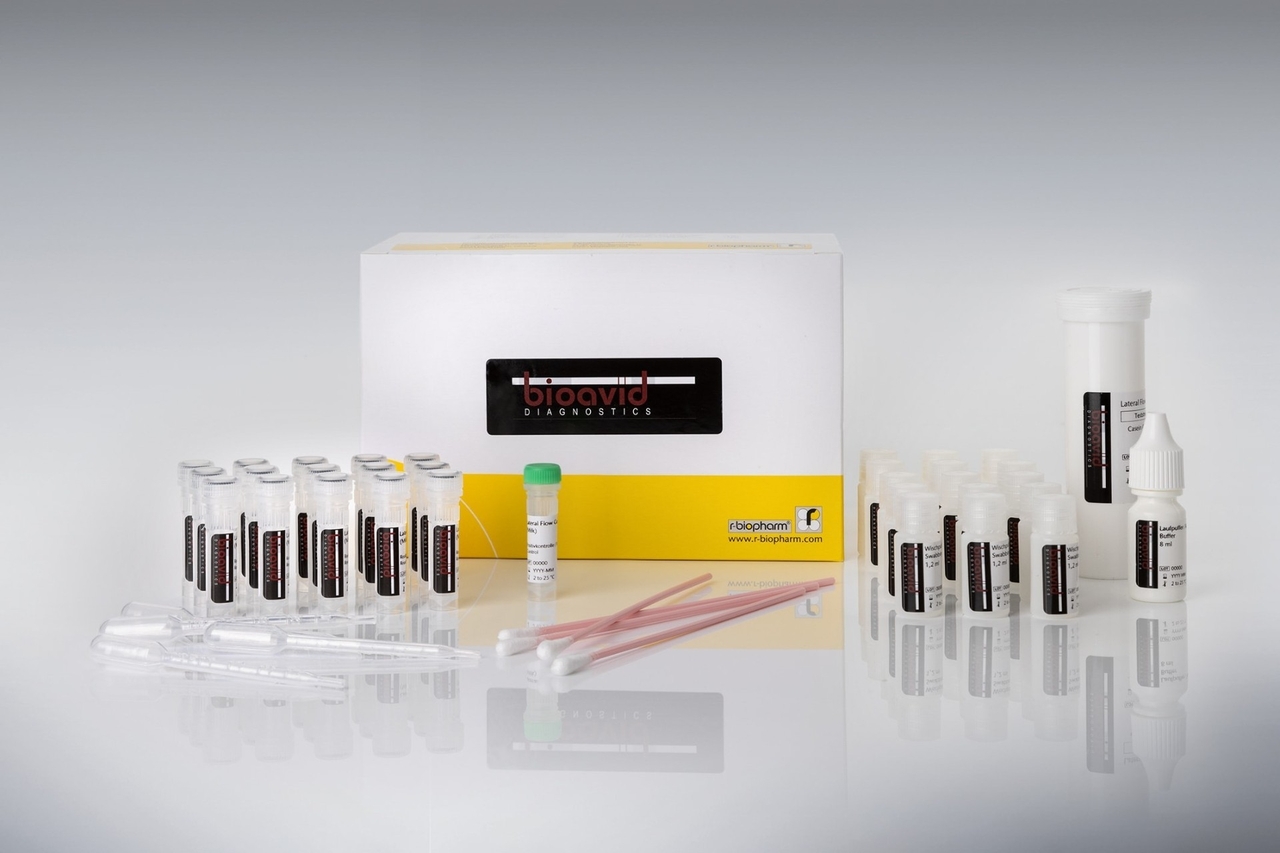
4.1. Lateral Flow Rapid Test
- Suitable for rapid on-site testing.
- Principle: Based on the immunochromatography technique, detecting mustard antigens through the colored lines that appear on the test strip.
- Advantages: Simple, fast, no complex equipment required.
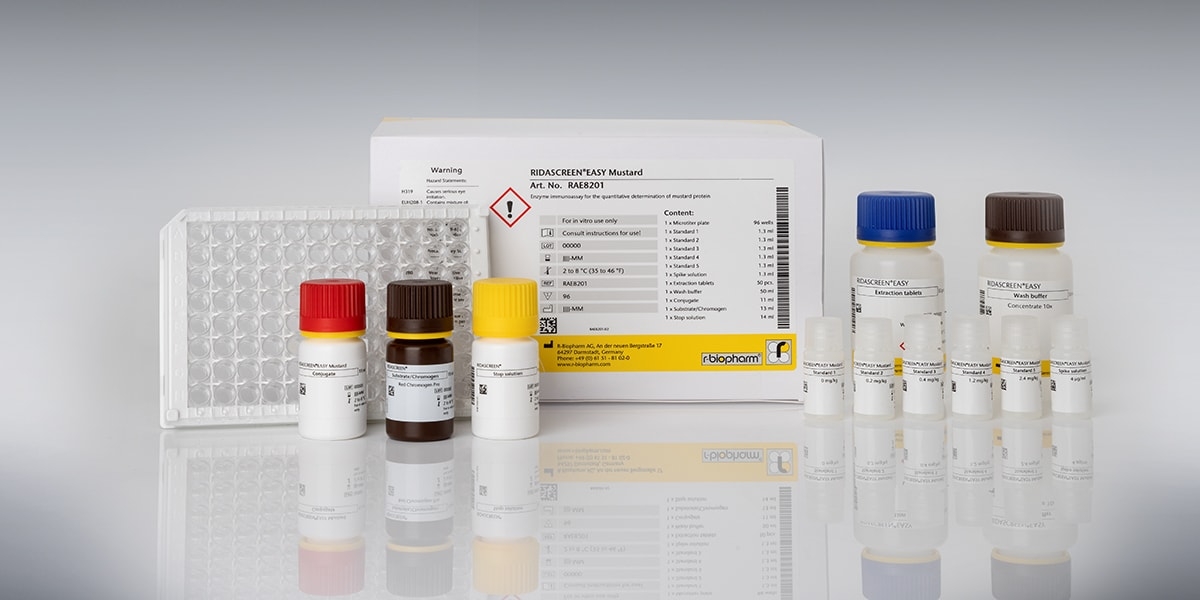
4.2. ELISA test for detecting mustard allergens (Enzyme-Linked Immunosorbent Assay)
- Commonly used in laboratories to test mustard content in food.
- Principle: Uses enzyme-linked antibodies to detect mustard through a color reaction.
- Advantages: High sensitivity, can accurately quantify mustard content in food.
- Applications: Testing on many types of processed foods, sauces, canned foods.
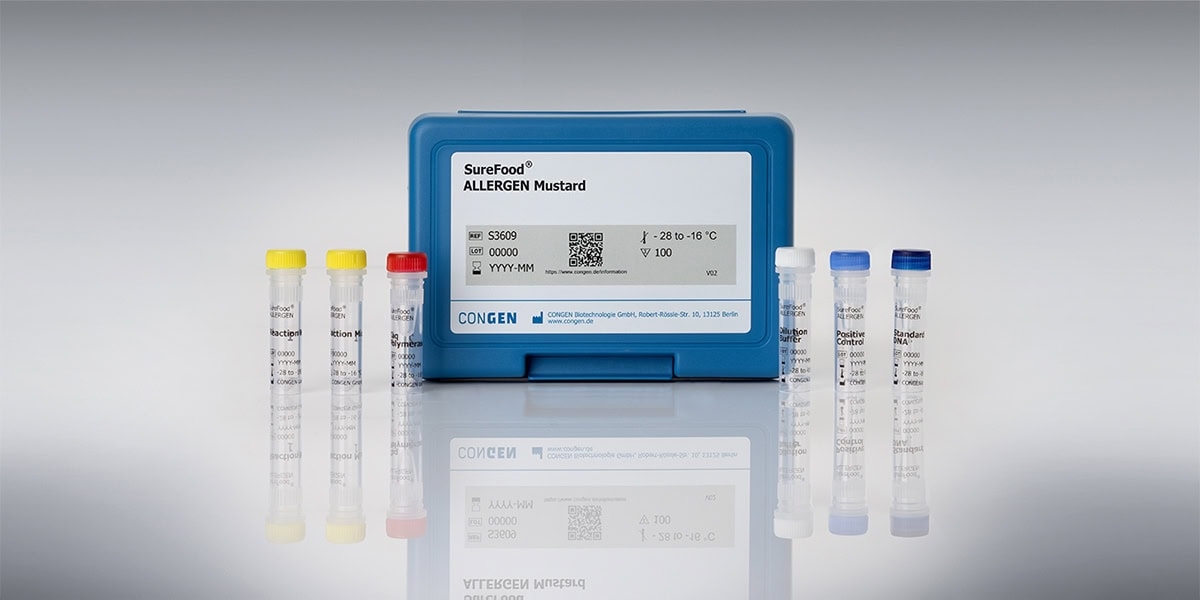
4.3. Real-time PCR test for detecting mustard allergens
- A modern method with high sensitivity and high specificity.
- Principle: Detects mustard DNA in food through the polymerase chain reaction (PCR) combined with fluorescent probes.
- Advantages: Accurately quantifies mustard levels, detects even extremely low amounts of mustard.
- Applications: Testing export foods, ensuring compliance with international food safety regulations.
5. Benefits of using R-Biopharm Test kits
- High accuracy: R-Biopharm test kits have high sensitivity and high specificity, helping to accurately detect mustard residues.
- Meets international standards: Certified by leading food safety organizations.
- Easy to use: The testing procedure is simple and easy to operate even for non-specialists (with the rapid test method).
- Multiple methods: Offers many options suited to each testing need.
Mustard allergy is a serious problem that can endanger consumer health. Testing and controlling mustard residues in food is very important to ensure food safety. R-Biopharm test kits, with advanced technology, help accurately and effectively detect the presence of mustard, contributing to the protection of public health and compliance with food safety regulations.