1. Why beverages must be microbiologically tested
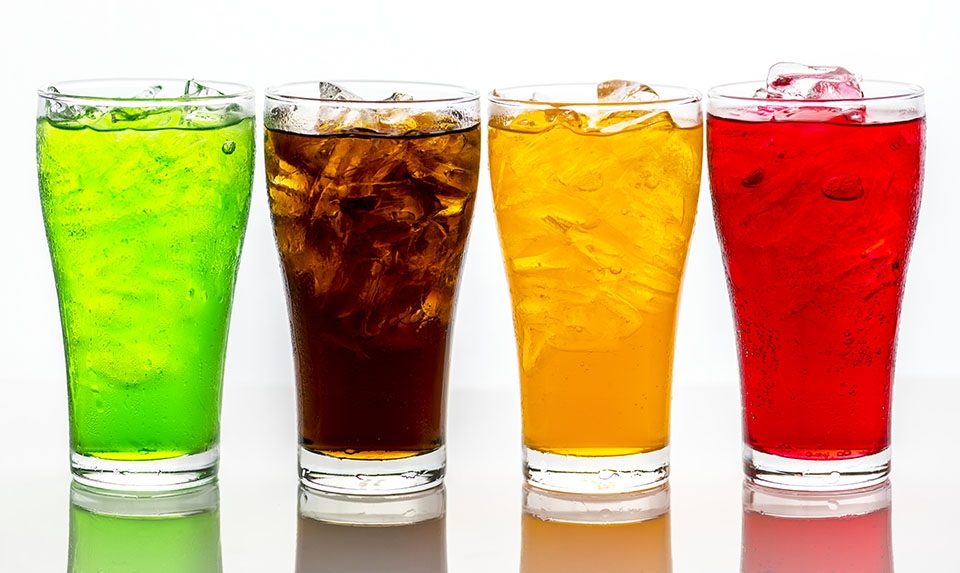
– Many unbranded products with no clear origin are sold openly on the market; especially at schools and in rural areas. These products are usually made by hand with low-quality ingredients and even with harmful chemicals. Given the large profits of beverages, the situation of counterfeit and low-quality goods is increasing.
- Among these, microbiological testing of beverages is one of the indicators that must be strictly controlled before being released to the consumer market.
– To help consumers use beverage products that are safe and of good quality; the Ministry of Health has issued the national technical regulation on non-alcoholic beverages QCVN 6-2:2010/BYT to control beverage quality.
- Because of these urgent requirements, PacificLAB brings a convenient, easy-to-use microbiological testing solution for the microbiology laboratories of food processing companies. A solution that significantly saves operating costs and manpower, namely the ready-made dried agar medium plate solution Compact Dry from Shimadzu - Japan.
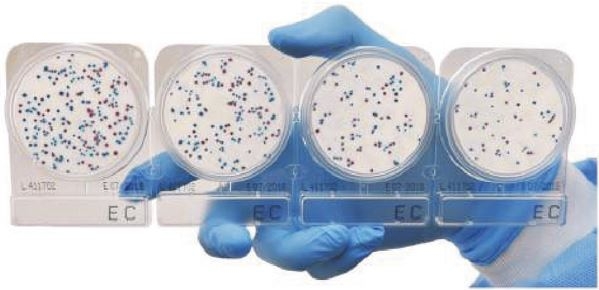
Shimadzu Compact Dry Plates
2. Microbiological testing of beverages recommended by Shimadzu
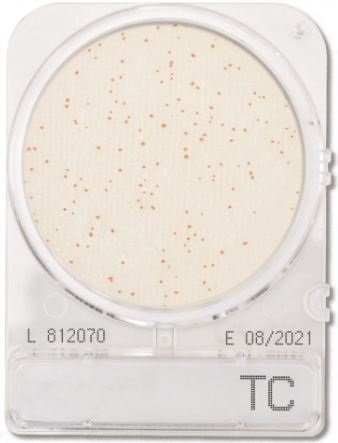
– Total viable count – Total Viable Count TC.
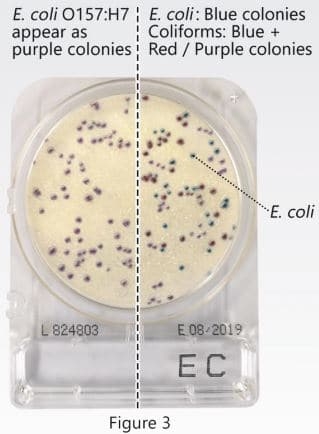
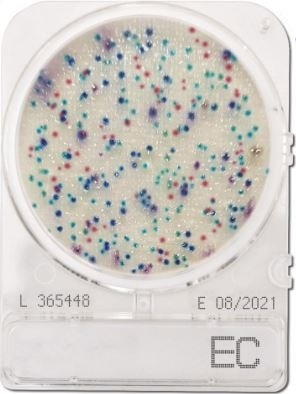
– Ecoli Coliform EC.
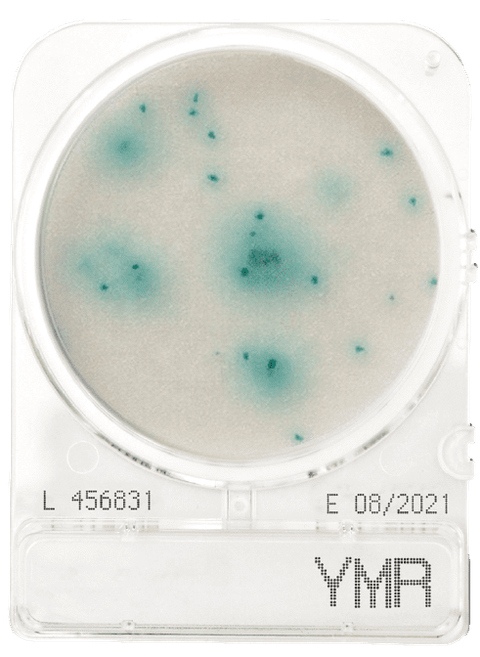
– Yeast and mold – Yeast and Mold Rapid YMR.
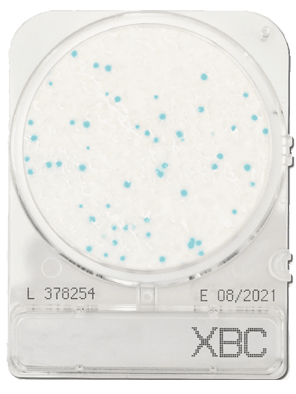
– Bacillus cereus BC.
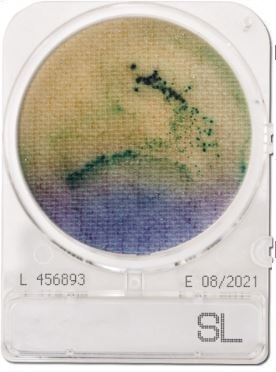
– Salmonella SL.
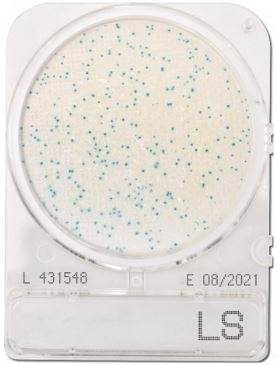
– Listeria LS.
* Note: codes such as TC, EC, YMR, X-SA, SL, LS are product abbreviations.
3. Sample preparation procedure for microbiological testing of beverages
– For indicator microorganisms (total viable count, Ecoli Coliform, Yeast and mold, Staphylococcus aureus):
+ For liquid samples that can be filtered: filter 100 ml of the liquid sample using a 47 mm membrane filter with a pore size of 0,45.
+ For liquid and powder samples that cannot be filtered: Weigh the standard sample portion (for example 10g or 25g). Place it in a sterile container, a centrifuge tube can be used. Then add a suitable volume of sterile diluent (for example: 90ml or 225ml Buffered Peptone Water or BPW, Maximum Recovery Diluent or MRD, or 0,1% Peptone Water). Homogenize the sample and dilute appropriately.
– For pathogenic microorganisms (Salmonella and Listeria): Weigh 25g and dilute with 225ml sterile BPW.
4. Regulations on limits
Refer to the Codex Alimentarius standard; food and drug standards (FDA); the Food Standards Agency (FSA) or local regulatory authorities.
5. Notes on the procedure
– Use a 25g sample size for samples that absorb a large amount of diluent.
– Users should use filter bags or stomacher bags to minimize sample particles during inoculation.
6. Influence of sample color on the interpretation of microbiological test results in beverages
– Check the sample pH after 10-1 dilution. Ensure that the sample pH is between pH 6 and pH 8, otherwise neutralize using sterile 0,1N Sodium Hydroxide (NaOH) if the pH is below 6, or 0,1 N Hydrochloric Acid (HCl) if the pH is above 8.
– For filtered samples, pre-wet the CompactDryTM plates with 1mL of sterile diluent before transferring the membrane filter with a rolling motion to avoid air pockets between the filter and the membrane.

- Similar to other tests based on β-Glucuronidase activity for the detection of E.Coli, CompactDry EC cannot detect E.coli O157: H7 as E.coli.