1. Why water must be tested for microorganisms
- Disease-causing organisms or pathogens are excreted together with feces and are difficult to detect in the water supply. People can come into contact with these pathogens in drinking water, on beaches, in streams and rivers, and in swimming pools.
- There have been very many cases of poisoning or infection caused by microorganisms present in water. Controlling microorganisms in water is an unavoidable requirement not only for the product but also during food production and processing.
- To meet these pressing requirements, Pacific Scientific & Technical Equipment Company Limited brings a convenient, easy-to-use microbiological testing solution to the microbiology laboratories of clean water suppliers. A solution that saves considerable usage costs and staffing: the freeze-dried pre-poured agar medium Compact Dry plates from Shimadzu of Japan.
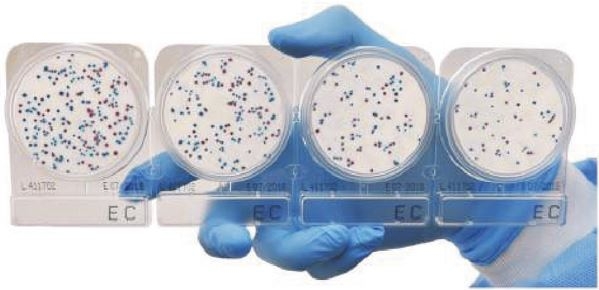
Shimadzu Compact Dry plates
2. Microbiological water tests recommended by Shimadzu
– Heterotrophic Bacteria in Water AQ
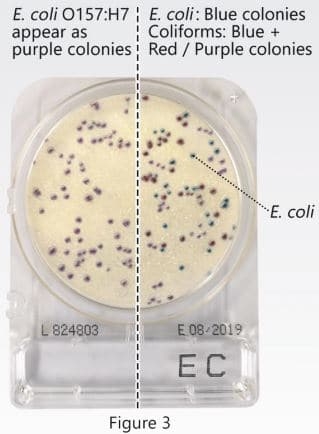
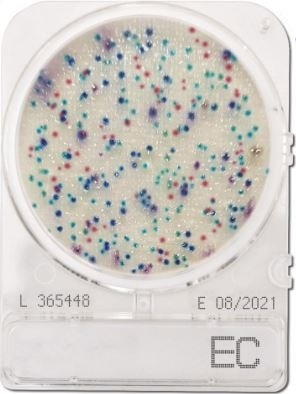
– Ecoli Coliform EC.
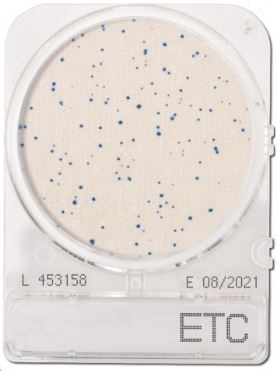
- Enterococcus ETC
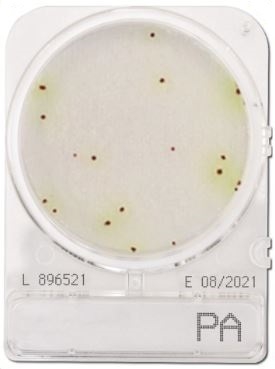
- Pseudomonas aeruginosa PA
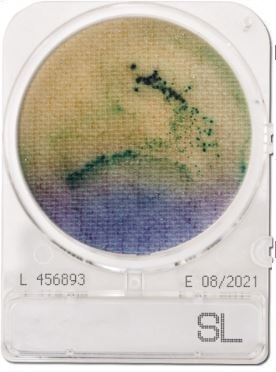
– Salmonella SL.
* Note: notations such as AQ, EC, ETC, PA, and SL are product abbreviations.
3. Sample preparation procedure for microbiological water testing
* For indicator organisms (AQ, EC, ETC, and PA):
– For samples with very low microorganism counts (for example potable water): filter 100 ml of the liquid sample with a 47 mm membrane filtration unit with 0.45 µm pores.
– For samples with low-to-high microorganism counts (for example surface water and wastewater): inoculate 1 ml of the sample directly, or if high counts are suspected, dilute to 10-1 with sterile diluent.
* For pathogenic microorganisms (Salmonella — SL):
– Direct method: measure 100 ml of the water sample and dilute with 100 ml of Buffered Peptone Water (BPW).
– Filtration method: filter 100 ml of the water sample and transfer the filter into 100 ml of sterile BPW.
4. Limits and regulations
Refer to the Codex Alimentarius standard; the food and pharmacopeia standards (FDA); the Food Standards Agency (FSA), or local regulatory authorities.
5. Notes on the water microbiological testing procedure
For water samples already disinfected with chlorine, make sure the sterile container holds enough sodium thiosulfate (Na2S2O3) to neutralize the chlorine in the water. Take 100 ml of the water sample, add 100 µl of 3% Na2S2O3 for drinking water, and 100 µl of 10% Na2S2O3 for chlorinated water or wastewater samples. Sample containers prepared for this usually carry a Na2S2O3 tablet.

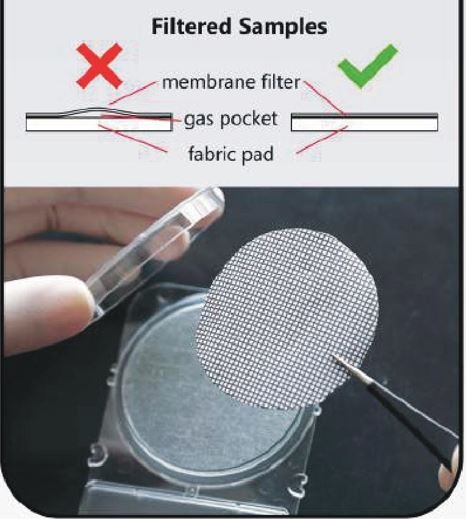
– For filtered samples, add 1 ml of sterile diluent to replenish the water for the CompactDry™ plates. Place the membrane filter into the Compact Dry plate, taking care in handling to avoid air bubbles between the filter and the fabric (see the illustration).
- As with other tests that rely on β-Glucuronidase activity to detect E. coli, Compact Dry EC cannot detect E. coli O157: H7 as E. coli.