1. Why should microbiological testing be performed in confectionery?
- To manage product quality well, confectionery manufacturers must properly control the production process from the raw material intake stage to the finished product and delivery to the customer. This testing helps manufacturers control the incoming raw materials well and also control the finished output well, helping them carry out the procedures for declaring product quality standards and carrying out periodic monitoring plans (2 years/once for products of facilities that have not been granted a quality management system certificate) as stipulated in Circular 19/2012/TT-BYT issued on 09 November 2012.
- Because of these urgent requirements, PacificLAB brings to you a convenient, easy-to-use solution for the microbiology laboratories of food processing companies. A solution that significantly saves operating costs and saves manpower, that is the pre-dried agar plate solution Compact Dry from Shimadzu Diagnostics (Nissui) - Japan.
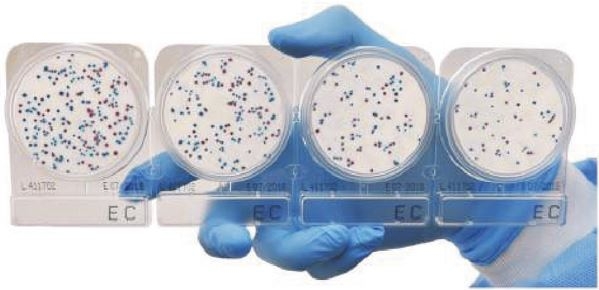
Shimadzu Compact Dry plates
2. Microbiological testing in confectionery recommended by Shimadzu
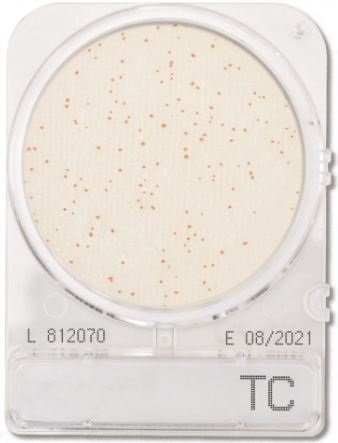
– Total aerobic viable count – Total Viable Count TC.
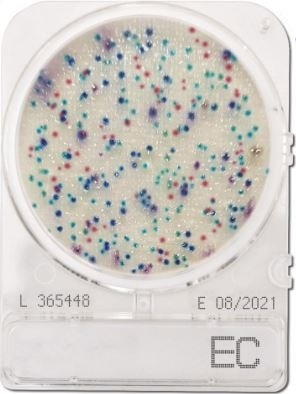
– Ecoli Coliform EC.
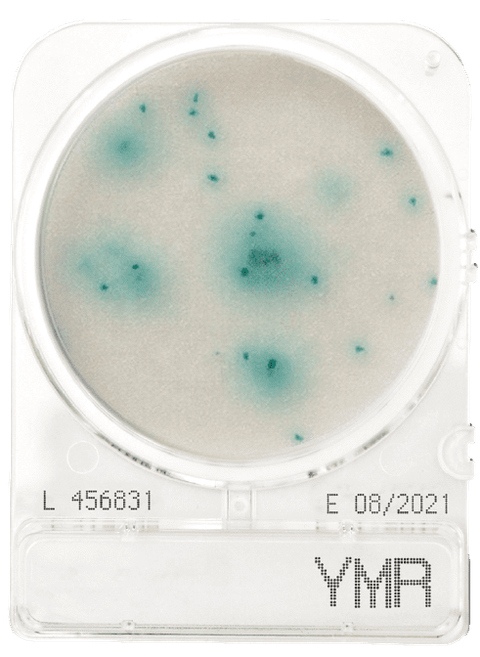
– Yeast and mold – Yeast and Mold Rapid YMR.
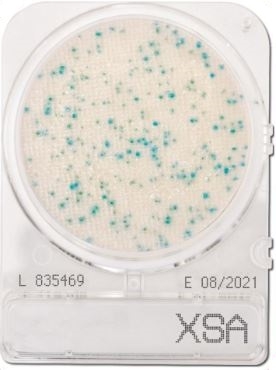
– Staphylococcus aureus X-SA.
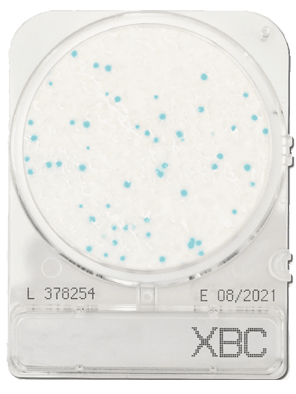
– Bacillus cereus BC.
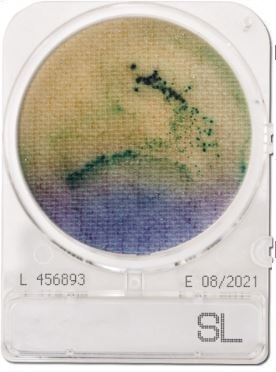
– Salmonella SL.
– Listeria LS.
* Note: the codes such as TC, EC, YMR, X-SA, X-BC, SL, LS are product abbreviations.
3. Sample preparation procedure for microbiological testing in confectionery
– For indicator microorganisms (total aerobic viable count, Ecoli Coliform, Yeast and mold, Staphylococcus aureus and Bacillus cereus):
+ Cut the sample to standard dimensions (for example 10g or 25g) using a sterile knife or scissors.
+ Place the sample in a sterile container, a centrifuge tube can be used. Then add an appropriate volume of sterile diluent (for example: 90ml or 225ml Buffer Peptone Water or BPW, Maximum Recovery Diluent or MRD, or 0.1% Peptone Water).
+ Homogenize the sample and dilute it appropriately.
– For pathogenic microorganisms (Salmonella and Listeria): Weigh 25g and dilute with 225ml sterile Buffer Peptone Water.
4. Regulations on limits
Refer to the Codex Alimentarius standard, the food and drug standards (FDA), the Food Standards Agency (FSA) or the local regulatory authorities.
5. Notes on the procedure
– Use a sample size of 25g for samples that absorb a large amount of diluent.
– Users use filter bags or stomacher bags to minimise sample particles during inoculation.
6. Influence of sample colour on the interpretation of confectionery microbiological test results
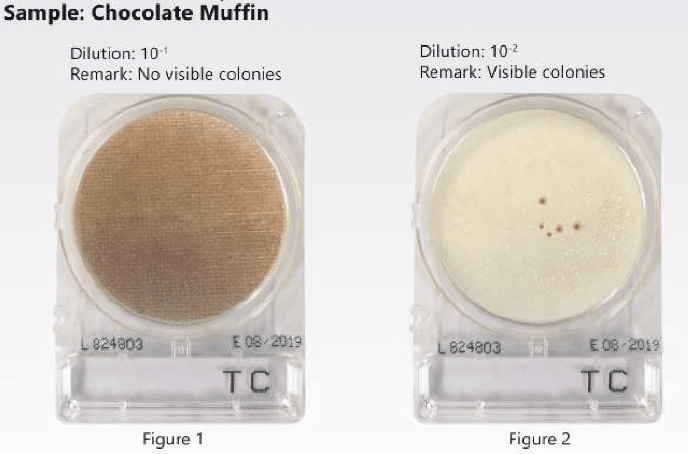
The colour of the sample can hinder the interpretation of results (Figure 1). Set the highest dilution possible without affecting the required sensitivity of the test procedure, for example: if the permitted level for the total count is 800 CFU/g, plate 1ml of the 10-2 dilution (Figure 2) but not 10-3 because it cannot be detected at the required level.
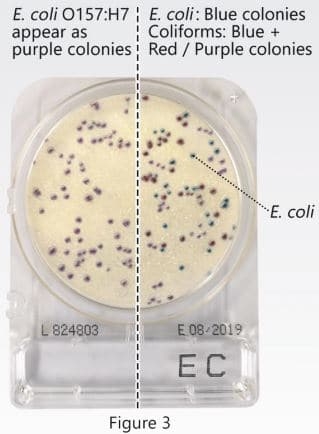
- Similarly to other tests based on β-Glucuronidase activity to detect E.Coli, CompactDry EC cannot detect E.coli O157: H7 as E.coli.