1. Why microbiological testing for pharmaceuticals is necessary
- Microbiological testing at every stage and in every environment of the pharmaceutical production process is very important, including the procedures that control contamination that can harm patient safety. The purpose of this group of tests is to provide a framework for testing anything that could cause microbiological pollution throughout the production process.
- Because of these urgent requirements, Pacific Scientific & Technical Equipment Co., Ltd brings a convenient, easy-to-use microbiological testing solution for the laboratories of pharmaceutical manufacturers. A solution that saves considerable cost of use and saves staffing: the Compact Dry freeze-dried ready-poured agar plate solution from Shimadzu — Japan.
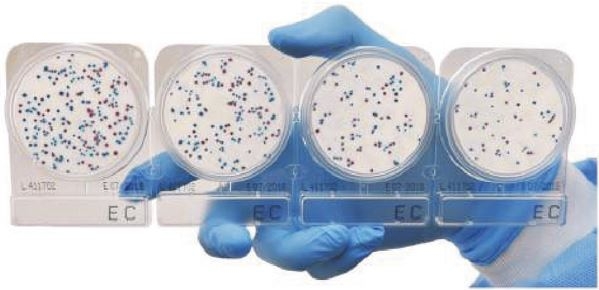
2. Microbiological testing for pharmaceuticals recommended by Shimadzu
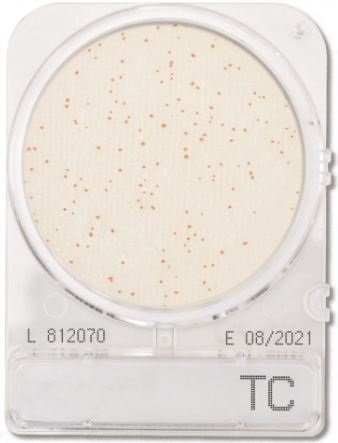
– Total aerobic count — Total Viable Count TC.
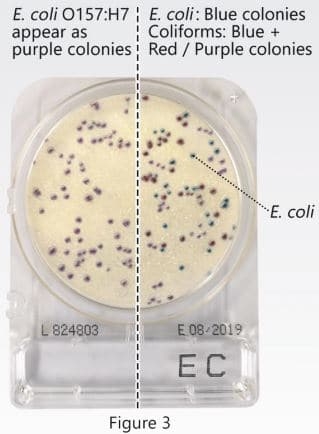
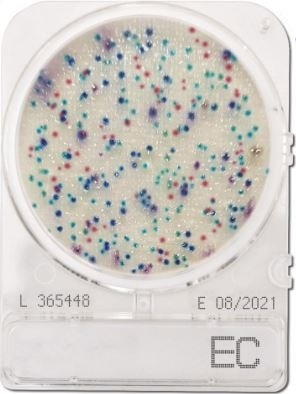
– E. coli / Coliform EC.
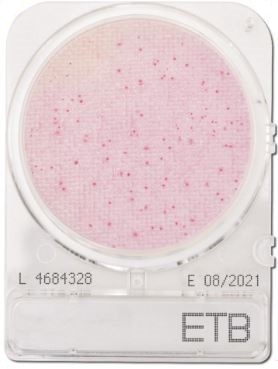
- Enterobacteriaceae ETB.
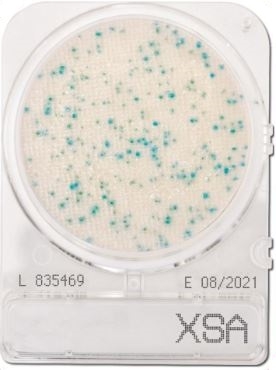
- Staphylococcus aureus X-SA.
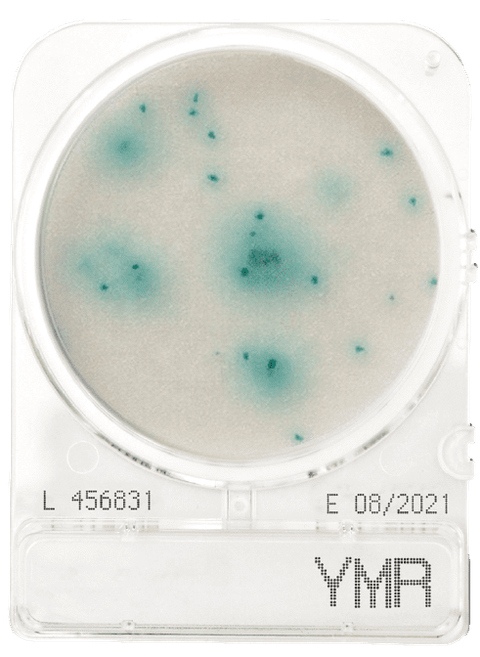
– Yeast and mold — Yeast and Mold Rapid YMR.
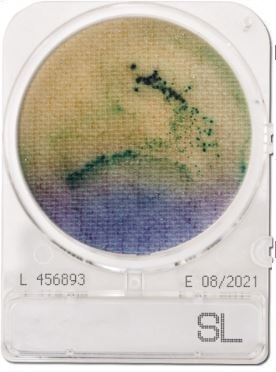
– Salmonella SL.
– Listeria LS.
- Pseudomonas aeruginosa PA
* Note: abbreviations such as TC, EC, ETB, YMR, X-SA, LS, SL, PA are product short names.
3. Sample preparation process for microbiological testing in pharmaceuticals
- For indicator microorganisms (TC, EC, ETB, YM, XSA and PA): Weigh 10g and dilute with a buffer solution supplemented with Tween (polysorbate) 80 or 20 (for example: Butterfield's Phosphate (BPB), Fluid Soybean Casein Digest Medium (TSB). Dilute as needed.
- For pathogens (SL and LS): Weigh 25g and dilute with 225ml of sterile TSB.
4. Regulations on limits
Refer to the United States Pharmacopeia (USP), the Food and Drug Administration (FDA) or other local regulatory agencies.
5. Notes on the pharmaceutical microbiological testing process
Adding Tween or Polysorbate (4% v/v) not only supports the dispersion of samples that do not dissolve in water, but it also acts as a neutralizing agent for the antimicrobial substances found naturally in most plant-derived supplements.
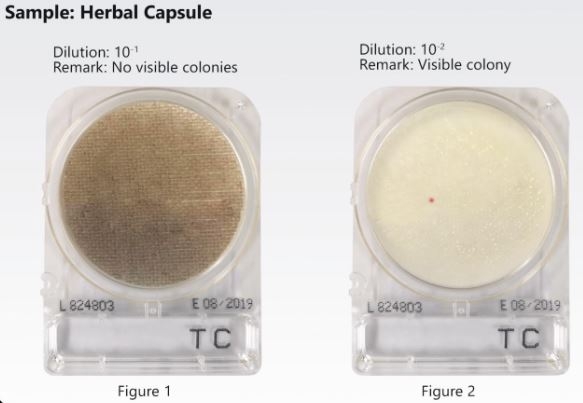
6. How sample color affects the interpretation of microbiological test results in pharmaceuticals
The color of the sample can interfere with interpreting the results. Dilute the plate as far as possible without affecting the required sensitivity of the testing procedure. For a sample, if the permitted level for the total aerobic count is 200 CFU/g, use the 1mL plate at a dilution of 10-2 but not 10-3, because it could not detect the required level.
Like other tests that rely on β-Glucuronidase activity to detect E.Coli, CompactDry EC cannot detect E.coli O157: H7 as E.coli.