1. Why milk and dairy products need microbiological testing
- During production, from raw materials to the final product, many steps need to be controlled and monitored to obtain high-quality, safe products
+ Input material control: Poor quality input materials make poor quality products. Therefore, checking all raw materials is the first important step in the production process to ensure product consistency and to minimize material costs and subsequent risks
+ In-process control: Quality requirements for milk and dairy products are very high. Regular control throughout the whole process is necessary to ensure the safety and quality of the final product.
+ Product control: The final product must meet all quality criteria before being placed on the market. This includes control measures to eliminate all food safety hazards and serves as the basis for product labeling.
- Milk and dairy product testing indicators are specified in Decision 46/2007/QĐ-BYT, QCVN 5-1:2010/BYT, QCVN 5-2:2010/BYT, QCVN 5-3:2010/BYT, QCVN 5-4:2010/BYT, QCVN 5-5:2010/BYT, QCVN 11-1:2012/BYT, QCVN 11-1:2012/BYT, QCVN 11-2:2012/BYT QCVN 11-3:2012/BYT, QCVN 8-1:2011/BYT, QCVN 8-2:2011/BYT, QCVN 8-3:2011/BYT, Circular 24/2013/TT-BYT.
- Because of those essential requirements, PacificLAB Scientific Equipment Co., Ltd brings a convenient, easy-to-use microbiological testing solution for the microbiology labs of dairy processing companies and dairy product companies. A solution that significantly saves costs and manpower, that is the Compact Dry pre-poured freeze-dried culture plate solution from Shimadzu - Japan.
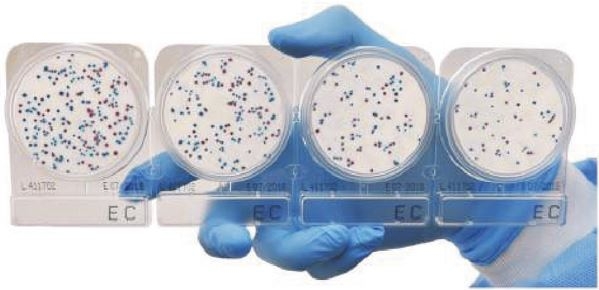
Shimadzu Compact Dry Plate
2. Microbiological testing in milk recommended by Shimadzu
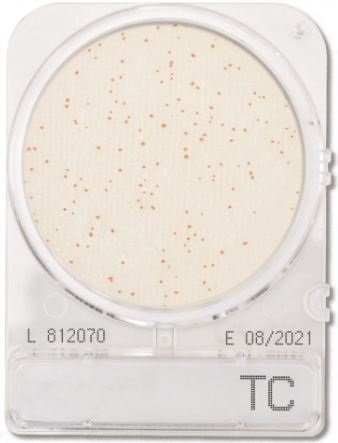
– Total Viable Count TC.
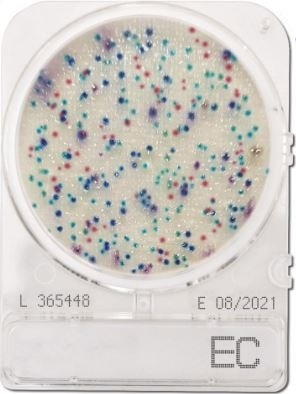
– Ecoli Coliform EC.
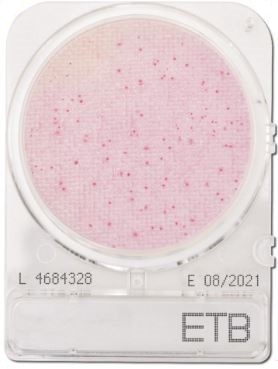
- Enterobacteriaceae ETB.
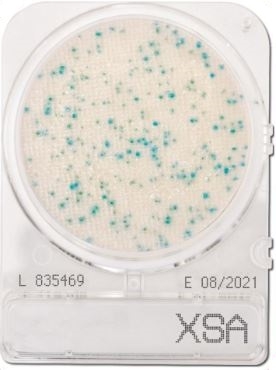
- Staphylococcus aureus X-SA.
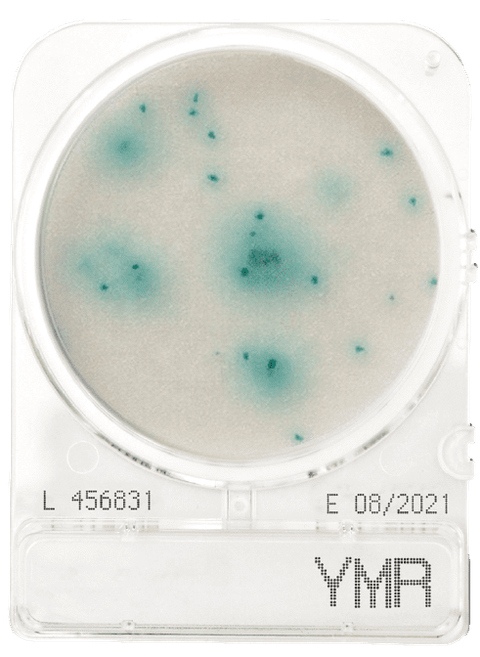
– Yeast and Mold Rapid YMR.
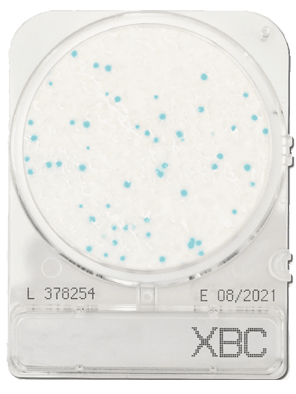
– Bacillus cereus BC.
– Salmonella SL.
– Listeria LS.
* Note: abbreviations such as TC, EC, ETB, YMR, X-SA, BC, SL, LS are product abbreviations.
3. Sample preparation procedure for microbiological testing of milk and dairy products
– Solid and liquid samples (TC, EC, YM, XSA and XBC):
+ Cut or weigh the sample aseptically (for example 10 g or 25g) with a sterile knife or scissors.
+ Place the sample in a sterile container, then add a suitable volume of sterile diluent (for example: 90ml or 225ml Buffered Peptone Water (BPW), Maximum Recovery Diluent (MRD) or Peptone Water 0,1%). Homogenize and dilute the sample appropriately.
– Butter samples – Based on ISO 6887-5: 2010:
+ Weigh 10g or 25g of sample into a sterile container and heat until melted in a 450C water bath.
+ Add sterile diluent 90mL or 225mL pre-warmed to 250C and mix thoroughly. The use of a sample stomacher is highly recommended in this case.
* Bacillus cereus BC is only required to be tested for powdered samples.
4. Limits regulations
Refer to the Codex Alimentarius standard; the food and drug standard (FDA); the Food Standards Agency (FSA) or local regulatory authorities.
5. Notes on the microbiological testing procedure for milk and dairy products
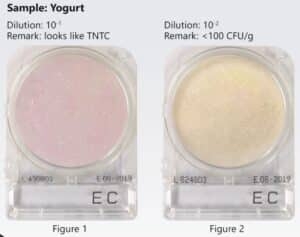
- For CompactDryTM EC, interference may be observed due to the natural β-Galactosidase content of most fermented dairy products (for example yogurt and soft cheese). Use an appropriate dilution.
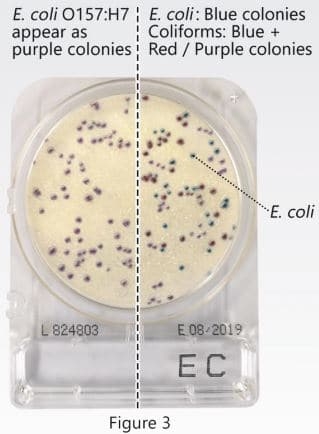
- Similar to other tests based on β-Glucuronidase activity for detecting E.Coli, Compact Dry EC cannot detect E.coli O157: H7 as E.coli.