1. Why cosmetics must be tested for microorganisms
– Microbiological control is an unavoidable requirement, not only for the product but also for the production process; contamination occurs during contact with the surfaces of machinery and equipment…
– Controlling microorganisms in incoming raw materials, during production, and in finished products helps businesses reduce the risk of product spoilage from microbial contamination; it saves production costs, raises product quality, and increases the product's competitiveness…
– For cosmetic products: the limits on microorganisms are clearly set out in Annex 06-MP of Circular 06/2011/TT-BYT
.
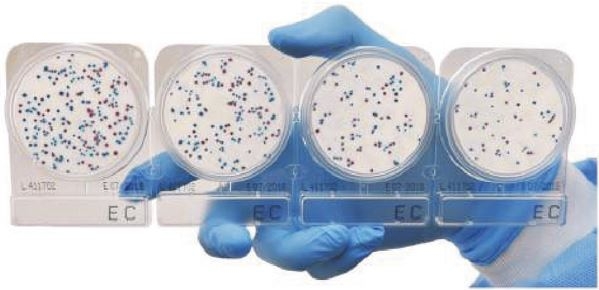
- To meet these pressing requirements, Pacific Scientific & Technical Equipment Company Limited brings a convenient, easy-to-use microbiological testing solution to the microbiology laboratories of cosmetics manufacturers. A solution that saves considerable usage costs and staffing: the freeze-dried pre-poured agar medium Compact Dry plates from Shimadzu of Japan.
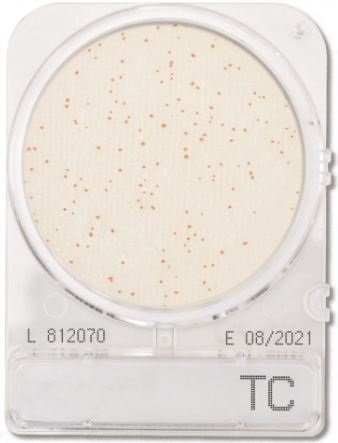
2. Microbiological tests for cosmetics recommended by Shimadzu– Total viable count – Total Count TC
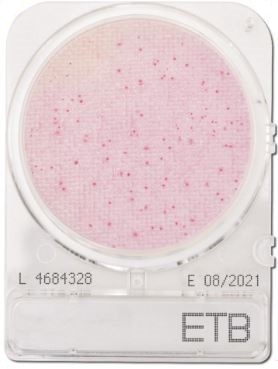
.- Enterobacteriaceae ETB
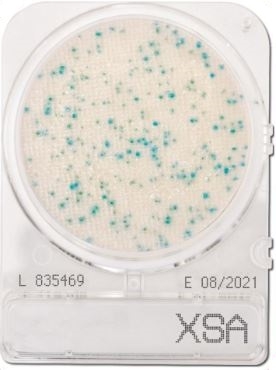
.- Staphylococcus aureus X-SA
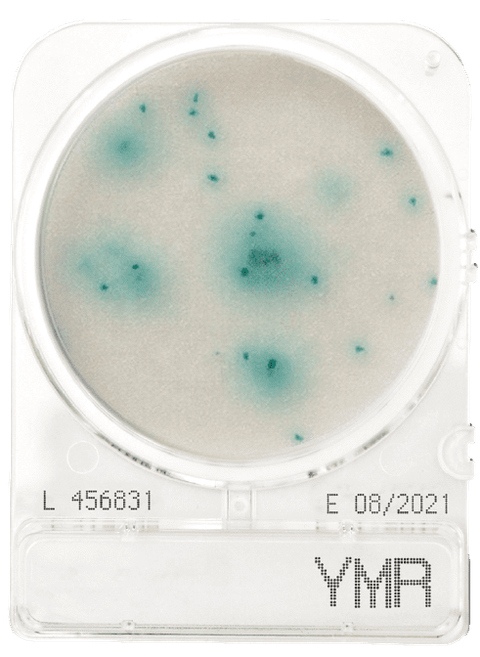
.– Yeast and mold – Yeast and Mold Rapid YMR.
* Note: notations such as TC, ETB, YMR, and X-SA are product abbreviations.
3. Sample preparation procedure for cosmetics microbiological testing
– For indicator organisms (TC, ETB, YM, XSA): weigh 10 g and dilute with 90 ml of Modified Letheen Broth (MLB).
– For oil-based and powder samples: weigh 10 g and dilute with 80 ml of sterile TSB plus 10 ml of Tween (Polysorbate) 80 or 20. Then homogenize the sample.
4. Limits and regulations
Refer to the US Pharmacopeia (USP) and other local regulatory authorities.
5. Notes on the cosmetics testing procedure
Adding Tween (Polysorbate) not only helps disperse samples that do not dissolve in water; it also acts as a neutralizer against the antibacterial agents contained in cosmetics.
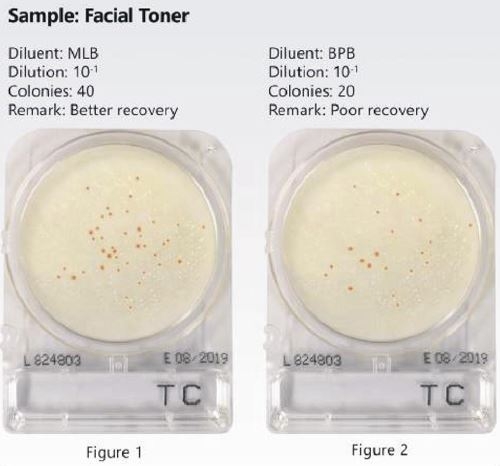
MLB is needed to neutralize antibacterial compounds in the formulation. Using a different diluent with no neutralizer — for example Butterfield's Phosphate Buffer (BPB) in (Figure 2) — leads to poor microbial recovery.
7. How sample color affects the interpretation of cosmetics testing results
– The color of the sample can interfere with interpreting the result (Figure 3). Make the dilution as high as possible without compromising the sensitivity the test procedure requires.
– Example: if the allowed limit for total colonies is 500 CFU/g, use the 1 mL plate at a 10-2 dilution (Figure 4) but not 10-3, because it cannot detect the required level.