1. Why animal feed needs microbiological testing
- Animal feed comes in many types with different origins. However, to meet state regulations and also ensure the safety of livestock; contributing to promoting the domestic livestock industry and increasing export output, it is necessary to ensure that animal feed is supplied by reputable facilities; and that animal feed has been tested in accordance with the regulations. This is also considered a way to support animal feed quality control agencies in making routine decisions related to reviewing products whose variation ranges fall within acceptable limits before being released to the market.
– Microbiological testing for animal feed is carried out according to the following regulations:
+ QCVN 01-183:2016/BNNPTNT: Specifies the maximum permissible limits for the content of mycotoxins, heavy metals and microorganisms in mixed feed for livestock and poultry.+ QCVN 01 – 78: 2011/BNNPTNT: National technical regulation for animal feed – the hygiene and safety indicators and maximum permissible limits in animal feed.
- Because of those urgent requirements, PacificLAB Company Ltd. brings a convenient, easy-to-use microbiological testing solution to the microbiology laboratories of animal feed manufacturers. A solution that significantly saves usage costs and saves labour: the Compact Dry ready-made frozen agar culture plate solution from Shimadzu - Japan.
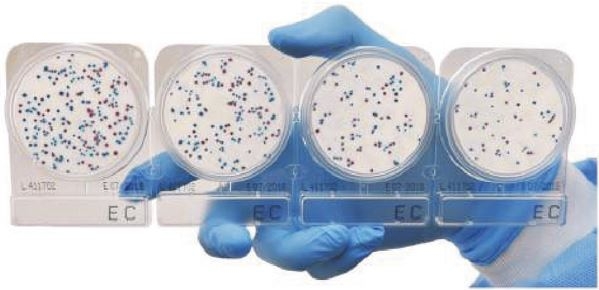
2. Microbiological testing for animal feed recommended by Shimadzu
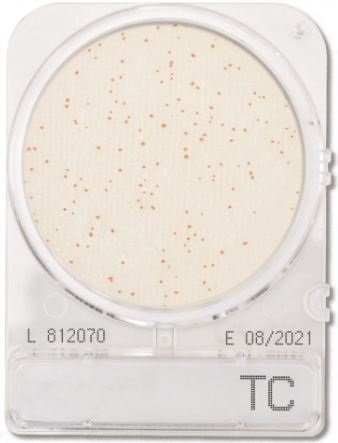
– Total Viable Count TC.
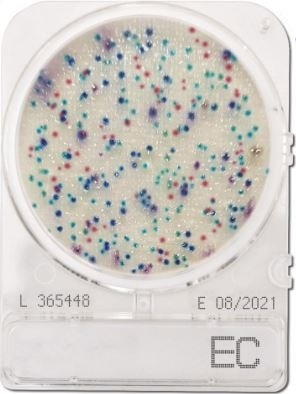
– Ecoli Coliform EC.
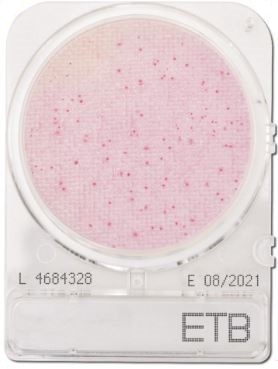
- Enterobacteriaceae ETB.
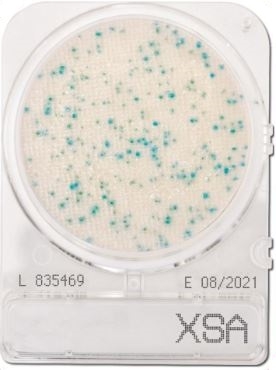
- Staphylococcus aureus X-SA.
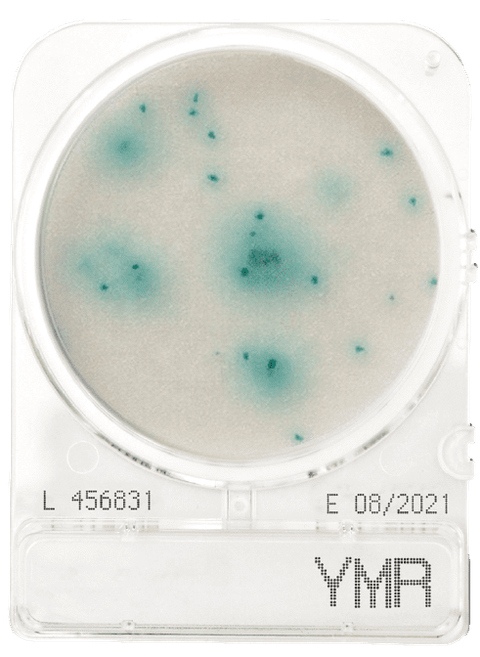
– Yeast and Mold Rapid YMR.
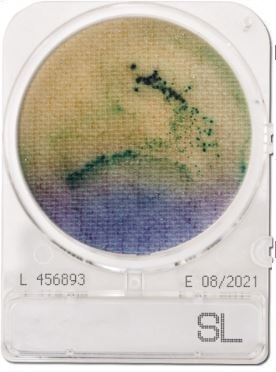
– Salmonella SL.
– Listeria LS.
– Bacillus cereus BC.
* Note: symbols such as TC, EC, ETB, YMR, X-SA, LS, SL, BC are abbreviations of product names.
3. Sample preparation process for microbiological testing in animal feed
– For indicator microorganisms (TC, EC, YM, XSA and XBC):
+ Weigh the sample according to the standard (for example 10 g or 25g). Place the sample into a sterile container, then add an appropriate volume of sterile diluent (for example: 90ml or 225ml Buffered Peptone Water (BPW), Maximum Recovery Diluent (MRD) or Peptone Water 0,1%).
+ Homogenize the sample and dilute cumulatively.
– For pathogenic microorganisms (SL Salmonella and LS Listeria): Weigh 25g and dilute with 225ml sterile BPW, then homogenize the sample.
4. Regulations on limits
Refer to the Codex Alimentarius standard and other local regulatory bodies.
5. Notes on the microbiological testing process for animal feed
– Use the 25g sample size for samples that absorb a large amount of diluent (for example: water and biscuits).
– Users should use sample filter bags to reduce sample particles during inoculation.
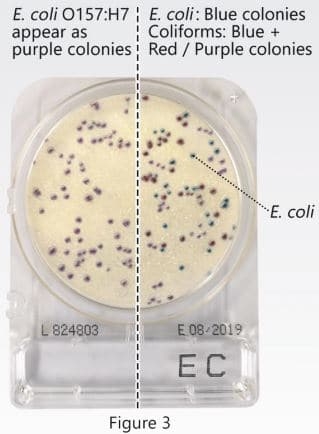
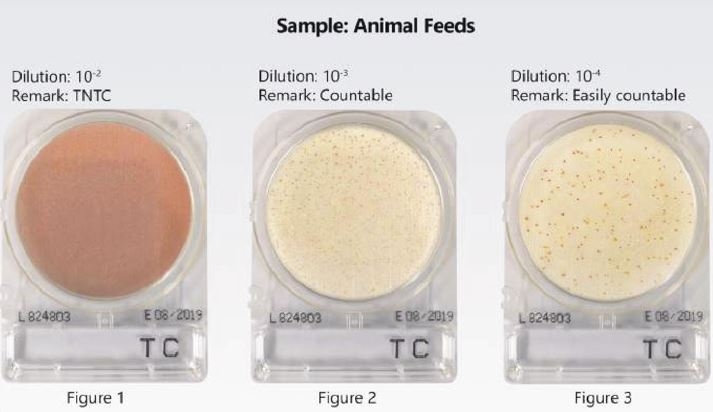
– Animal feed usually has a high microbial count. For Compact Dry TC plates, use the 10-3 (Figure 2) or 10-4 (Figure 3) dilution, while 10-1 or 10-2 is used for other indicator organisms.
- Similar to other tests based on β-Glucuronidase activity to detect E.Coli, CompactDry EC cannot detect E.coli O157: H7 in the form of E.coli.